
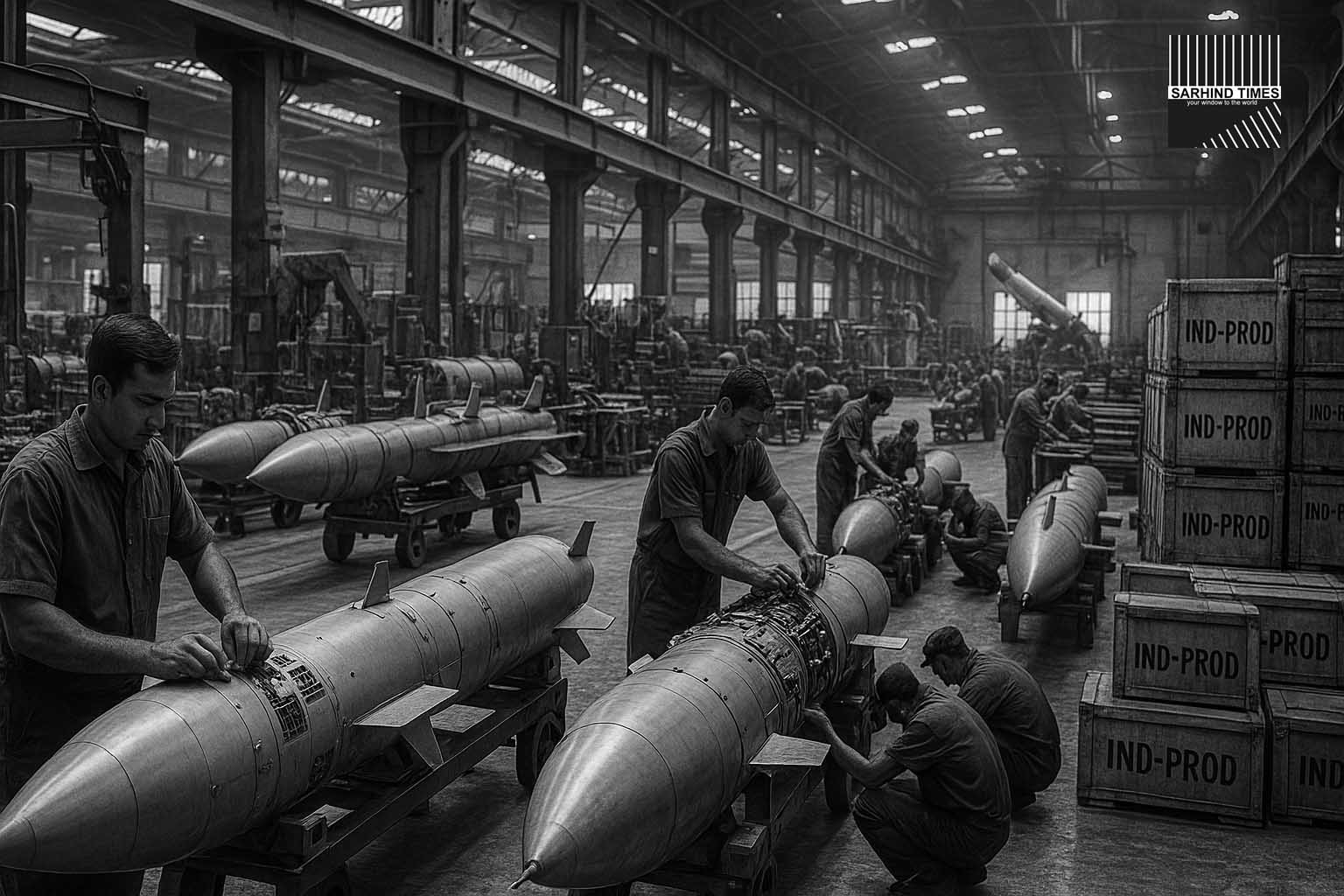
The Ministry of Defence reports record indigenous production numbers, rolls out the Defence Procurement Manual 2025 and highlights a surge in defence exports, indicating a significant shift in India’s defence-industrial landscape.
Dateline: New Delhi | 27 November 2025
Summary: In a major milestone for India’s defence sector, indigenous defence production reached ₹1.54 lakh crore in fiscal 2024-25, the highest ever. Simultaneously, the government released the Defence Procurement Manual 2025, signalling a simplified, transparent procurement regime aligned with the “Atmanirbharta” vision. Defence exports are also flourishing, backed by a deeper role for MSMEs and private industry in the strategic manufacturing ecosystem.
Record Numbers: Indigenous Defence Manufacturing Soars
The government’s statistics released this week show that India’s indigenous defence production hit a record ₹1.54 lakh crore in 2024-25 — a steep increase from ₹1.27 lakh crore in the previous year.
Defence industry insiders attribute the rise to multiple factors: aggressive “Buy Indian – IDDM” procurement policies, prioritisation of indigenous design and manufacture, a surge in private-industry participation, and deeper engagement of MSMEs across the supply chain.
Procurement Reform: The Defence Procurement Manual 2025
As part of the major reform drive, the Ministry of Defence officially released the Defence Procurement Manual 2025, effective from 1 November 2025.
The manual introduces simplified processes, standardised procedures, and uniform procurement norms across the Armed Forces — intended to reduce delays, increase transparency and facilitate quicker induction of adaptive systems.
Deeper Industry Participation and MSME Inclusion
One of the key shifts has been the expanded role of private industry and MSMEs. According to ministry data, over 16,000 MSMEs are now active in defence manufacturing supply chains.
This expanded participation not only diversifies the industrial base but also brings agility and innovation, making India’s defence industrial ecosystem more competitive globally.
Exports on the Rise: India Moves From Buyer to Seller
Alongside domestic production growth, India is experiencing a surge in defence exports. While specific export figures are still being finalised, the trend indicates growing acceptance of Indian-made defence platforms and components in international markets.
Procurement Value and Capability Upgrades
The government’s procurement architecture is being strengthened in parallel. For example, approvals by the Defence Acquisition Council (DAC) exceeded ₹79,000 crore for critical capability upgrades earlier in the year.
These approvals span multiple domains – army, navy, air force – and cover modern weapon systems, surveillance platforms, drones and missile technology, highlighting the strategic dimension of the manufacturing surge.
Strategic Implications: Self-Reliance, Technology Transfer & Value Chains
The manufacturing strength aligns with the government’s strategic objective of self-reliance — or “Atmanirbharta” — in defence. By shifting from being primarily an importer to a viable manufacturer and exporter, India is changing its role in the regional security-industrial complex.
Technology transfer, domestic design, and deeper value-chain integration are now being emphasised — rather than simple assembly. The procurement manual mandates higher indigenous content, faster contracting and clearer timelines, enabling industry planning and investment.
Industry Response: Opportunities and Challenges
Defence firms, particularly in aerospace, naval and electronics sectors, welcomed the reforms and production numbers. They view this as validation of long-term investment in capacity, design capabilities and export orientation.
At the same time, some industry stakeholders caution that rapid growth must be matched with product quality, certification maturity, sustainment capability, after-sales infrastructure and global compliance readiness. Without these, India risks being constrained to lower-tier manufacturing segments.
Regional and Geopolitical Context
India’s enhanced manufacturing capability arrives at a time of heightened regional competition. Border confrontations, maritime domain pressures and evolving threat arrays mean that indigenous manufacture — with shorter supply-chains and local control — becomes a security imperative. The production surge also strengthens India’s position in global defence trade networks.
The Private Sector Push: New Deals and Acquisitions
Private defence companies are expanding rapidly. For example, Apollo Micro Systems recently acquired IDL Explosives from the Hinduja Group — bolstering its capabilities in defence-grade explosives and warhead systems.
These strategic transactions underscore the industrial shift: from large public-sector dominance to a diversified ecosystem of private players, suppliers, and platforms, enabling more agile design-manufacture cycles and export push.
MSMEs and Tier-2/3 Players: The Backbone of the Surge
Analysts emphasise the role of smaller companies in making this turnaround possible. MSMEs are now supplying sub-systems, electronics modules and mechanical parts — tasks previously imported or manufactured overseas. The ecosystem change significantly improves both cost and speed of indigenisation.
Manufacturing clusters in hubs such as Bangalore, Hyderabad, Pune, and now emerging centres in Gujarat and Tamil Nadu are contributing to the productive network.
Quality, Certification and Sustainment: The Next Frontier
Experts point out that manufacturing is only the first step. After-sales service, repair and overhaul (R&O), lifecycle support, upgrade pathways and export certification are equally critical. India now faces the task of building these capabilities at scale.
Without reliable sustainment and global compliance, export potential may remain limited despite manufacturing volume.
Risk Factors: What Could Slow Momentum?
Several risk factors could dampen the momentum:
- Global supply-chain disruptions and raw-material dependencies still linger.
- Competition from low-cost manufacturing hubs such as Vietnam, Turkey and Mexico.
- Skill shortages in high-technology manufacturing, testing, and certification.
- Procurement delays due to bureaucratic friction or contract disputes.
- Export compliance, dual-use controls and geopolitical constraints may limit market access.
Looking Ahead: What to Expect in the Next 5 Years
If current trajectories hold, India’s defence manufacturing ecosystem will evolve into:
- A robust export base worth ₹50,000-70,000 crore annually by the early 2030s.
- A diversified industrial base including electronics, aerospace, unmanned systems, missile systems and naval platforms.
- Significant private-sector leadership accompanied by globally competitive MSMEs and niche innovators.
- Stronger integration into global defence supply-chains and allied markets, reducing imports and improving strategic autonomy.
Conclusion: A New Chapter for India’s Defence Industry
The combination of record indigenous production, modernised procurement rules and a growing export ambition marks a pivotal point in India’s defence-industrial journey. The change is not just quantitative but qualitative — the shift from buyer to manufacturer and exporter is underway.
Yet this transition will not be automatic. The next phase will test the ecosystem’s ability to execute — converting policy and numbers into operational platforms, industry competitiveness, sustained exports and strategic advantage. If India succeeds, it may emerge as a key defence-production hub in the global order. If it falters, the gains may stall. For now, the signs are solid.


+ There are no comments
Add yours