
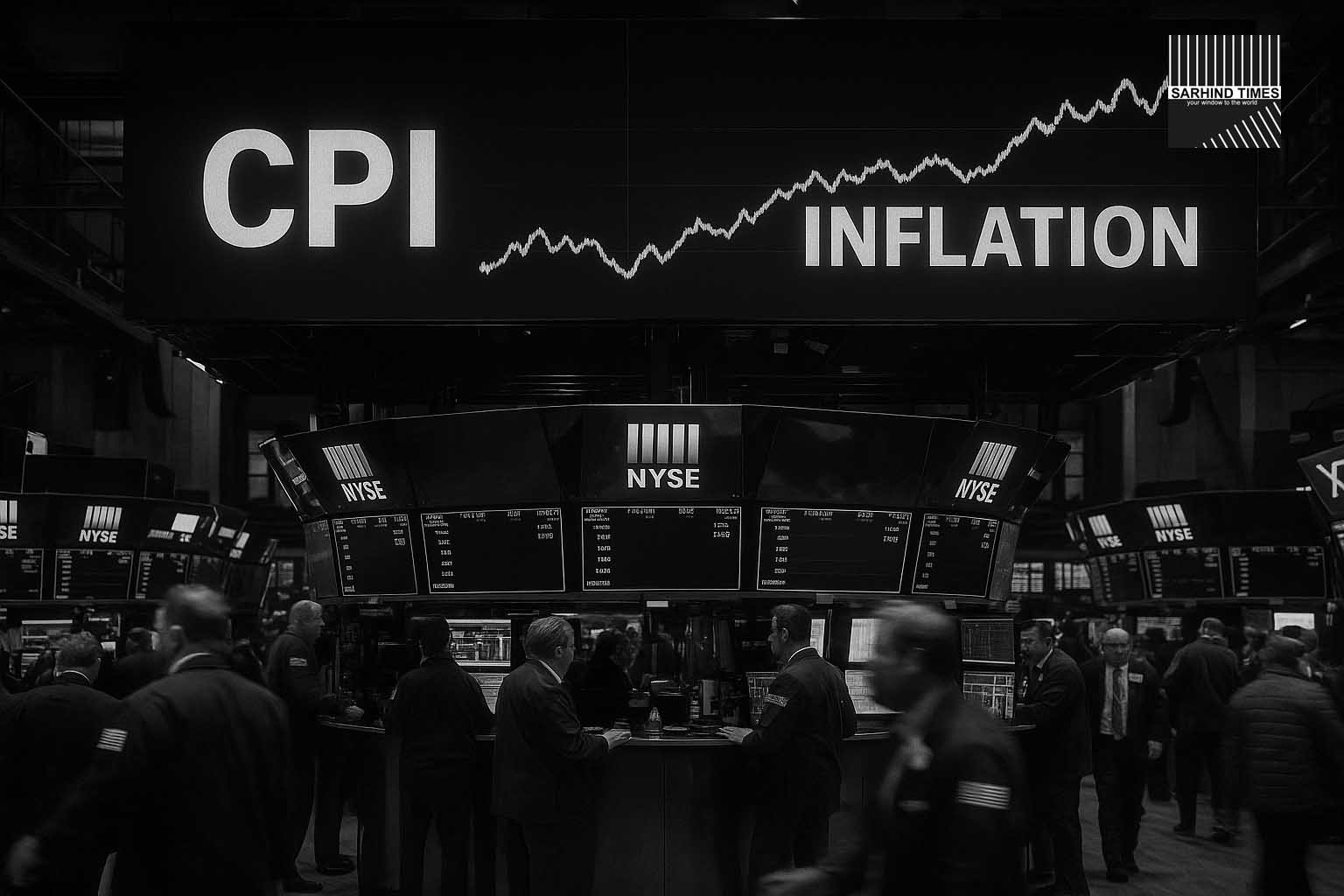
Annual Consumer Price Index hits five-month low, but services inflation and wage pressure keep policymakers cautious
Dateline: Washington D.C. | 26 November 2025, Asia/Kolkata
Summary: The U.S. Consumer Price Index (CPI) for September rose by 3.0 % year-on-year, down from August’s 2.9 %, registering the lowest annual increase in five months and slightly overshooting forecasts. While the slower‐pace inflation gives Federal Reserve some flexibility on interest‐rates, sticky service‐costs, housing rents and wage pressures mean the path to the 2 % inflation target remains uncertain.
Of note: input inflation for energy and goods has moderated, but certain categories—such as shelter (housing), miscellaneous services and used vehicles—remain elevated.
What’s behind the moderation—and what isn’t
Several factors are contributing to the moderating headline inflation:
– Commodity and energy-price pressures have eased, limiting pass-through to consumer goods.
– Supply-chain constraints have gradually loosened, reducing scarcity-induced price spikes.
– The previous year’s high base in certain categories means year-on-year comparisons soften.
Yet persistent upward pressure remains in:
– Housing and shelter services: Rent components and owners’ equivalent rent continue to tick up, remaining a large portion of the CPI basket.
– Wage growth: Labour markets remain tight, and the wage-cost dynamic keeps service-prices from falling rapidly.
– Service sectors beyond housing: Healthcare services, personal services and some miscellaneous professional services continue to show price resilience.
What this means for the Fed’s policy outlook
The moderation provides the Federal Reserve with some breathing room, allowing for the possibility of delaying further interest-rate hikes and potentially preparing for rate cuts — depending on upcoming data.
However, the Fed will likely emphasise the following conditions before acting:
– Sustained decline in core inflation (which excludes volatile food and energy prices).
– Material easing in shelter/rent inflation.
– Evidence of wage growth catching up with productivity rather than simply passing costs to consumers.
In short: the door to rate cuts is open but not guaranteed.
Risks that threaten the improvement
Several risk-factors could derail the downward trend in inflation:
– If global commodity or energy prices spike again (for example via supply-disruption), goods inflation could rebound.
– Service-price inflation may remain sticky, especially with strong labour bargaining in specific sectors.
– Fiscal policy changes (e.g., large stimulus, tax cuts or sharp spending increases) could inject upward inflation‐pressure.
– Consumer inflation expectations might rise, feeding through into wage demands and price-setting behaviour.
Impact on investments, markets and global spill-over
– Equity markets tend to favour the moderation, as inflation easing reduces pressure on interest rates and supports valuations.
– Bond yields may stabilise or drop modestly, as rate-cut expectations improve.
– For emerging markets (including India), lower U.S. inflation reduces the likelihood of U.S. rate hikes—potentially easing capital‐flow and currency pressures.
– Commodity-exporting nations may face weaker price momentum if global inflation dims; commodity importers may benefit.
Outlook: What to watch next
Key upcoming data points:
– October CPI data, especially to see if the 3 % level holds or dips further.
– Core CPI and services inflation trends over the next quarter.
– Labour cost growth and productivity data, to assess how wage dynamics evolve.
– Global commodity/energy price developments and their pass-through.
– Fed speeches and minutes for shifting forward-guidance on policy.
Conclusion
U.S. inflation falling to 3.0 % in September is welcome progress—but it is too soon to declare victory. The basics have improved, yet structural pressures in housing, services and wages remain unresolved. For the Fed, the inflation war remains active; the next phase will be about managing a sustained descent towards 2 % without stalling growth.
In short: The tide might be turning—but the shoreline still lies ahead.



+ There are no comments
Add yours