
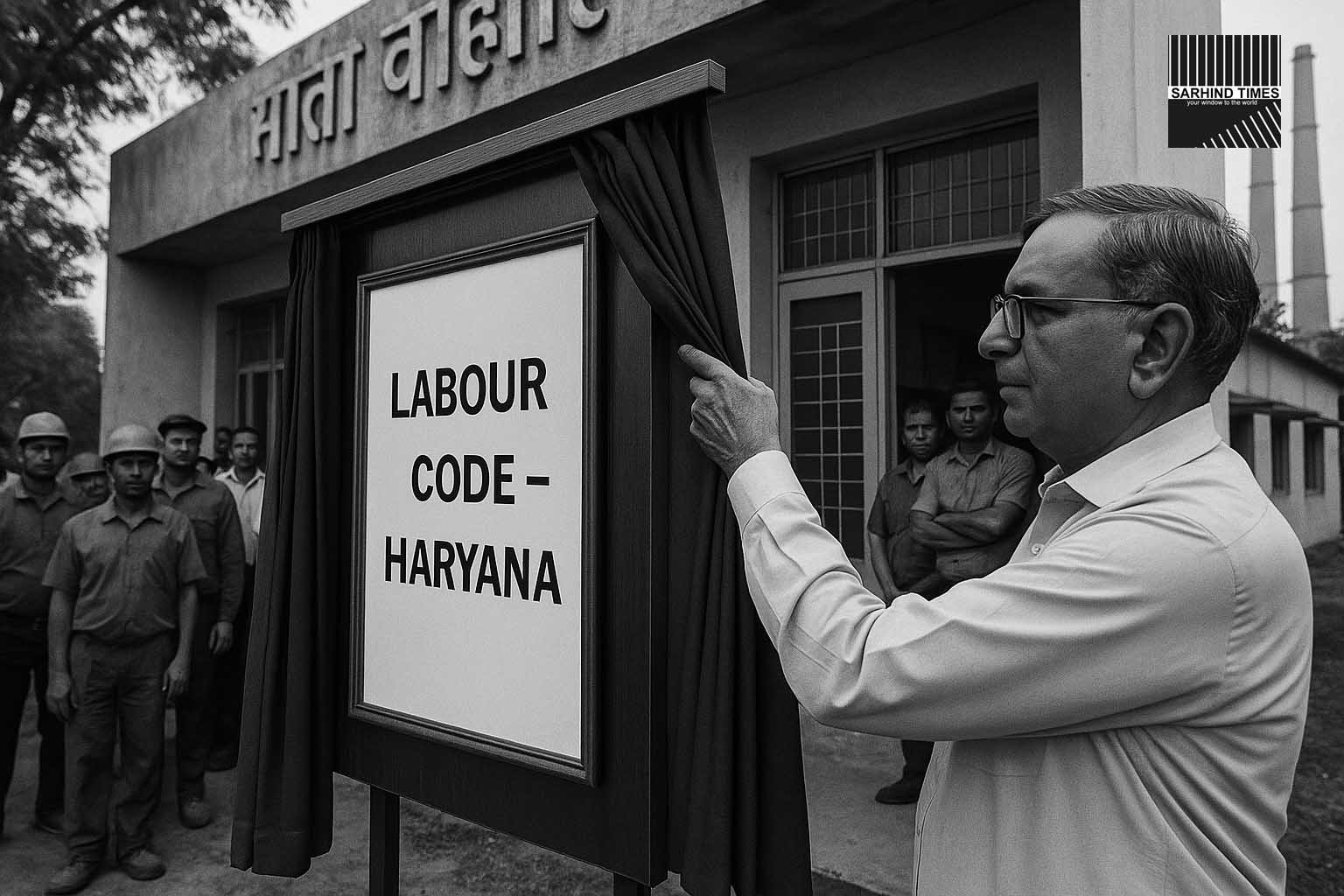
State tweaks thresholds for layoffs, simplifies compliance and aligns with national labour-code reforms amid industrial-policy push
Dateline: Chandigarh | 21 November 2025, Asia/Kolkata
Summary: The government of Haryana has introduced sweeping amendments to its labour-law framework aimed at attracting investment, stimulating manufacturing and reducing regulatory friction. Key changes include raising the retrenchment threshold, expanding contractor-labour limits and implementing a single-window compliance architecture in line with the national labour-codes agenda. While business welcomes the reforms, worker-groups caution about potential erosion of protections and demand robust safeguards.
Why this update matters now
For decades, India’s labour-law system was characterised by dozens of overlapping laws, varying state-by-state, creating compliance burdens for large-scale manufacturing and industrial investment. At the central level, four major labour-codes — on Wages, Social Security, Industrial Relations and Occupational Safety & Working Conditions — were drafted to consolidate and simplify the framework.
Haryana, a key manufacturing and industrial hub in north India, is now moving aggressively to implement state-level reforms that align with this national shift. With land, labour and logistics already recognised as bottlenecks in the state’s industrial strategy, the timing is strategic — firms evaluating scale-ups often cite labour-regulatory clarity as a decisive factor.
Main reforms introduced by Haryana
According to government communications and media coverage, Haryana’s labour-department package includes several core changes:
- Raised threshold for lay-offs/retrenchments: The minimum number of workers above which permission is needed for retrenchment has been increased, thereby offering firms greater flexibility.
- Contract-labour cap increase: The number of contract workers allowable in establishments has been expanded, which enables faster ramp-up of production lines and shift operations.
- Single-window compliance mechanism: The state has streamlined inspection and licensing under labour laws, enabling firms to file one licence valid across multiple statutes for five years—reducing paperwork and inspection frequency.
- Flexible work rules and mixed-use permissions: While primarily flagged under land reforms, labour-rules around shift timings and worker categories have also been softened to enable modern industry operations.
- Accelerated state-notification of central labour-codes: Haryana has taken steps to notify rules under the central codes ahead of many states, thereby giving greater predictability to employers and aligning state-legislation with national framework.
Expected impact on industry and investment
For businesses and investors, these reforms signal a friendlier regulatory environment: lower compliance costs, fewer delayed approvals and better labour-flexibility. In a competitive investment climate where manufacturing and export-linked units evaluate multiple states, such clarity can tip the balance. The state’s messaging to industry emphasises “Haryana for large-scale manufacturing” and “labour-ready infrastructure”.
The updated labour-framework is likely to strengthen nodal industrial corridors such as Gurugram-Manesar-Palwal (GMP) and other export-oriented zones. Firms looking to scale operations, adopt shift-based manufacturing or require contractor-labour will find state rules more aligned with dynamic production models.
Worker protections, voices and risks
Despite the positives for business, the reforms have stirred concern among labour-unions and worker-advocacy groups. Their critique centres on the following risks:
- Reduced job-security threshold: Raising the retrenchment limit may make workers in smaller plants vulnerable to layoffs without proper approval.
- Greater contract-labour reliance: With easier caps, firms might substitute regular workers with contractors—undermining benefits like provident fund, tenure and bargaining rights.
- Inspection-frequency reductions: While intended to reduce burden, fewer inspections may weaken enforcement of safety and labour-rights standards, especially in peripheral units.
- Speed of implementation outpacing awareness: Workers, particularly in small-town industrial zones, may not be fully aware of the changes and their rights under the new rules, leading to an information asymmetry.
How this ties into national labour-reforms agenda
At the central level, the four labour-codes mark an ambitious rationalisation, but their rollout has been gradual and state-dependent. Many states have delayed notifications or adopted partial reforms.
Haryana’s move therefore positions the state as an early adopter and a potentially preferred destination for labour-intensive industry. It also shows how states are competing to harmonise law-making with ease-of-doing-business frameworks. The shift can be seen as part of the broader economic strategy of ‘Make in India 2.0’—emphasising local manufacturing, exports, supply-chain resilience and large-scale employment.
Implementation challenges ahead
However, reform announcements are only the start. Haryana’s labour-department will face operational challenges to deliver the intended benefits:
- Capacity of state-inspectorate: Transitioning to new rules and fewer inspections requires robust databases, digital tracking, retraining of inspectors and clear oversight to prevent regulatory out-gaps.
- Coordination with labour-unions: To maintain industrial peace, the state must engage with social-partners (workers, unions, employer bodies) and ensure changes are negotiated rather than perceived as unilateral. Otherwise conflict risk remains.
- Balancing speed and fairness: While easing rules aids growth, the state must not compromise minimum standards of safety, wages, hours and union-rights. A perceived tilt towards employers could spark unrest.
- Monitoring transition risks in smaller units: The benefits of large-scale reform often accrue first in bigger firms; smaller factories and workshops may lag behind in compliance, training and awareness, potentially creating pockets of risk or exploitation.
What to watch in coming months
Key indicators and events to monitor include:
- State notifications of remaining rules under the central labour-codes in Haryana and timelines for full enforcement.
- Data on new industrial-unit approvals in Haryana post the reforms; whether manufacturing investment sees measurable uptick.
- Workforce entry and reassignment: whether contractor-labour numbers rise and whether the share of regular workers remains stable.
- Industrial-relations outcomes: whether layoffs rise, strikes decline/increase, and whether labour-unions report grievances.
- Worker-safety indicators and compliance metrics—whether fewer inspections correlate with higher violations or whether digital oversight compensates.
Broader implications
For policy-makers, Haryana’s reforms serve as an example of state-level adaptation to national regulatory architecture. It also highlights how industrial states are tailoring labour-laws to support competitive advantage. For workers and communities, the reform signals shifting terrain: more flexible employment but also higher importance of worker-awareness, protective institutions and negotiation power.
Conclusion
Haryana’s labour-law overhaul is a decisive shift. It tells industry that the state is open for business, while sending a signal to workers and regulators that the regulatory landscape will no longer be static. The framing is clear: regulation must enable growth. But success will depend on balancing that growth with worker protections, ensuring industrial-harmony and regulatory credibility. The coming months will test how the new framework plays out in factories, workshops and communities across Haryana.



+ There are no comments
Add yours