
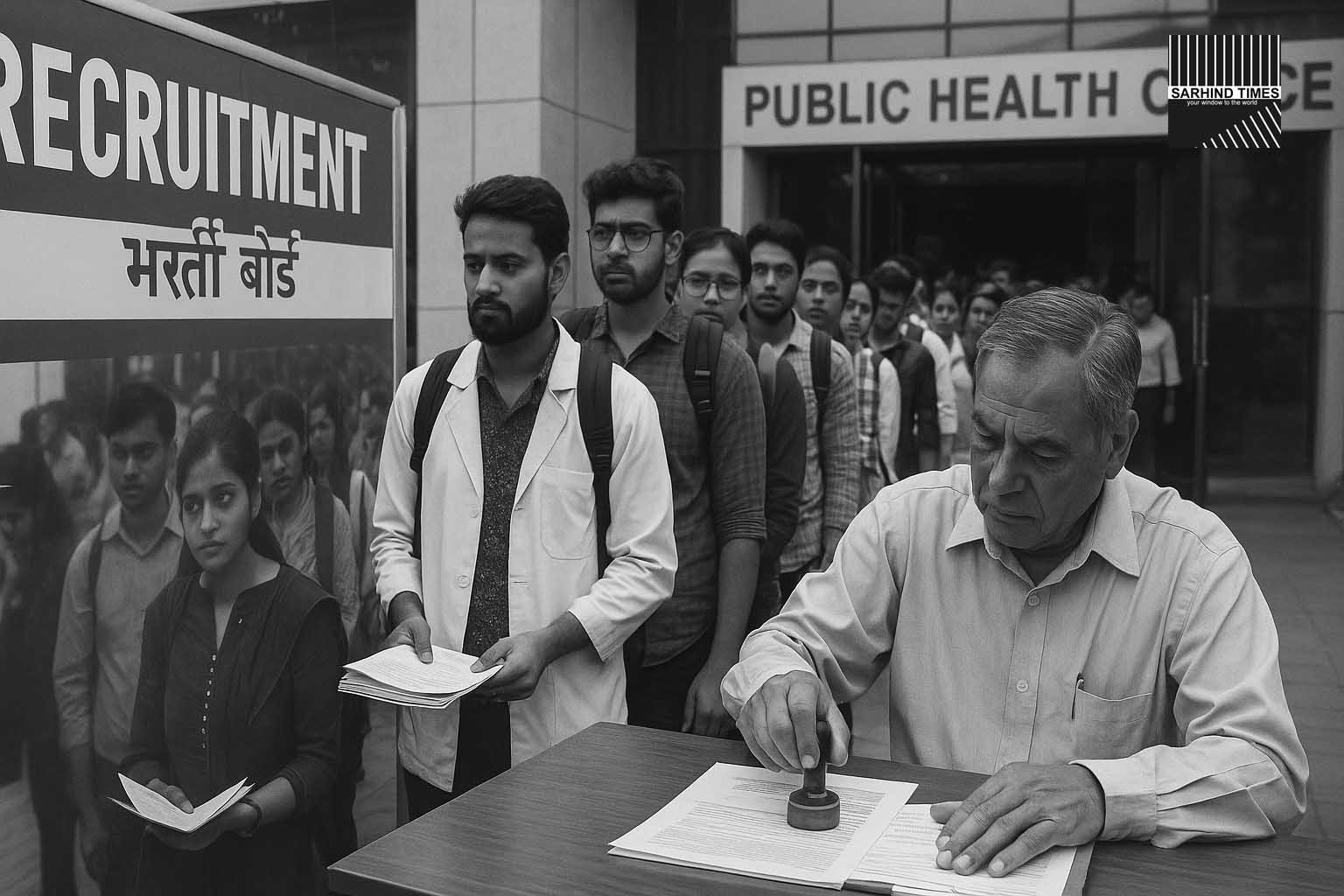
Central Drugs Standard Control Organisation expands workforce to tighten oversight as public health concerns intensify
Dateline: New Delhi | 21 November 2025, Asia/Kolkata
Summary: The Union Ministry of Health and Family Welfare has officially notified the recruitment of 32 additional drug-inspectors for the Central Drugs Standard Control Organisation (CDSCO), marking a notable push to bolster regulatory oversight of medicines, medical devices and cosmetics across India. The move comes amid persistent concerns about pharmaceutical compliance, safety and manufacturing standards.
The decision and its context
The Ministry of Health and Family Welfare issued a notification on 20 November 2025 authorising the direct recruitment of 32 drug-inspectors under Section 21 of the Drugs & Cosmetics Act, 1940. This addition comes after an earlier recruitment of 49 inspectors in September, and signals a continuing effort to strengthen regulatory capacity. The new appointees will operate under the CDSCO, India’s central regulator responsible for ensuring standards in drug manufacturing, distribution, and sale.
The positions are classified as Group B, Level-8 pay matrix, with the total sanctioned posts under review (maximum of 419 posts indicated). The Inspectors will be empowered to inspect manufacturing units, storage facilities, sales and distribution premises; take samples; search and seize goods; test compliance; and initiate legal or administrative action under the Act.
Why now? India’s pharmaceutical industry is vast, complex and globally integrated—the world’s “pharmacy of the world”. Yet it has faced scrutiny: international fatalities linked to toxic cough syrups produced in India, domestic manufacturing compliance gaps, device regulation issues and the expanding scale of cosmetic and medical-device manufacturing. The regulatory workload has surged, and cadres note that enforcement and inspection staffing have lagged. This move attempts to narrow that gap.
What the new inspectors will be expected to do
Under the Drugs & Cosmetics Act, inspectors have powers to inspect premises across sectors: manufacturing, storage, display; to take samples of drugs, cosmetics and medical devices; to inspect vehicles used for transport; to seize or move goods; to launch prosecution in violation cases; and to test compliance with schedules, labelling, shelf-life rules and storage norms.
Given the expanded responsibilities (especially with the inclusion of medical-device regimes and cosmetic oversight), the new inspectors will face a heavy workload: travel to plant sites, unannounced inspections, coordination with state regulator counterparts, oversight of imports, and monitoring of export logistics. From a budgeting perspective, the government has flagged that the total sanctioned posts (419) may be adjusted based on workload, indicating this is a first tranche rather than a full-scale permanent expansion.
Recent triggers and concerns prompting action
A telling backdrop to this recruitment push is the series of controversies involving Indian-manufactured pharmaceuticals. Last year’s cough-syrup crisis—where lethal contamination in Indian exports reportedly killed dozens of children abroad—raised red-flags for global stakeholders and the Indian government alike. While major firms moved to upgrade their facilities, smaller manufacturers and supply-chain actors remain under strain. That context has sharpened political will to strengthen bodies such as the CDSCO.
Moreover, the integration of medical devices and cosmetics under the regulatory ambit has added complexity: device regulation requires different skills, lab network coordination, import checks, and overlaps with other ministries. The new inspectors will therefore need broader technical capabilities. In addition, India’s goal of enhancing its exports and global reputation in pharmaceuticals imposes pressure—non-compliance is no longer only a domestic issue but a diplomatic and trade risk.
Implications for manufacturing and industry
For pharmaceutical and medical-device manufacturers, the increased regulatory capacity means deeper inspection, faster scrutiny and potentially greater compliance costs. Smaller units, which may have been operating with minimal oversight, now face the prospect of more frequent visits, tighter sample-testing, and accelerated enforcement. This may push consolidation in the industry, compliance upgrades, or exit of marginal units.
Companies already aligned with global standards may benefit: improved regulator confidence, fewer disruptions, and clearer export avenues. Firms that lag may find it harder to bypass compliance. From an investment perspective, the regulatory clarity may be positive, but firms must budget for upgrades, audits and possibly more liability exposure.
Challenges and what the recruitment does not do
Recruiting more inspectors is only the first step. Several structural challenges remain:
- Training and capacity building: New inspectors will require strong training in international-standard inspection, device regulation, digital surveillance and forensics; without that, mere numbers don’t translate into quality enforcement.
- Coordination with state regulators: Drug regulation in India is shared between central and state bodies. Harmonising actions, removing duplication, and clarifying jurisdiction will remain a key hurdle.
- Data systems and automation: Effective oversight increasingly depends on real-time data—imports, batch tracking, supply-chain analytics. If the IT backbone is lagging, inspectors will be less effective.
- Incentive and liability structure: Inspectors operate in challenging conditions—remote plant inspections, unannounced audits, possible legal backlash. Ensuring their independence, security and accountability will matter.
- Follow-through enforcement: Inspection is meaningful if followed by consistent action: licence suspensions, recall orders, export bans, prosecutions. Without downstream enforcement, the deterrence effect is limited.
Policy-angle and reform momentum
The recruitment aligns with broader reform signals. India is positioning itself to restore the global trust in its pharmaceutical and medical-device ecosystem. The inspector expansion is one piece. Others include stricter plant-upgrade deadlines for small and midsize manufacturers, enhanced export-compliance monitoring, device-registry and traceability rules, digital tracking of supply-chains, and integration with the national “One Health” mission (which links human, animal and environmental health). The One Health Mission’s architecture—approved earlier this year—provides a systemic multicomponent framework for health-security and regulation. Officials say the new inspectors will contribute to both routine oversight and health-security emergency response under that framework.
Impact on public-health and patient outcomes
For patients and the public, the move could lead to better-quality medicines, fewer safety incidents, improved trust in health-care systems and fewer regulatory anomalies. The expectation is that oversight will catch non-compliant manufacturers quicker, reduce low-quality or counterfeit drugs, enhance post-market surveillance and generally raise the bar on quality. Over time, this could reduce adverse drug reactions, product recalls, and international incidents tied to Indian pharma output.
However, the immediate effect may include disruptions in supply—some firms may need to halt production to upgrade facilities or face temporary suspensions. Patients and health-care providers may see shortages or price pressures until the system stabilises. The government must manage these risks carefully and perhaps provide transitional safeguards for essential medicines.
What to watch going forward
Key developments to monitor include:
- Notification of the new inspectors’ deployment regions and timelines. Which states or plant-clusters will receive reinforced inspection?
- Training curriculum and certification of inspectors—whether they match international peers.
- Numbers of inspection visits, product recalls, licence suspensions and enforcement actions over the next 12–18 months.
- Effects on compliance by smaller manufacturers—will there be an uptick in exits, consolidation or investment in upgrades?
- Impact on export inspections, foreign regulatory approvals and incident rates tied to Indian-made health-care products.
Conclusion
India’s decision to boost the cadre of drug-inspectors under the CDSCO is a sharp and timely move. It signals seriousness, provides regulatory bandwidth and responds to recent failures in the pharmaceutical system. Yet execution will matter more than announcement. Without training, data-systems, state-centre integration and follow-through enforcement the benefit may be muted.
For industry players, the message is unambiguous: higher compliance investment is now part of the operational cost-base. For patients and public health advocates, this provides hope for better safety standards. In short, India is moving from regulator under-resourced to regulator upgrading—but the path ahead still demands sustained effort.
India faces a tougher era for its health-care governance—and this recruitment is a strong opening pivot. The next phase will test whether the system turns intention into impact. For a country of India’s size and global role in pharmaceuticals, the stakes are high—and the public is watching.



+ There are no comments
Add yours