
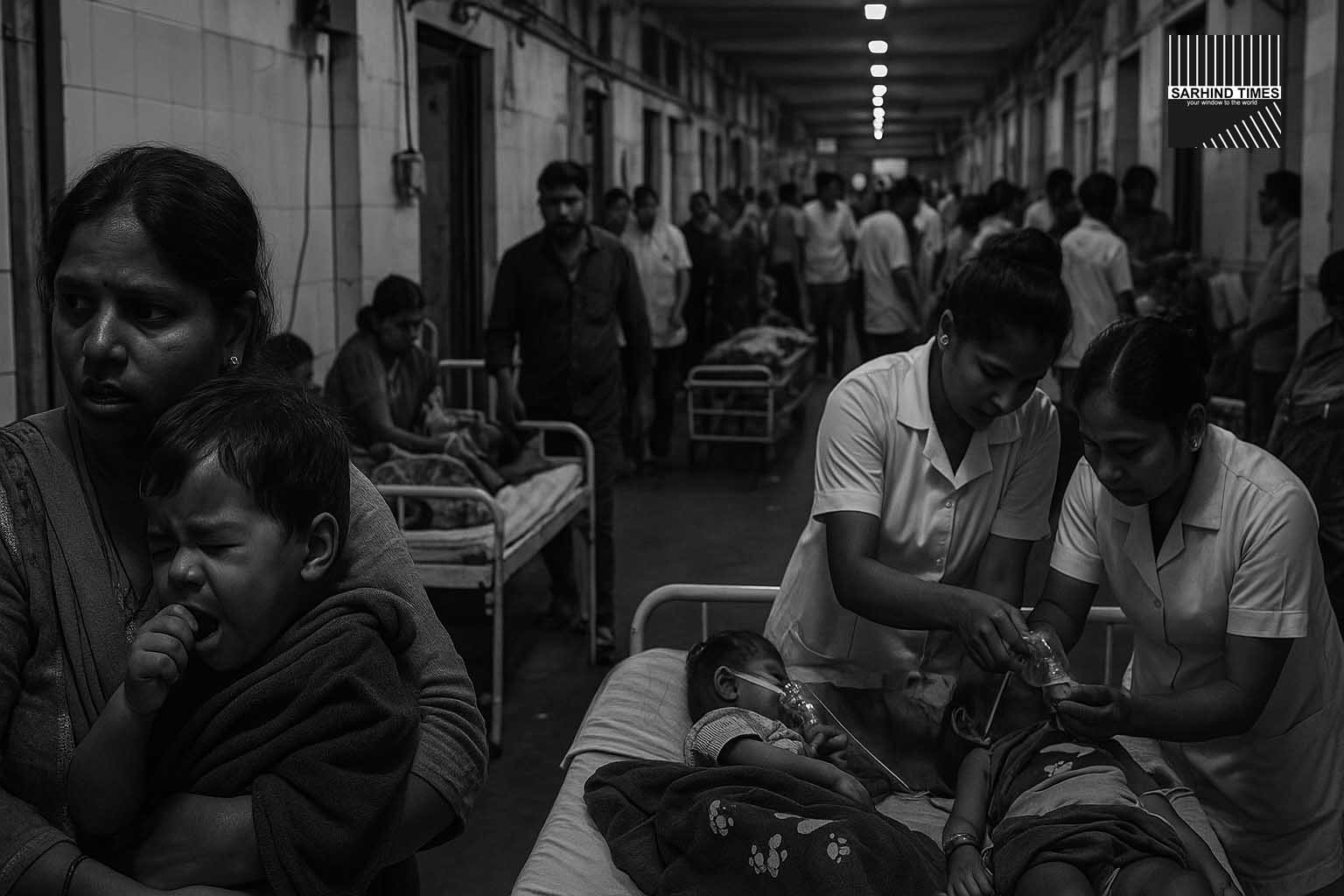
Hospitals report a sharp rise in respiratory syncytial virus cases among infants and young children as winter onset intensifies viral spread.
Dateline: New Delhi | (Asia/Kolkata)
Summary: The Union Health Ministry has issued a nationwide alert after several states reported a sudden spike in pediatric respiratory syncytial virus (RSV) cases. Hospitals are witnessing increased admissions of children—with infants being the most vulnerable—prompting the Centre to mobilise rapid response teams, strengthen surveillance, and direct states to activate pediatric emergency protocols. RSV, a highly contagious virus that affects the lungs and breathing passages, spreads rapidly during winter and can cause severe complications in young children if untreated.
1. Health Ministry issues nationwide alert
The Union Health Ministry has issued a national advisory following a significant rise in respiratory syncytial virus (RSV) cases being reported across pediatric hospitals in multiple states. With winter settling in across northern and central India, public hospitals in Delhi, Rajasthan, Uttar Pradesh, Maharashtra, Karnataka, and West Bengal are recording unusually high numbers of infants presenting with wheezing, persistent cough, difficulty breathing, and high fever.
The advisory, sent to all state health departments, directs hospitals to increase pediatric ICU preparedness, stock essential medicines, expand oxygen availability, and ensure that emergency triage units are fully functional. The Ministry has also deployed rapid response teams to districts showing sharp increases in admissions.
2. RSV: A familiar virus returning with unexpected intensity
RSV is not new—India sees waves of infections almost every winter. However, pediatricians and virologists say this year’s pattern is unusual because of:
- Earlier-than-expected seasonal onset
- Higher rate of severe cases
- Increased hospitalisation in infants below two years
- Co-infections with influenza and adenovirus
- Longer duration of symptoms
Doctors warn that infants, premature babies, and children with asthma, congenital heart disease, or low immunity are at the highest risk.
3. Hospitals witnessing sharp rise in admissions
Several children’s hospitals have reported a 30–40% jump in respiratory cases over the last two weeks. Ward occupancy in pediatric wings has risen sharply, prompting hospitals to convert general wards into temporary respiratory units.
At a major children’s hospital in Delhi, doctors said nearly 60% of their current respiratory admissions are linked to RSV or RSV-like symptoms.
“We are seeing more infants requiring oxygen support this year. The severity in younger children is concerning,” a senior pediatric pulmonologist said.
4. Why RSV spreads rapidly among children
RSV spreads through respiratory droplets and contaminated surfaces. Its contagious nature makes it particularly dangerous in crowded households, day-care centres, schools, and low-ventilation environments—conditions common during winter.
The virus is also known for causing bronchiolitis, a lung infection where small airways swell and fill with mucus, resulting in laboured breathing, especially in babies. Without timely intervention, RSV can lead to pneumonia and require ICU support.
5. Government mobilises rapid response teams
To prevent widespread outbreaks, the Health Ministry has deployed district-level rapid response teams (RRTs) to evaluate the severity of local surges, inspect hospital readiness, and coordinate with state surveillance units. These teams will:
- Collect clinical and epidemiological data
- Increase monitoring through the Integrated Disease Surveillance Programme
- Strengthen sample-testing capacities in regional virus labs
- Ensure hospitals follow triage and isolation protocols
- Issue weekly situation updates
Central teams have been asked to prioritise high-density urban areas and districts where pediatric hospital beds are filling rapidly.
6. States activate winter preparedness protocols
States have been instructed to escalate winter-specific preparedness measures, including:
- Dedicated pediatric oxygen wards
- Round-the-clock emergency services
- Increased availability of nebulisers, steroids, and bronchodilators
- Strict hygiene and sanitisation measures in hospitals
- Expanded outpatient hours to reduce emergency rush
- Isolation zones for contagious respiratory infections
Several state governments have also launched public-awareness campaigns urging parents to monitor symptoms closely and avoid crowded indoor spaces with infants.
7. Parents advised to look for early warning signs
Pediatricians emphasise that early detection is critical. The Health Ministry has shared a list of symptoms that parents must watch for:
- Rapid or troubled breathing
- Chest sinking while breathing
- Persistent high fever
- Blue lips or fingertips
- Inability to feed properly
- Unusual lethargy or irritability
Doctors say timely medical care significantly reduces complications.
8. Co-infections worsening clinical outcomes
Hospitals are also reporting children testing positive for more than one respiratory virus at the same time—mainly RSV with influenza, rhinovirus, or adenovirus—which is leading to prolonged illness.
Pediatric infectious-disease specialists say co-infections strain the lungs more aggressively and require intensive monitoring.
9. Impact on schools and day-care centres
Some schools in northern India have issued advisories asking parents not to send symptomatic children to class. Day-care centres have stepped up sanitisation, ventilation, and mask usage for staff members handling infants.
Experts say schools must strictly implement sick-child policies during winter to avoid mass spread.
10. Pediatric specialists call for additional precautions at home
Doctors advise families to follow strict hygiene practices to reduce spread among infants and toddlers. Even minor lapses—like not washing hands after returning home or kissing a symptomatic sibling—can infect babies within hours.
Recommended precautions include:
- Keeping infants away from sick family members
- Regular handwashing with soap
- Using masks when adults have cold or cough symptoms
- Avoiding indoor gatherings during peak winter weeks
- Cleaning toys, doorknobs, and commonly touched surfaces
- Maintaining good ventilation at home
Pediatricians stress: “Infants cannot communicate discomfort. Parents must act early.”
11. Why RSV is more dangerous for infants than older children
RSV can affect individuals of all ages, but infants under six months face the highest risk due to narrow airways and developing immunity. Even a small amount of swelling or mucus can obstruct their breathing, forcing them to breathe rapidly and shallowly.
Premature babies and infants with prior NICU stays are particularly vulnerable. Doctors urge parents of newborns to limit unnecessary exposure during the winter months.
12. Oxygen demand rising again in children’s hospitals
A concerning trend this season is the increased requirement for oxygen support among RSV-infected infants. Several hospitals reported that more children are needing nasal cannula oxygen or high-flow nasal therapy compared to last year.
Health officials have asked states to ensure sufficient oxygen cylinders, concentrators, and pediatric-sized masks in all district hospitals.
13. Diagnostic labs witness spike in RSV testing
Both government and private labs report higher RSV test volumes owing to prolonged cough, wheezing, and difficulty breathing seen in children visiting outpatient departments.
While many cases can be diagnosed clinically, laboratory confirmation is often needed in severe cases or when co-infection with influenza or COVID-19 is suspected. The Ministry has asked labs to prioritise pediatric samples.
14. No specific antiviral treatment — supportive care is key
There is currently no specific antiviral medication for RSV. Treatment focuses on:
- Maintaining oxygen levels
- Hydration
- Nasal saline and suction
- Nebulisation in severe cases
- Antibiotics only if bacterial infection is suspected
Doctors caution parents against self-medicating infants using cough syrups or steroids without prescription.
15. New preventive tools emerging globally
Several countries have begun using monoclonal antibody injections for high-risk infants to prevent severe RSV disease. India is currently evaluating these options for selective rollout, particularly for vulnerable groups such as premature newborns.
Public health experts say long-term solutions require investment in both vaccination research and maternal immunisation programmes.
16. Government intensifies public health communication
The Health Ministry has launched widespread awareness campaigns across television, radio, social media, and district-level outreach programmes. These advisories emphasise simple but life-saving steps such as early detection, home isolation, and avoiding over-the-counter cold medications for infants.
Many states are printing RSV education materials for distribution in Anganwadi centres, maternity clinics, and schools.
17. Global RSV trends show similar winter surges
Countries across North America, Europe, and East Asia have reported strong RSV waves this season, with some seeing multi-virus respiratory surges. Experts say pandemic-related immunity gaps, indoor crowding, and fluctuating climate conditions are contributing to unpredictable patterns.
India’s surge mirrors global trends, suggesting the country must prepare for stronger winter waves in coming years.
18. Health economists warn of rising pediatric healthcare load
The sudden influx of respiratory cases has increased outpatient and emergency visits at government hospitals, straining limited pediatric staff. Health economists warn that if RSV peaks alongside flu and COVID-19 waves, the triple burden could severely stretch the system.
Several states are now considering temporary pediatric duty rosters, extended shifts, and telemedicine triage support to reduce hospital congestion.
19. What parents should do when symptoms appear
Doctors advise parents not to wait for symptoms to worsen. If a child shows difficulty breathing, refusal to feed, chest in-drawing, or persistent high fever, immediate medical attention is necessary.
Home remedies like steam inhalation may help older children but are dangerous for infants and should be avoided.
20. Final outlook: A critical winter for children’s health
The nationwide alert underscores how fragile pediatric health becomes during winter viral peaks. RSV, though common, can quickly escalate into a medical emergency for young children. Early diagnosis, preventive action, and hospital readiness are crucial in reducing complications and deaths.
Public health officials say India must prepare for a long season of respiratory infections ahead, while also strengthening long-term pediatric health systems and virus surveillance.
With parents, hospitals, schools, and governments working in tandem, experts believe the current RSV surge can be managed effectively without overwhelming the healthcare system.



+ There are no comments
Add yours