
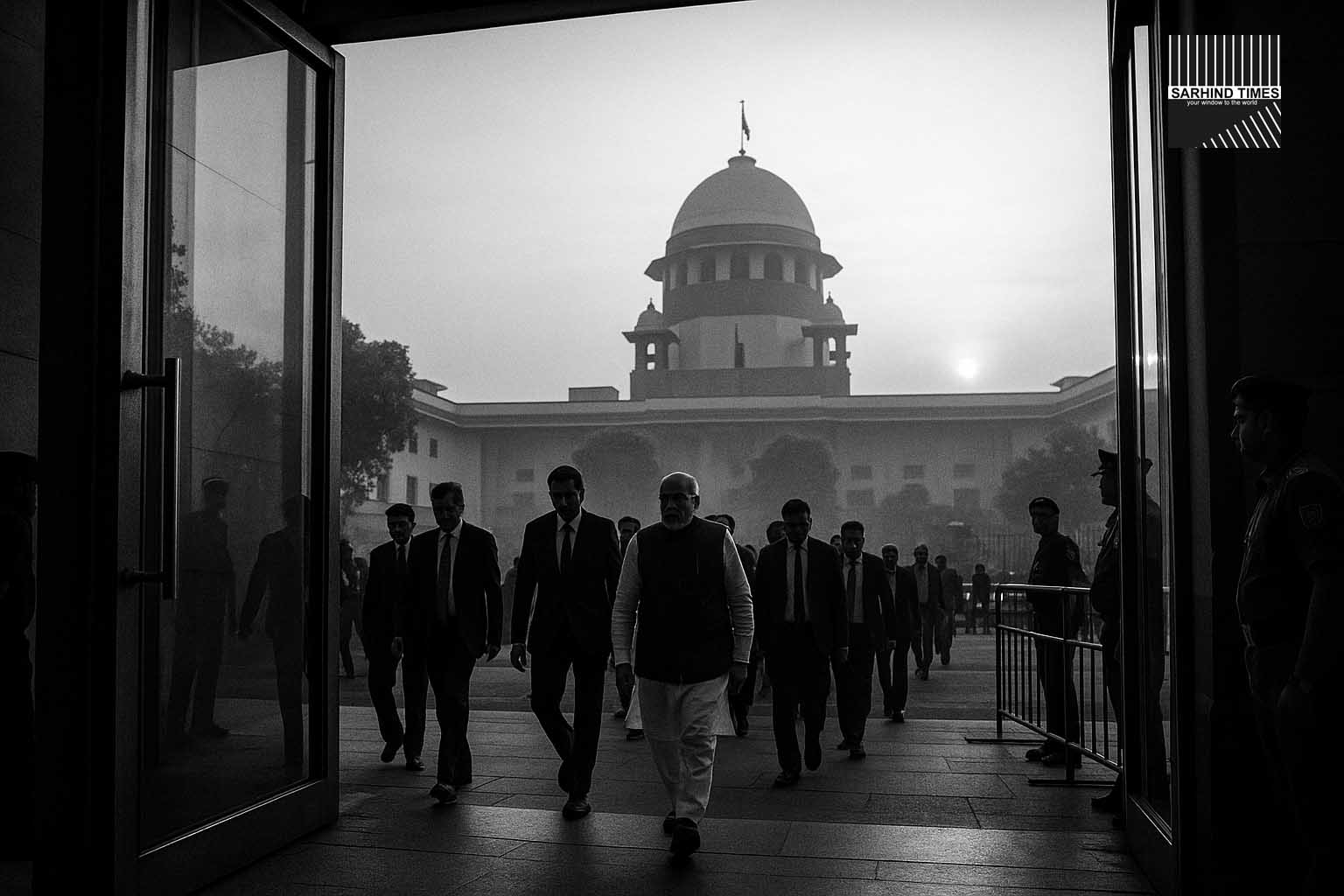
Major regulatory overhaul aimed at easing business compliance and building trust-based governance framework across India
Dateline: New Delhi | November 19, 2025
Summary: The Indian government has unveiled the third edition of the Jan Vishwas Bill (3rd Edition), designed to decriminalise numerous legacy laws, streamline regulatory burdens, and pivot the regulatory framework towards “trust-based governance”. The move signals a strategic push to boost ease of doing business, nurture investment, and accelerate India’s transition to a developed-economy mindset.
The announcement and its context
In a statement at the curtain-raiser event of the Federation of Indian Chambers of Commerce & Industry (FICCI) 98th Annual General Meeting, the Minister for Commerce and Industry, Piyush Goyal, declared that the government has prepared the third edition of the Jan Vishwas Bill, which will further decriminalise certain offences, reduce compliance burdens for citizens and businesses, and signal a shift towards trust-based governance. The minister stated that the model of regulation is now moving “from Virasat to Vikas to Vishwas” — from heritage through development to trust. According to him, the Bill responds to critical feedback on regulatory overload, redundant offences and red-tape that have hindered growth, investment and the ease of doing business. (source: Times of India)
The Bill is being pitched as part of a broader economic-strategy push: India’s ambition to become a self-reliant economic powerhouse, create millions of manufacturing jobs, attract global capital and build a modern regulatory ecosystem. The government is seeking to send a strong signal that the regulatory-environment burden will reduce, and therefore investors—domestic and international—should take note.
What the Jan Vishwas Bill has done so far
The Jan Vishwas Bill was first launched to simplify laws and promote better compliance culture across India. The first two editions focused largely on decriminalising minor offences under various Acts, shifting certain punishments from criminal to civil penalties, and removing obsolete provisions. One of the core aims has been to reduce the burden on small business-owners and ordinary citizens who were being penalised for procedural non-compliances rather than substantive wrongdoing.
According to government sources, the first edition resulted in de-criminalisation of offences under laws such as the Public Trusts Acts, certain provisions of labour laws, and minor violations under the Environment (Protection) Act. The second edition ramped up the effort by examining over 1,300 offences and replacing many penal provisions with monetary fines or compliance directions. These efforts correlated with India climbing higher in global ease-of-doing-business rankings (though the methodology has evolved) and the government emphasising transparency and automation in enforcement.
With the third edition now ready, the government aims to go further — tackling regulatory offences that have been flagged by industry, targeting sectors such as manufacturing, labour, environment, MSME compliance, social-welfare laws and technology regulation.
Key features of the third edition
While the full text of the Bill has not yet been formally tabled in Parliament, ministerial briefings and industry sources point to the following key elements:
- Broad decriminalisation: Dozens of legacy offences currently punishable by imprisonment (often up to two or three years even for procedural lapses) will be converted into civil penalties (monetary fines) or regulatory directions. This is expected to reduce litigation burden and remove criminal-justice risk for businesses and individuals for minor infractions.
- Escalation-based enforcement: First-time non-compliances of certain procedural norms will trigger warnings, remedial directions or monetary penalties; repeat offences might invite harsher action. The idea is to move from “punish first” to “guide and correct” for lesser offences.
- Single-point digital compliance portals: The Bill proposes to mandate digital portals in each central and state regulator where businesses can view outstanding compliance obligations, receive warnings and instantly pay fines without litigation. This is part of the government’s “single-window, single portal” vision for regulatory oversight.
- Freeze on arrests for procedural-only offences: One of the big changes being mooted is prohibition of arrest (or prosecution) of individuals in cases where the only wrongdoing is a procedural non-compliance — unless it is wilful, fraudulent or causes public harm. This aims to prevent business owners, directors or professionals from facing criminal detention because of paperwork delays or missed filings.
- Audit-trail for regulators: The Bill proposes that each regulatory authority must publish annual reports on enforcement actions taken (warnings, fines, prosecutions), thereby enabling audit, public oversight and consistency in enforcement. Regulators will also have to benchmark performance on turnaround times for compliance matters.
- NRI and foreign investor protections: Given India’s push to raise foreign direct investment (FDI) and attract global capital, the Bill will include specific provisions to protect foreign investor rights, ensure more transparent approvals and reduce backlog for approvals and inspections. Many industry insiders indicate that the Bill flags sectors such as IT-HW manufacturing, renewable energy, defence and aviation as early beneficiaries.
- Phased roll-out and sunset clauses: To avoid abrupt disruption, the Bill is likely to be implemented in phases, with some provisions coming into effect immediately after Presidential assent, and tougher offences being retained or re-examined in a subsequent tranche. The Bill may also include “sunset” clauses for pilot projects and regulatory-sandbox environments for new sectors such as AI, fintech and drone-ecosystems.
The government’s messaging emphasises that the Bill does not skip accountability. Serious crimes, environmental harm, money-laundering, terrorism financing and corruption offences will remain firmly criminal. But the aim is to recognise that not all regulatory non-compliances should attract the stigma and consequences of criminal law.
Why now? Strategic urgency meets political window
The timing of the announcement is significant. India is in a phase where economic growth rates remain high but need consolidation, investment flows are cooling globally, and labour-market transitions require faster structural change. The government has flagged manufacturing growth, global supply-chain shifts and “India as alternative to China” positioning. Within this ecosystem, red-tape, regulatory uncertainty and fear of criminal enforcement for procedural lapses are seen as headwinds.
Politically, the ruling coalition also sees merit in highlighting governance reforms ahead of upcoming state elections and general electoral cycles. By projecting a “trust-based governance” narrative, the government intends to appeal not only to businesses but to citizens who feel burdened by compliance, litigations and enforcement hurdles.
For foreign investors, the message is a recalibrated India: simpler rules, lighter enforcement for routine matters, heavier focus on big-ticket structural reform. For domestic businesses—especially MSMEs—the hope is removal of fear of sudden raids or arrests for missed filing deadlines or minor infractions.
Implications for business, economy and investment
From an economic standpoint, the third edition of Jan Vishwas Bill may translate into several favourable shifts:
- Reduced legal risk premium: Investors often factor in regulatory enforcement risk, litigation risk and non-compliance risk. By converting many offences into civil categories, the “risk premium” for investment in India may reduce, potentially leading to greater investment inflows.
- Accelerated project execution: Businesses cite that delays arise not just from approvals but from fear of sanction for minor omissions. A cleaner compliance ecosystem could unlock faster business launch, expansion, and sectoral pivoting.
- Improved MSME sentiment: Smaller firms often suffer from punitive enforcement rather than value creation. The Bill may ease the burden on them and improve their growth and survival prospects.
- Strengthened “Ease of Doing Business” ranking push: India has improved its rankings over years but faces tougher peer competition. A visible legal-reform push may boost India’s perception internationally, aiding investment flows and economic diplomacy.
- Potential for structural shift in enforcement culture: By emphasising digital portals, warnings before prosecutions and audit-trail mandates, regulators may move toward more transparent, consistent, and predictable enforcement — an intangible but vital improvement for capital and confidence.
However, analysts caution there are important caveats. De-criminalisation alone doesn’t ensure outcomes. Unless accompanying reforms in regulatory architecture, digital-readiness, inter-agency coordination and state-level adoption happen, the benefits may yet remain aspirational. Further, past reform announcements have sometimes foundered at the state-implementation level, given India’s federal structure.
Challenges, risks and resistance
The Bill faces several challenges on its path to becoming effective:
- State-level alignment: Many of India’s regulatory offences exist at state level under state statutes. If the central Bill doesn’t sufficiently incentivise states or accompany financial support, uptake may be inconsistent.
- Implementation-gap risk: Re-writing laws is one thing; changing on-ground enforcement culture is another. If regulators continue to use criminal sanctions informally, the reform will lose credibility.
- Potential political blow-back: Some opposition voices have already raised concerns that de-criminalisation may signal softening of enforcement on white-collar crime or business irregularities. The government will need to balance deregulation with accountability.
- Legal-drafting complexity: Re-working large numbers of offences, ensuring no loopholes, aligning with constitutional norms (due-process, fair trial) and managing transition of past cases pose drafting and transitional-justice challenges.
- Public trust and perception: If businesses are perceived to get easier treatment while citizens face stricter enforcement, the trust-based narrative may back-fire. Equity in enforcement will be key.
Industry analysts emphasise: “The devil is in the detail. If the rules are not uniformly adopted across states, and if regulators continue past patterns, then the third edition may end up as symbolic rather than transformative.”
Political dynamics: How the parties are reacting
The governing coalition has welcomed the announcement enthusiastically. Senior ministers and industry-fits have portrayed the Bill as a key plank in the government’s reform agenda and towards its “developed-India by 2047” vision. For example, Minister Goyal emphasised the concept of trust-first governance, reflecting a shift in tone from compliance-fear to cooperative enforcement.
The opposition has responded with measured caution. Some critics argue that while de-criminalisation is welcome for minor offences, the Bill must clearly exclude serious offences (fraud, corruption, environmental devastation) from dilution. Opposition leaders have also flagged the need for robust safeguards against regulatory capture, and insisted that businesses should not be given carte blanche under the guise of “ease”.”One thing is clear – we support simplification, but not weakening of enforcement,” one opposition spokesperson said.
Within state political circles, some parties are evaluating how the Bill will impact state-level laws and enforcement regimes. States that have seen high litigation or regulatory enforcement in areas such as pollution, land use or labour compliance may view the central push either as a relief or as a dilution of their oversight powers.
Comparative view: What other countries have done
Many jurisdictions globally have experimented with moving from criminal to civil penalties for regulatory non-compliances. For example, some OECD countries classify non-serious breaches of financial-markets law as administrative fines rather than criminal sanctions, thereby reducing burden on courts and lowering entry-barriers for business. The shift in India reflects a global trend of pragmatic regulation rather than top-heavy enforcement culture.
In Singapore for example, regulators often issue warnings or “fit-and-proper” notices for firms rather than immediate criminal action. In the United States, some state regulators provide “safe-harbour” compliance windows before prosecutions. India’s third edition seeks to lean into that global play-book while adapting it to its size, federal complexity and ambition.
What the Bill means for citizens and small businesses
For an everyday citizen or micro-business owner, the Bill could make a tangible difference. Imagine a small manufacturer in a Tier-2 city who missed a filing deadline for a safety certificate or an export-related form. Under the older regime, such omissions could lead to raids, prosecution or imprisonment for the director. Under the new model, a warning, corrective direction or fine may replace the fear-driven arrest risk. That reduces stress, lowers legal costs, enhances predictability and frees entrepreneurial energy.
For the millions of gig-economy workers, start-ups and freelancers, the promise is similar: fewer paperwork-traps, fewer criminal-enforcement drills on minor obligations, and more focus on growth, innovation and delivering value rather than complying with arcane statutes. In short: less time in court, more time in creation.
Paths forward: Adoption, roll-out and monitoring
The government has indicated a phased roll-out strategy. Key next steps include:
- Tabling the Bill in the next session of Parliament and pushing for passage during the upcoming Budget session.
- Issuing draft rules and regulatory guidelines within 30–60 days of passage, allowing stakeholders to give feedback.
- Constituting a high-level oversight committee (possibly under the Cabinet Secretary) to review regulatory authorities and monitor the shift from criminal to civil enforcement across sectors.
- Publishing bi-annual reports from each regulator on enforcement outcomes, compliance burden, time-taken for approvals and number of prosecutions vs warnings. This will build transparency and accountability.
- Providing training and capacity-building grants to state regulatory agencies, since uniform adoption across federal India is crucial. States will be asked to align their laws with the central framework or provide justifications for deviations.
In addition, the government may release a compliance burden dashboard for citizens and business. This will publicly show how many regulatory offences have been shifted to civil penalty status, how many remaining are still criminal, and how enforcement trend-lines compare year-on-year. That dashboard will become a key indicator of success.
Looking ahead: Potential impact and caution flags
If implemented effectively, the third edition of Jan Vishwas Bill could help India escape one of the classic growth traps: regulatory suffocation. By injecting predictability, reducing fear of enforcement and freeing resources for value-creation rather than litigation, the Bill offers a pathway toward higher productivity, better business sentiment and stronger investment flows.
However, the reform is not a guarantee. Key caution flags include:
- If enforcement culture remains unchanged — still heavy on arrests and criminal action for routine non-compliance — then the de-criminalisation message will ring hollow.
- If states do not move in tandem, businesses will face split jurisdictions, varying rules and confusion — undermining the single-window unity goal.
- If regulators lose capacity or political independence in the name of “trust”, there is a risk of weaker oversight, weaker consumer protection or higher corporate impunity.
- If the communication remains vague, with stakeholders unclear which offences have been de-criminalised and which remain in criminal category, it may create confusion and litigation rather than clarity.
In many ways, success will depend not on the paper of law but on the practice of governance.
Conclusion: Reforming rules to release energy
The unveiling of the third edition of the Jan Vishwas Bill marks a notable moment in India’s regulatory journey. It recognises that growth depends not just on policies on paper, but on how law-enforcement, business, citizens and regulators interact in daily life. The message is: we trust you, now deliver — with rules that enable, not disable.
Whether this signals a genuine shift in regulatory culture or a superficial headline will depend on execution. For India’s ambition of becoming a developed nation by 2047, the enabling environment must be real, transparent and predictable. The Bill may be a vehicle — but only if the roadway is built and the traffic flows smoothly.
In the end, the aim is less about penalising mistakes and more about empowering creation. If India gets that balance right — between trust and accountability — then the third edition of Jan Vishwas may become a landmark. If it doesn’t, it risks becoming another reform announcement lost in the maze of implementation. For businesses, investors, workers and citizens alike, the horizon is clear: lighten the burden, raise the ambition, and deliver for tomorrow.



+ There are no comments
Add yours