
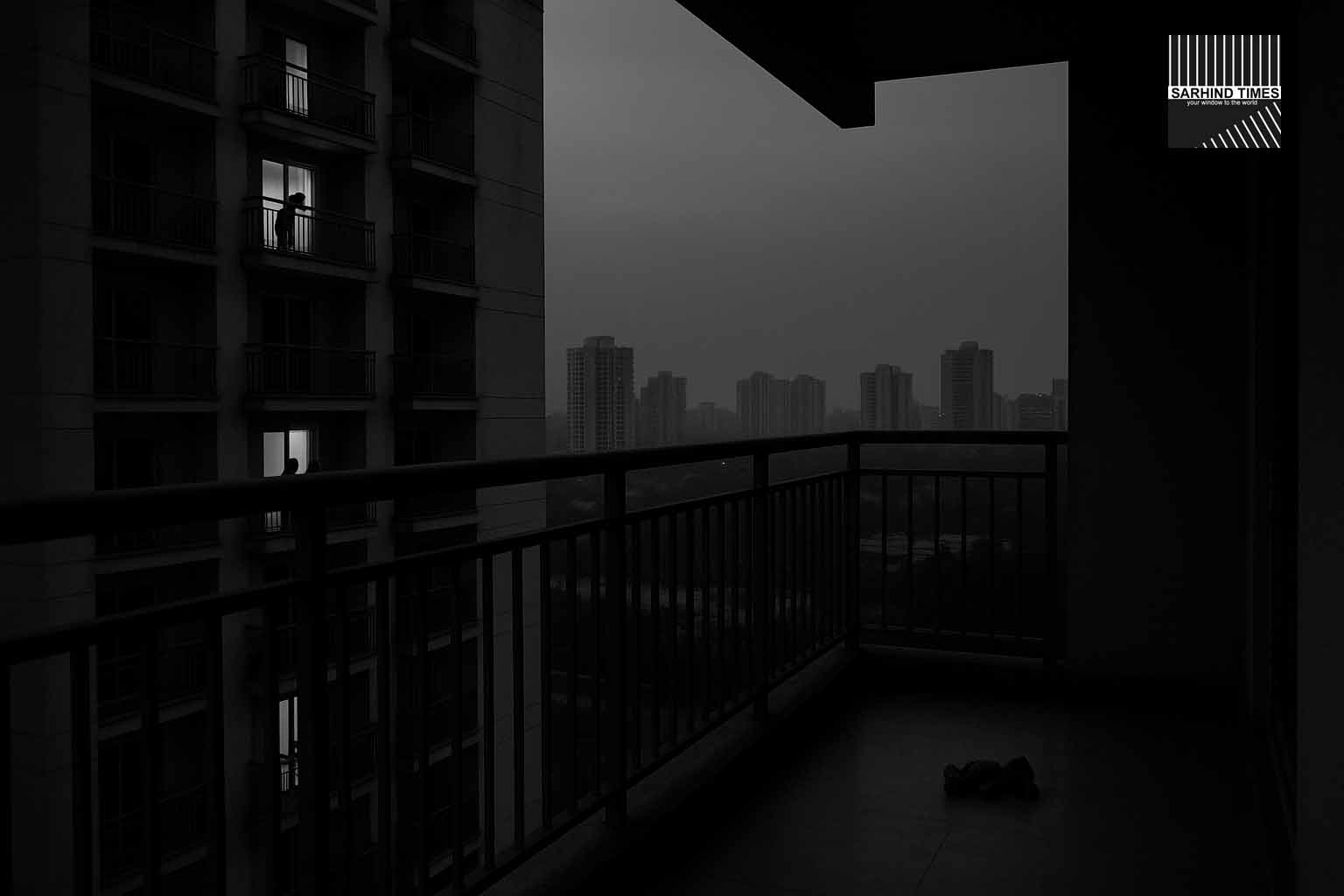
Residential safety spotlight sparks after a young child’s fatal fall from the 22nd floor in Gurugram’s Pioneer Presidia Society
Dateline: Gurugram | 17 November 2025
Summary: A five-year-old boy lost his life after falling from the 22nd floor of a residential apartment in Gurugram’s Sector 62, raising urgent questions over high-rise safety standards and responsibilities of society management. The incident has triggered local demands for stricter child-safety protocols in urban homes.
1. The incident
On the afternoon of Sunday, the calm of the upscale residential complex Pioneer Presidia Society in Sector 62, Gurugram, was shattered by tragedy. A five-year-old boy, identified by police as Rudra Tej Singh, fell from the 22nd floor balcony of the building and died shortly after being taken to the hospital. At the time of the incident, he was reportedly playing with the household helper on the ground floor of the society and then proceeded inside the flat. The helper, returning from the ground level, found that the main gate of the apartment had shut behind the boy and he was left alone inside.
According to supervisory police staff, the child climbed out on to a balcony, reached up onto a clothes-drying rod, called out for help and lost his balance. The fall was witnessed by residents of neighbouring flats who rushed him to a nearby hospital, but he was declared dead on arrival. Police have sent the body for post-mortem and are examining CCTV footage of the lift lobby, stairwell and floor corridor to ascertain the precise sequence. The helper’s statement is being recorded and society records inspected.
2. Profile of the building and safety context
Pioneer Presidia Society is a large high-rise apartment complex located in one of Gurugram’s fast-developing residential zones. With multiple towers exceeding 20 floors, it typifies the shift of the city’s residential profile from low-rise to vertical living. While the elevation gives residents extended views and easier commuting access, it also introduces elevated risk-profiles—especially where young children are concerned.
High-rises in the Gurgaon-NCR region often host families with young children; balconies, railings, drying rods and open windows become latent hazards. Building management protocols, society bye-laws and resident behaviour all influence safety outcomes. In this case, the fact that a child reached a drying-rod set a chain of events that ended in a fatal outcome—leaving many to question how such access was possible in the first place.
3. Sequence of events as reconstructed
In the detailed reconstruction offered by the Society’s security and police investigators:
- The child and helper had played outside the flat earlier in the afternoon and were returning to the 22nd floor flat via lift.
- As the door opened on the relevant floor, the main gate of the flat shut behind the helper, who exited but did not realise the child remained inside.
- Alone in the corridor and unsettled, the child entered the balcony area and climbed a vertically mounted drying rod attached to the balcony grill in an attempt to attract attention from neighbours.
- At that height, the rod was slippery and the child lost hold, falling onto the pavement below.
- Neighbours called the emergency services and an ambulance was arranged; hospital efforts were unable to revive him and he was declared dead.
Investigators are checking the locking mechanism of the gates, balcony grill design, rod fixation and prior complaints or safety audit records of the building. They are also reviewing whether the child had access to unsupervised spaces that should have been restricted given his age.
4. Immediate response from authorities and society management
The Gurugram Police said on record that an FIR has been registered under sections covering accidental death due to negligence. The police emphasised that investigations would cover whether the building management, society committee or parents bear liability for any lapses. A senior officer noted that such incidents prompt deep reviews of urban housing safety protocols.
The society committee met within hours of the incident and issued a statement expressing “deep sorrow” and offering cooperation to police. The committee pledged to convene an extra-ordinary general meeting to review balcony and corridor safety as well as child supervision in high-rise zones. According to residents, society management also arranged counselling for the family of the boy and deployed additional security patrols to guide families with young children.
5. Legal ramifications and accountability questions
Legally, the incident falls within a grey zone. While the immediate cause is a fall and the death is treated as accidental, the broader question revolves around negligence. Could the flat gate lock, balcony drying-rod design or society’s oversight of children’s mobility constitute negligence? Under Indian jurisprudence, society management committees can be held partially liable if they fail to maintain safe premises. Parents and helpers likewise may be held responsible under the principle of supervision of minors.
Furthermore, the case might prompt civil claims from the deceased’s family against the society for damages and against the building management for structural or maintenance lapses. On the criminal side, if investigations find clear negligence, sections related to culpable negligence leading to death may be invoked. The police are also exploring whether similar earlier complaints exist against this tower.
6. Child-safety in high-rises: broader context
The tragic fall sheds light on an often-overlooked dimension of urban housing—child-safety within high-rise apartment living. Experts point out several recurring hazards:
- High-level balconies and railings often lack optimal height or protective barriers for young children.
- Climbing fixtures such as drying rods, grills or movable furniture near edges — combined with inadequate supervision — elevate risk.
- Flat-gates that lock mechanically from inside may trap children without adult supervision.
- Shared corridors, access to rooftops or maintenance platforms that children can access unsupervised.
- Lack of designated play-zones within high-rise societies, which pushes children to use balconies or corridors for play.
Urban studies indicate that metropolitan cities are witnessing increasing number of accidents involving young children in towers, partly because families move vertically but supervision practices and architectural design lag behind. This incident in Gurugram echoes a pattern: young children in high-rises are at risk unless deliberate safety design and behaviour change accompany rapid urban living transitions.
7. Reactions from residents and families
In Pioneer Presidia, the mood among residents remains somber. Parents expressed shock that a small child could access potentially dangerous balcony fixtures. Several mothers told visiting journalists they would now restrict their children’s balcony access and call for society-wide audits of balcony grilles and fixtures.
The deceased child’s family, while reeling from loss, has publicly urged other families to be extra vigilant and called for building-wide safety checks. One relative named the child as playful and cheerful, making it harder to digest the sudden outcome. The household helper, she said, was “trying her best” but got separated due to the locked gate on returning to the flat.
8. Policy and regulatory reflections
The larger governance questions raised by this incident include building regulation enforcement, society-management accountability and residential safety norms. In Haryana and Delhi-NCR, high-rise growth has outpaced mandated safety checks. While building codes call for balcony guard-rails of minimum height, non-structural fixtures like drying rods are rarely checked during certifications.
Moreover, societies often rely on self-regulation rather than formal audits. Child-safety measures — such as locks, restricted balcony access, child-proof gates and designated play zones — remain voluntary. Some argue new regulations should require certified safety audits for high-rise societies every few years, especially for buildings above a certain height and with large numbers of child-resident families.
9. Expert commentary
Architectural safety experts view the incident as avoidable. Dr. Anjali Sharma (urban safety consultant) commented: “When children are present in high-rise buildings, balconies become vertical playgrounds unless designed otherwise. The presence of a drying-rod near the balcony edge created a climbing surface. The gating system trapped the child inside unsupervised. These combined to cause tragedy.”
The resident helper-supervisor system also came under scrutiny. Societies often employ helpers/guards for multiple tasks, but dedicated child-safety supervision is rare. A society resident noted: “We treat balconies as zones of fresh air, but to a five-year-old they can appear like accessible platforms. We never imagined the drying-rod would become a danger.” Residential psychologists added that in nuclear-family contexts, children left with helpers may explore unsupervised spaces — balconies, corridors — and risk exposure to falls.
10. Comparative data and incident patterns
While official national statistics on falls from high-rise buildings are limited, anecdotal media coverage from the NCR region shows increasing child-falls from balconies or windows in high-rise apartments. A case earlier this year noted a boy of eight falling from the balcony of a second-floor house in Gurugram. The risk intensifies with higher floors and greater unsupervised access. As vertical living intensifies in Indian cities, the need for preventive architecture and resident education grows.
11. What changes now? Society and municipal responses
Following the incident, Pioneer Presidia’s management announced several immediate steps:
- Inspection of balcony guards and removal or repositioning of drying-rod fixings away from the edge.
- Installation of child-safety locks on balconies and flat gates that prevent children from being locked in unsupervised.
- Organisation of a resident meeting within 48 hours focused on child-safety awareness for families with children below age 10.
- Proposed consultation with a certified safety-audit firm to evaluate structural and fixture hazards across all towers in the society.
On the municipal side, the Gurugram Municipal Corporation and the building regulatory-authority have been petitioned by residents to issue a circular reminding all high-rise societies of the need for child-proofing measures — balcony risk assessments, proper supervision and dedicated play zones. Some advocates expect that this incident could catalyse a policy review or inclusion of child-safety audits in building occupancy certificates.
12. Parental supervision and modern lifestyle pressures
Experts stress that architectural safeguards must be paired with behavioural supervision. In modern urban families, both parents may be working, children may be left for short periods with helpers or caregivers and may play unsupervised in corridors or balconies. Balancing that reality with safe design is critical.
In this case, the child was reportedly transitioning from the ground-floor play zone to the high-rise flat with a helper; the locked gate created a moment of vulnerability. Urban sociologists note that as families migrate into high-rises, communal play zones shrink, internal spaces become primary play areas and balconies become alluring. Society managements must recognise balconies are not incidental spaces for children but active risk zones.
13. The emotional and community impact
Beyond the technical issues, the incident has inflicted a deep emotional wound on the community. Many parents who had grown accustomed to the relative safety of gated high-rise living are now second-guessing complacency. A prominent local school’s parent-teacher group expressed anguish and called for immediate safety workshops; one parent said: “I never thought my child could fall from a balcony, we thought ground-floor risks were more.”
Residents of the same tower reportedly arranged a small vigil for the boy and his family, and cancelled scheduled social gatherings for the week out of respect. Some have offered to donate to the family while simultaneously pressing society to accelerate the safety audit process. The helper, visibly shaken, has been given leave and counselling support by the society’s security office.
14. Regional ramifications for high-rise safety in NCR and Haryana
This incident is likely to trigger sharper scrutiny of high-rise residential safety across the Delhi-NCR region. Haryana in particular has seen rapid vertical expansion in Gurugram, Faridabad and other districts; regulatory frameworks and society management practices often lag behind. As residents increasingly inhabit tall towers, accident-risks shift from road and construction hazards to internal residential hazards like balcony falls, unsupervised access, and fixture-based climbing.
In policy terms, discussions may accelerate around mandatory child-safety audits for high-rise societies, inclusion of balcony-guard height upgrades, and notification of building management responsibilities for children under specific ages. Civil society groups may push for public-policy changes requiring societies to publish safety reports and audit logs annually.
15. Final thoughts
What happened on that afternoon in Pioneer Presidia is tragic and avoidable. A combination of architectural access, momentary lack of supervision, and unsafely mounted fixtures allowed a brief window of hazard to open—and a young life ended. The incident offers a sobering reminder: in high-rise settings, danger often comes not from construction cranes or traffic rampages but from everyday spaces left unchecked—balconies, drying-rods, unsupervised children.
The policy fix will require physical audits, management accountability and parental vigilance. But execution will matter. If the response stops at condolence meetings and checks of rods, without longer-term strategy, this could become another statistic rather than a system-changing moment. In the end, what is needed is sustained vigilance: society committees that revisit child-safety audits annually, architects who design child-safe tools, and residents who treat balconies with the respect they demand. The cost of failure is more than bricks and mortar—it is life.



+ There are no comments
Add yours