
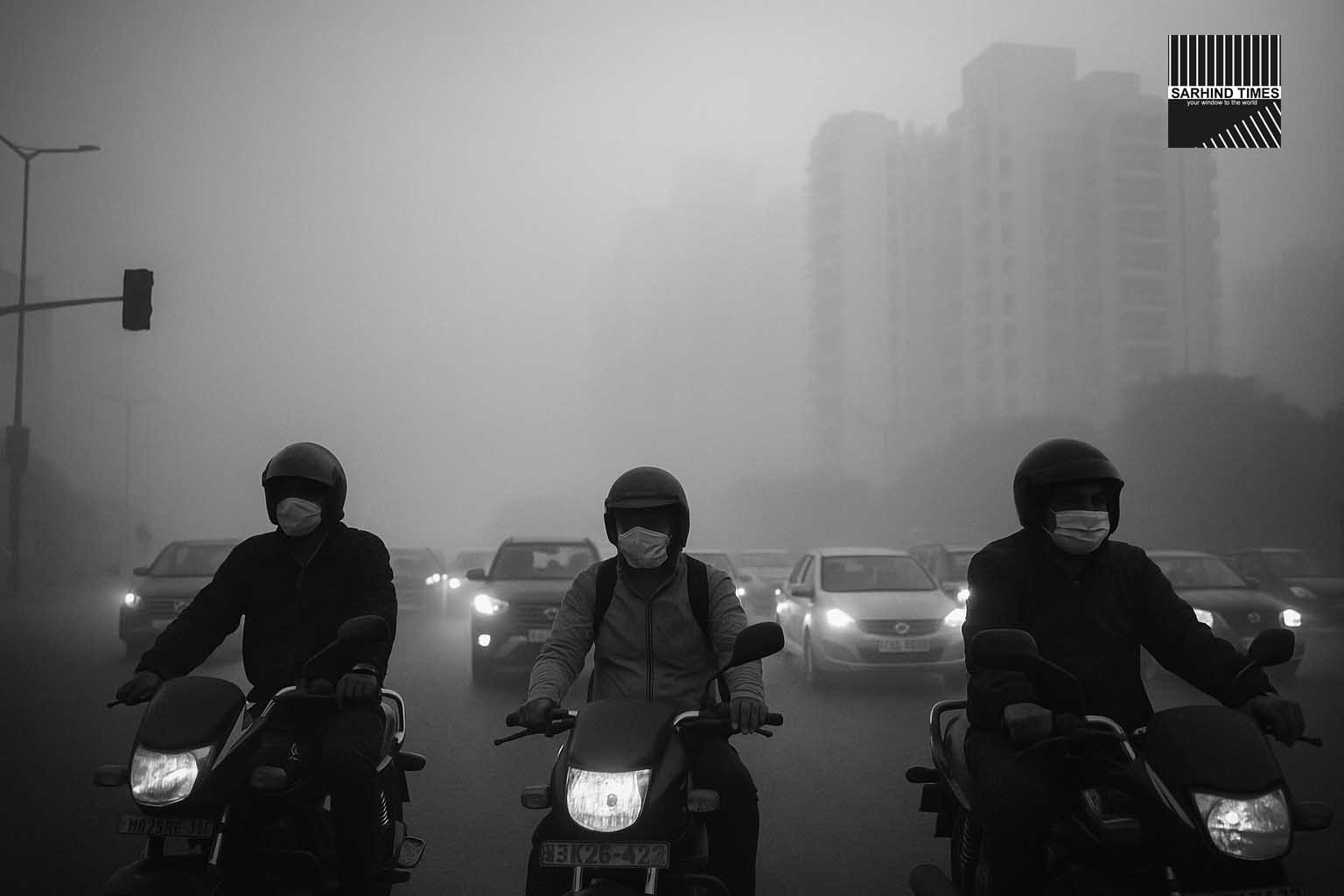
Seasonal smog intensifies across NCR; doctors report rise in respiratory cases and schools issue new health advisories
Dateline: Gurugram | November 16, 2025
Summary: Air quality in Gurugram slipped back into the ‘Very Poor’ category as stagnant winter winds, haze, and vehicular emissions combined to push AQI levels above 300 in several pockets of the city. Residents reported heavy smog during early morning and late evening hours, prompting renewed health alerts and warnings from environmental experts.
Smog Blankets Gurugram as AQI Levels Spike
Gurugram witnessed a significant deterioration in air quality over the weekend as the Air Quality Index rose sharply across multiple monitoring sites. The AQI hovered between 290 and 340 across sectors such as DLF Phase 3, Gwal Pahari, Sector 51, and Palam Vihar, placing the city firmly in the ‘Very Poor’ category once again.
With winter now making its presence felt and nights becoming cooler, a dense layer of smog settled across the city. Residents stepping out early in the morning reported limited visibility, irritation in the eyes, and a distinct smoky smell hanging in the air.
Commuters Face Low Visibility and Heavy Haze
Morning traffic slowed down considerably along Golf Course Road, NH-48, and Sohna Road as fog-like smog reduced visibility. Motorcyclists and cyclists covered their faces with scarves, masks, or bandanas to avoid breathing in the polluted air.
Several commuters reported mild headaches, coughing, and dryness in the throat during their morning commute, particularly those who travel long distances between Delhi, Gurugram, and Manesar.
Schools Issue Immediate Precautions for Students
Multiple schools across the city sent advisories to parents, warning them of poor air quality and requesting them to take extra precautions for children. Outdoor sports sessions, football and cricket practice, and early-morning physical training were temporarily suspended in several institutions.
Children with asthma, bronchitis, or allergies were advised to carry inhalers and avoid unnecessary outdoor exposure. Some schools even recommended that parents consider keeping vulnerable children at home until the AQI improves.
Hospitals Report Rising Respiratory Complaints
Healthcare facilities in Gurugram reported a noticeable rise in cases of breathlessness, wheezing, chest tightness, and chronic cough. Doctors noted the seasonal pattern: as winter approaches and pollution increases, respiratory illnesses surge across NCR.
Pediatric departments, in particular, saw increased footfall. Many children experienced aggravated symptoms of asthma or allergic rhinitis. Elderly patients and individuals with pre-existing lung or heart conditions also visited hospitals more frequently.
Why the Sudden Spike? Meteorologists Explain
Meteorologists attributed the worsening air quality to a combination of:
- Low wind speeds failing to disperse pollutants
- Temperature inversion causing pollutants to remain close to ground level
- Dry weather and no possibility of rainfall
- Increased emissions from vehicles due to winter traffic surges
- Construction activity across several developing sectors
The combination of these factors created the perfect atmospheric trap for particulate matter to accumulate in Gurugram’s air.
Vehicular Emissions Continue as the Largest Contributor
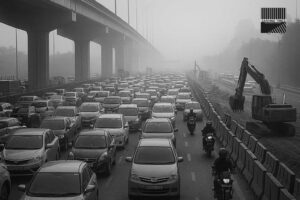
With more people returning to offices, weekend outings, and winter shopping crowds increasing, vehicle density on Gurugram roads remains high. Long queues at traffic signals, bumper-to-bumper movement at key intersections, and slow-moving traffic on NH-48 added to emissions.
Experts note that even though electric vehicle adoption is rising in the city, internal combustion engine vehicles still dominate and produce a significant share of PM2.5 pollutants.
Construction Dust Adds to the Crisis
Across several developing clusters—particularly along Dwarka Expressway, sectors 82–95, and Southern Peripheral Road—construction dust continues to rise. Inadequate covering of construction debris, irregular water sprinkling, and poorly contained excavation sites contribute to suspended particulate levels.
Residents living near these zones often complain about fine layers of dust settling on balconies, vehicles, and household surfaces.
RWAs Demand Stronger Enforcement from Authorities
Resident groups have expressed frustration over repeated seasonal pollution episodes. Many RWAs argued that authorities take only surface-level action—such as issuing fines or conducting inspections—while deeper systemic problems remain unresolved.
They want consistent monitoring of construction sites, better coordination between civic bodies, and transparent updates on pollution control measures in the city.
GMDA Steps Up Road Sprinkling and Sweeping Operations
In response to rising pollution, GMDA increased mechanized sweeping across major stretches like Golf Course Extension Road, Sohna Road, and IFFCO Chowk. Water sprinklers were deployed in high-dust zones to minimize particulate suspension.
However, environmental groups argue that while these measures help temporarily, they do little to address long-term structural issues.
Doctors Urge Residents to Take Precautions
Health experts recommend that residents:
- Wear N95 masks while outdoors
- Avoid early-morning and late-evening outdoor exercise
- Use indoor air purifiers if possible
- Stay hydrated to support respiratory function
- Consult doctors immediately if breathing issues worsen
They also urged special care for children, elderly individuals, and those with chronic lung disorders.
Businesses Feel the Impact
Offices in Cyber City and Udyog Vihar witnessed slight increases in sick leave requests, particularly from employees suffering from recurring respiratory symptoms. Outdoor workers—delivery executives, security personnel, traffic marshals, and construction workers—are among the most affected.
Fitness trainers, sports academies, and outdoor event organizers have experienced a drop in participation due to poor visibility and health advisories.
Environmental Experts Call for Structural Reforms
Environmentalists argue that Gurugram cannot rely solely on short-term measures like sprinklers or seasonal advisories. They call for:
- Stronger monitoring systems for construction dust
- Expansion of green cover across residential and commercial zones
- Faster shift to electric public transport
- Better inter-agency coordination
- Long-term health surveillance systems in vulnerable communities
They emphasize that only sustained structural reforms can break the annual pollution cycle.
Forecast: Smog Likely to Persist
Meteorological predictions show no signs of strong winds or rainfall in the coming days. Without these natural clearing events, pollution levels are expected to remain in the “Very Poor” range.
Residents are advised to stay updated on daily AQI readings and follow health advisories.
Conclusion: The Need for Long-Term Urban Resilience
As Gurugram enters the early winter phase, the city finds itself grappling with familiar challenges. Pollution has become a seasonal crisis that impacts public health, mobility, economy, and daily routines. While authorities continue to adopt preventive actions, long-term sustainable urban reforms remain essential.
For now, residents brace for another stretch of smog-filled days—hoping that policy, planning, and enforcement combine effectively to provide lasting relief in the months and years ahead.

+ There are no comments
Add yours