
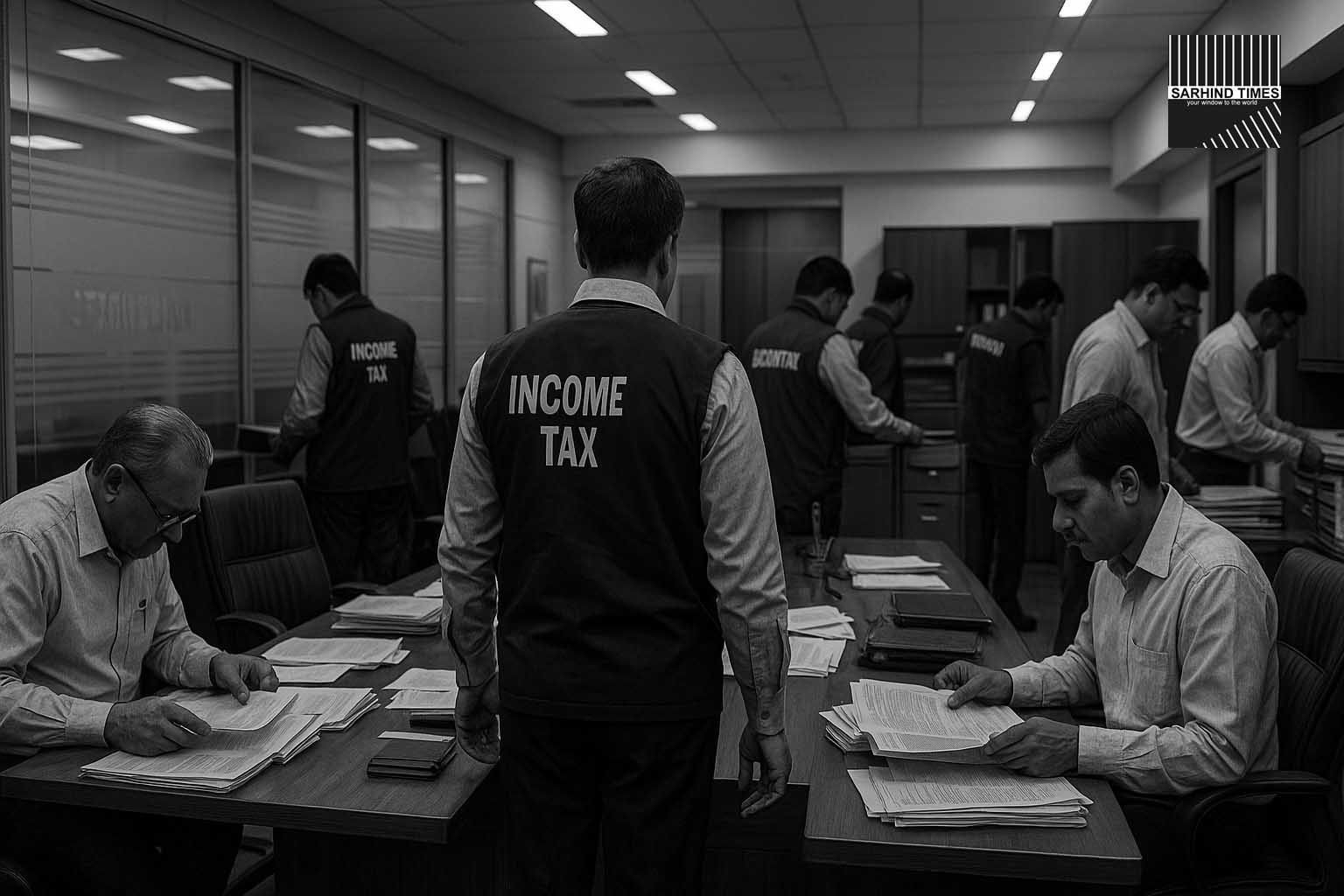
Over 120 locations searched in coordinated operation spanning Delhi-NCR, Maharashtra, Karnataka, Telangana and Gujarat; officials suspect large-scale tax evasion and benami investments
Dateline: New Delhi | 30 November 2025, Asia/Kolkata
Summary: In one of the year’s largest enforcement actions, the Income Tax Department carried out extensive raids on multiple real-estate groups across five states, uncovering what officials believe is a widespread network of tax evasion, unaccounted transactions and benami property holdings. More than 120 premises — including corporate offices, developers’ residences, investment firms, warehouses and land documentation centers — were searched. Authorities seized cash, digital evidence, unrecorded ledgers and documents linked to systematically concealed income.
A coordinated morning operation across multiple states
The Income Tax Department launched a large-scale search-and-surveillance operation early Tuesday morning, targeting prominent real-estate players with alleged links to unaccounted transactions, property undervaluation and large-volume cash dealings. Teams simultaneously raided locations in:
• Delhi and Gurugram (NCR region)
• Mumbai, Thane and Pune (Maharashtra)
• Bengaluru (Karnataka)
• Hyderabad (Telangana)
• Ahmedabad and Surat (Gujarat)
Officials described the operation as “highly coordinated,” involving over 900 officers, technical teams, data analysts and forensic experts.
Why the real-estate sector was targeted
Real estate remains one of India’s largest sectors and historically one of the most vulnerable to financial irregularities due to:
• high-value transactions
• property undervaluation
• cash circulation during land purchases
• benami holdings
• unrecorded investments from shell companies
• complex joint development agreements
• misuse of agricultural land classifications
Preliminary intelligence indicated large-scale tax evasion by certain developers, prompting the multi-state operation.
Key findings so far: Cash, digital ledgers and dummy firms
Though the investigation is ongoing, early reports suggest substantial discoveries, including:
• significant cash reserves kept off the books
• parallel digital ledgers maintained on encrypted devices
• unregistered agreements between developers and brokers
• details of undervalued property transactions
• links to shell firms allegedly used for routing funds
• benami investments in luxury homes and commercial spaces
• suspicious share transfers between related entities
Forensic experts are decoding seized hard drives, cloud backups, laptops and mobile devices to track digital evidence.
Delhi–NCR: High-value land deals under scrutiny
In Delhi and Gurugram, raids focused on builders involved in high-value mixed-use development projects and luxury residential townships. Authorities are examining:
• land acquisition patterns
• cash components in property sales
• alleged kickbacks linked to approvals
• discrepancies between project cost declarations and actual expenses
Several offices were sealed temporarily as search teams conducted document reviews.
Maharashtra: Mumbai–Thane belt sees major action
Mumbai and Thane, known for some of India’s costliest real-estate markets, witnessed extensive operations. Investigators reportedly recovered:
• digital evidence of payments routed through tax havens
• discrepancies in redevelopment project expenses
• underreported revenue from luxury towers
• undisclosed cash advances collected from buyers
Searches in Pune targeted developers involved in industrial and IT-park projects.
Telangana: Hyderabad’s booming real-estate market examined
Hyderabad, which has seen a strong surge in property demand, was another major focus. Authorities raided developers suspected of systemic property undervaluation and multi-tier land purchases involving concealed beneficiaries.
Karnataka and Gujarat: Commercial property networks under lens
In Bengaluru, teams inspected commercial leasing firms and property management companies. In Gujarat, searches concentrated on land development firms and industrial estate projects.
Benami properties: A recurring theme in the investigation
Officials believe a significant portion of the unaccounted income was used to purchase properties through benami holders. These include:
• agricultural plots
• luxury apartments
• commercial office spaces
• land parcels bought in names of employees or relatives
• shell-company-owned real-estate assets
Benami transactions allow concealed ownership and are often used to launder unaccounted income.
Shell companies: Tracking the money trail
The I-T Department has identified numerous shell firms allegedly used for routing transactions. These companies:
• showed minimal legitimate business activity
• engaged in large-scale financial transfers
• maintained inconsistent tax filings
• lacked physical office spaces
• were operated by proxies
Investigators are mapping connections between these shells and developers’ core businesses.
Digital evidence: The primary focus of raids
Compared to past raids, authorities emphasised digital evidence this time, seizing:
• encrypted accounting systems
• WhatsApp chats
• email backups
• unregistered ledger software
• files hidden behind password-protected folders
• cloud-stored documents
Forensic labs are analysing file metadata, financial trails and deleted data to reconstruct concealed transactions.
Real-estate brokers and intermediaries under scanner
The crackdown extends beyond developers to brokers who facilitate cash components in deals. Officials are examining:
• commission records
• unaccounted brokerage earnings
• informal agreements
• cash movement mechanisms
Brokers are often the link between buyers, sellers and illicit cash channels.
Impact on homebuyers
The raids are unlikely to directly affect homebuyers, but experts say they could lead to:
• tighter regulatory scrutiny for future transactions
• increased transparency in builder accounts
• potential delays in certain ongoing projects under investigation
• improved confidence in the sector over time
The government emphasised that legitimate buyers and investors have nothing to worry about.
Industry reaction: Mixed, cautious, and concerned
Real-estate industry associations issued guarded statements, acknowledging the need for transparency but expressing concern over potential disruptions.
Developers argue that the sector is already under stress due to financing challenges, regulatory approvals and increased compliance requirements. However, most industry bodies welcomed stricter measures against illicit practices that distort competition.
Government: The crackdown is about restoring fairness
Officials stressed that the action is designed to level the playing field by penalising tax evaders and discouraging illegal practices that undermine honest developers.
The Finance Ministry said the operation aims to widen the tax base and ensure “fair, transparent and sustainable growth” across the real-estate sector.
Political reactions
Opposition parties called for transparency in the proceedings, while ruling party leaders defended the crackdown, citing widespread irregularities in the real-estate industry.
Political analysts note that large-scale enforcement actions often attract political scrutiny, especially when multiple states are involved.
Real-estate and India’s economy
Real estate contributes significantly to GDP and is a major employment generator. However, financial opacity and cash-driven practices have long posed structural challenges.
The government’s renewed push toward transparency is expected to strengthen long-term investor confidence, especially foreign investors seeking stable, rule-based property markets.
What happens next?
Over the next several days, authorities will:
• examine seized documents and digital backups
• match transactions with tax filings
• summon developers and accountants for questioning
• collaborate with Enforcement Directorate if money laundering is suspected
• trace the full network of shell companies
The scope of the investigation may widen if new leads emerge.
Potential penalties
Depending on findings, violators could face:
• heavy tax penalties
• prosecution under the Income Tax Act
• action under the Benami Property Transactions Act
• freezing of assets
• cancellation of tax exemptions
• referral to ED for money-laundering probes
Long-term implications for the real-estate sector
The crackdown is expected to encourage cleaner practices, digital transactions and improved accounting hygiene. Developers may increasingly adopt transparent pricing, documented payments and automated financial systems.
The government is also likely to push for:
• stricter land-record digitisation
• better integration of property registration data
• real-time monitoring of high-value transactions
• blockchain-based registries for ownership records
Citizen awareness: The government’s message
Authorities encouraged citizens to insist on fully documented property transactions and avoid cash components. They advised verifying property titles, demanding proper agreements and using digital payment channels.
Conclusion: A decisive move toward financial transparency
The multi-state Income Tax crackdown signals the government’s intention to tackle illicit financial practices deeply rooted in parts of India’s real-estate sector. As investigators analyse the seized documents and digital evidence, the coming weeks are likely to reveal the full extent of irregularities.
Regardless of political debates, the operation marks a significant effort to ensure transparency, protect legitimate buyers, and promote healthier growth in one of India’s most vital economic sectors.



+ There are no comments
Add yours