
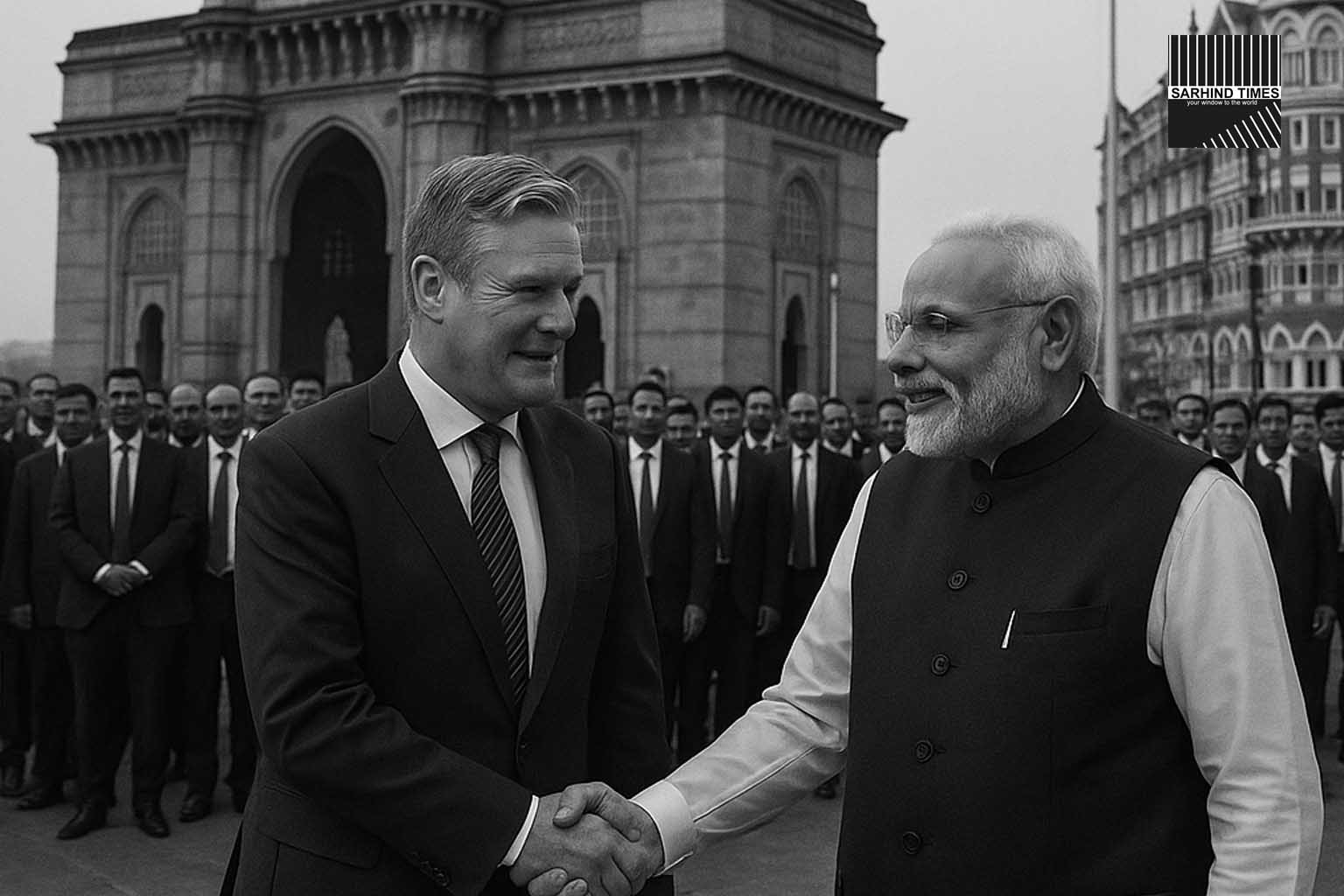
British Prime Minister reaffirms support for India’s growing international role; defence and trade deals follow
Dateline: Mumbai / New Delhi | 14 November 2025
Summary: During his two-day trade visit to India, British Prime Minister Keir Starmer publicly declared that the United Kingdom supports India’s bid for a permanent seat on the United Nations Security Council. The visit also culminated in a £350 million defence agreement and a business delegation of more than 120 British firms, signalling a strategic deepening of the UK-India relationship amid shifting global geopolitics.
Setting the Scene: India’s Global Role on the Rise
India has long sought greater voice in global governance, anchored by its democratic credentials, rising economic clout and strategic importance in the Indo-Pacific region. The longstanding goal of securing a permanent seat on the United Nations Security Council (UNSC) has figured prominently in Indian diplomacy. Recently, global observers and diplomatic peers alike have pointed to India’s expanding role—not just as a regional power but as a responsible global actor with interests spanning climate action, peacekeeping, maritime security and tech regulation.
Against this backdrop, the visit of UK Prime Minister Keir Starmer to India is more than bilateral trade optics. It takes place in a year marked by intensifying competition among major powers, shifting alliances, and re-evaluations of global institutions. For India, the UK visit becomes an affirmation that its global role is being taken seriously by one of Europe’s leading states.
The Visit Unpacked: Key Deliverables and Signals
The two-day mission by Prime Minister Starmer included high-level meetings with Narendra Modi in Mumbai and New Delhi, business forums, and announcements spanning defence, trade and diplomacy. The most headline-grabbing declaration: Britain supports India’s aspiration for a permanent seat on the Security Council. As Starmer stated during a public joint press conference: “We sit together in the Commonwealth, the G20 — and we want to see India taking its rightful place on the UN Security Council too.”
In parallel, the two governments inked a defence agreement worth about £350 million (around ₹3,600 crore) involving UK-made missiles supplied to India. The business delegation accompanying Starmer comprised 126 UK firms—said to be the largest ever such delegation to India—reflecting the UK’s ambition to deepen trade and investment ties and India’s willingness to engage.
Why the UK Is Backing India Now
There are multiple strategic calculations underlying the UK’s endorsement:
– **Geopolitical realignment**: Post-Brexit Britain is repositioning globally and India, as a major democratic partner in Asia, is a natural anchor for the UK’s Indo-Pacific tilt.
– **Shared values and institutions**: Both countries are historic members of the Commonwealth, committed to rules-based order, and share mutual interests in multilateral reform.
– **Trade and defence markets**: The UK sees India both as a large market and as a partner capable of co-developing systems in defence, technology and supply chains.
– **Global institutional reform project**: Britain has been advocating UNSC reforms for some time and India’s candidature helps sustain that agenda while reinforcing Western-friendly global partners.
Implications for India’s Permanent UNSC Bid
The UK’s support provides a diplomatic boost to India’s long-standing campaign. India has argued its case based on demographic weight (~1.4 billion people), sustained economic growth, increasing contribution to UN peacekeeping, nuclear-capable status, and broad strategic reach. However, the path ahead remains complex:
– **UN Charter constraints**: Current permanent members (P5) and many non-permanent members must agree to reform; Russia and China remain sceptical.
– **Regional voices and objections**: Countries such as Pakistan, Japan and others have competing ambitions or reservations, and India must navigate regional dynamics.
– **Institutional readiness**: India will need to demonstrate capacity for permanent membership — in areas of diplomacy, peacekeeping, sanctions implementation and larger global responsibilities.
– **Domestic follow-through**: The endorsement anchors public expectation, and the Indian government must demonstrate that it can deliver global leadership credibly.
Defence and Trade: More Than Symbolism
The £350 million defence deal underscores that the visit was not just diplomatic theatre. It reflects true collaboration: procurement of UK systems, potential joint manufacturing in India, and supply-chain integration. The large business delegation signals the UK’s ambition to use India as a growth engine for British firms, while India gains access to technology, capital and global market access.
For Indian industry, this means a pipeline of partnerships, access to UK know-how in sectors such as aerospace, cyber-defence, and advanced manufacturing, and strengthened investment flows. For the UK, India represents a counter-weight to China, an anchor consumer market and a partner in global technology development.
Challenges and Caveats: Not All Smooth Sailing
Despite the positive signals, challenges remain on both sides:
– **Geopolitical friction**: India continues to engage with Russia and China, and its diversified foreign-policy approach can sometimes clash with Western expectations around values and alignments.
– **Trade imbalances and regulatory issues**: UK investors point to Indian market access barriers, regulatory complexity and slower pace of reforms in sectors like financial services and digital trade.
– **Domestic articulation**: India must clarify how it would fulfil the responsibilities of a permanent UNSC seat — beyond the accolade. Public expectation could rise, and institutional capacity must match.
– **Global reform fatigue**: While many endorse UNSC reform in concept, actual momentum is weak; major structural changes to global governance institutions have been elusive for years. India may need to ride incremental gains rather than expect a breakthrough soon.
Broader Geostrategic Implications
The visit and its deliverables are part of a larger wave of shifting global alliances:
– **Indo-Pacific balance**: With both the UK and India increasing focus on the Indo-Pacific, maritime security, freedom of navigation and China’s rise factor heavily into their calculus.
– **Multipolar world order**: India’s backing by western states like the UK signals a broader recognition that power is shifting east; for global governance, this means institutions will increasingly need to reflect emerging-market power dynamics.
– **Technology and defence supply-chains**: The deepening of Indo-UK links may open new avenues for joint manufacturing, R&D, and next-gen systems — which may reduce global dependency on singular supply-chains (especially those aligned with China).
– **Climate and development cooperation**: India’s global role is also rooted in climate diplomacy, development partnerships and South-South cooperation. The UK relationship may bolster these agendas.
What to Monitor Going Forward
Several areas will indicate how substantive this visit proves to be:
– **Implementation of defence procurement and joint projects**: Will the £350 million deal translate into actual deliveries, co-manufacturing, and offset investments in India?
– **Progress in UK-India trade and investment flows**: Will the business delegation convert into serious contracts, investment commitments and two-way trade growth, especially in services, technology and manufacturing?
– **Movement on UNSC reform discussions**: Will the diplomatic momentum translate into concrete support among other major players (US, France, Germany, Japan) and formal process steps for expansion?
– **Indian institutional preparation for global leadership**: Will India enhance capacities in diplomacy, peacekeeping, sanctions enforcement, global health, and technology governance to match its emergent role?
– **Regional reactions**: How will Pakistan, China, and other regional players respond to the strengthened Indo-UK axis? Will this provoke counter-alignments or collaborative balancing strategies?
Conclusion
The two-day UK-India visit has not only elevated diplomatic optics—it bears substantive deliverables and forward-looking strategic alignment. For India, the UK’s endorsement of its bid for a permanent UNSC seat marks a meaningful diplomatic victory, while the defence and trade agreements offer concrete commercial and technology dividends.
Yet, optimism must be tempered with realism. Securing a permanent seat on the Security Council is a multi-decade effort. Defence and trade deals must translate into execution. India must match ambition with institutional capacity if it is to assume not just the trappings of global leadership but its responsibilities.
For international watchers, the visit signals that India is being woven into the dense web of global power architecture—shifting from a regional actor to a global one. The real test will be in the next few years: do the words turn into capabilities, the signatures into deliverables, and the seat in waiting into real influence?



+ There are no comments
Add yours