
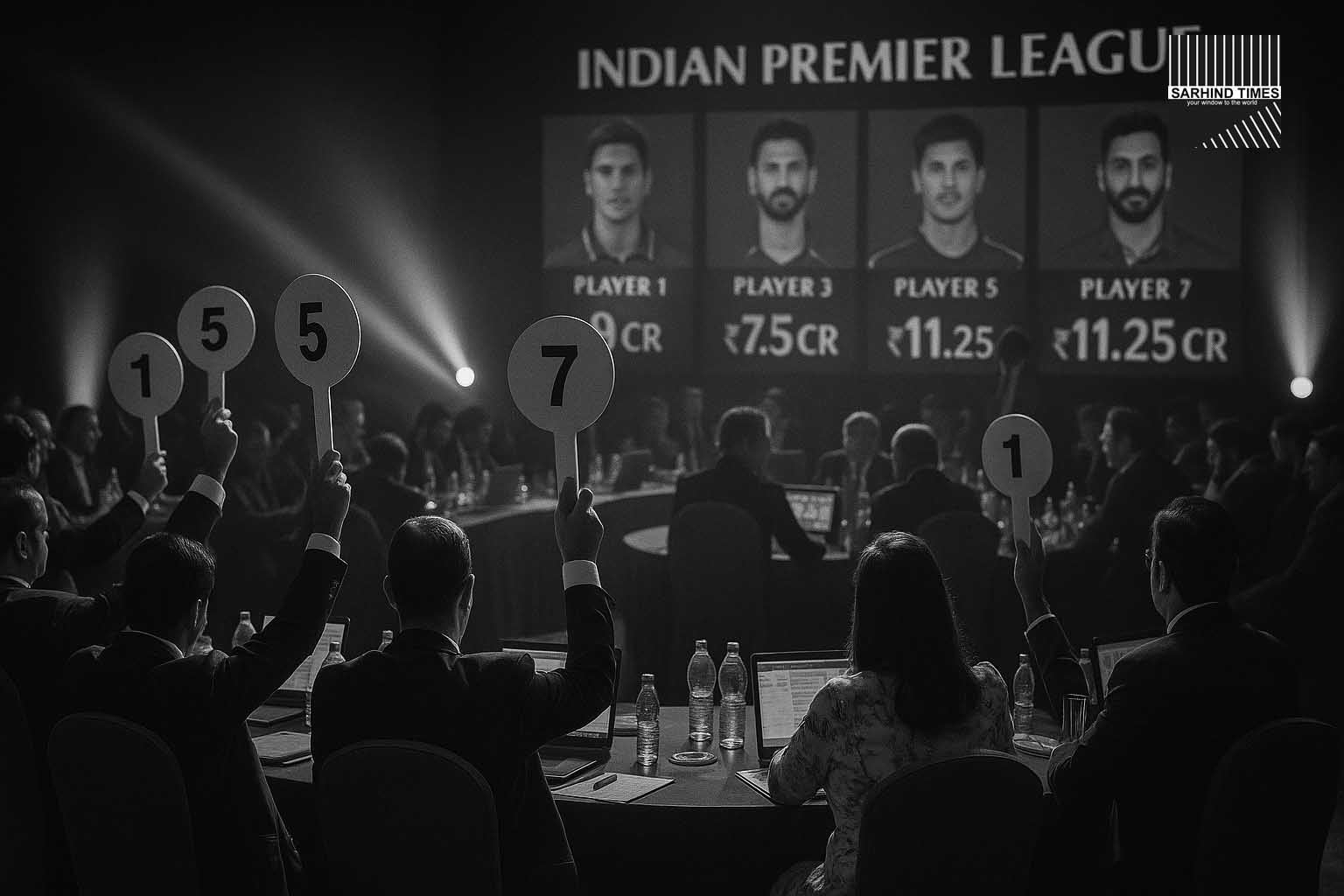
Retention deadline this month, auction venue under review and trade rules revamped—franchises brace for tactical overhaul
Dateline: New Delhi | November 12, 2025
Summary: With the retention deadline set for November 15, 2025 and the auction for the 2026 season of the Indian Premier League (IPL) likely scheduled around December 14–17, significant change is ahead for teams. The event may return to India (after previous overseas venues) and will follow a “mini-auction” format, signalling a shift in strategy for franchises and players alike.
A changing landscape: What’s new for IPL 2026
– The auction is now being described as a *mini-auction*, implying that major roster overhauls will be constrained and teams will focus on tactical tweaks rather than wholesale rebuilds.
– The retention deadline—requiring franchises to finalise which players they will keep—has been set for **November 15, 2025**. This deadline sets the stage for last-minute trades, contract terminations and strategic preparation.
– While the official venue is yet to be confirmed, reports suggest the auction may return to Indian soil (after two seasons held overseas) around December 14–17, 2025.
– Trade rules are being updated: franchises will now have additional flexibility to conduct one-way cash trades and player-for-player swaps ahead of the auction—giving teams new strategic levers.
Together these changes suggest that the IPL governing council is positioning the 2026 auction as a measured recalibration of squads—not a radical reset. Teams with strong existing cores may adjust marginally, while others may use the opportunity to reposition.
Why it matters: Franchises, players and ecosystem
The timing and format of this auction have implications across stakeholders:
– **Franchises**: With a mini-auction format, teams that retained strong cores will have an advantage. They will likely stay disciplined with budgets, target specialised additions (e.g., domestic emerging talent, versatile overseas picks) rather than blockbuster buys. The trade rule flexibility adds options to manage budgets, swap under-performing players or acquire niche skills without going to auction.
– **Players**: For existing squad members, retention decisions will dictate career paths. Players released or traded ahead of November 15 may face uncertain futures. For unsold or emerging players, the auction remains a critical entry point. Media lists already note Indian players who went unsold previously may get second chances.
– **Wider ecosystem**: The venue decision—returning to India—signals confidence in the domestic staging and may reduce logistical disruption. Sponsors, broadcasters and fans will appreciate a home-hosted event. Moreover, the auction mechanics (mini format, trade flexibility) reflect evolving franchise economics—less hype, more management discipline.
Key strategic themes for teams
Analysts and franchise staff are pointing to several themes that will mark the 2026 auction cycle:
1. Versatility over marquee signings
With budgets somewhat constrained and a mini-auction in play, teams may prioritise players who can perform multiple roles (e.g., all-rounder who bowls, finisher who can bat) rather than going all-out for one marquee name.
2. Domestic bench strength
Many teams are expected to lean into domestic talent—especially younger Indian players who offer value and are not subject to overseas player restrictions. This may build strong cores for the future while staying cost-effective.
3. Trade innovations**
The new trade rules give franchises an extra tool: instead of waiting for auction results, teams can swap players ahead of time for strategic repositioning. Cash-for-player trades or player-for-player swaps may become more visible.
4. Retention discipline**
The November 15 deadline forces decisions. Teams may choose to release high-cost players who no longer fit future strategy, freeing up budget for niche buys. Media reports suggest even stalwarts may be released to manage budgets.
Risks and pressures ahead
While the changes are promising for strategic stability, there are inherent risks:
– **Under-investment risk**: If teams become overly conservative and skip marquee buys, there is a risk of dampened fan excitement and commercial returns.
– **Over-reliance on youth**: Betting heavily on emerging domestic players without retention of experienced campaigners may hurt performance under pressure.
– **Timing and logistics**: Venue uncertainty and scheduling may impact planning. If external disruptions (e.g., weather, security or geopolitical) affect the auction, logistic costs may rise.
– **Player discontent**: Players released or traded may feel disenfranchised, which could impact morale and performance across seasons. Ensuring fair processes and communication is key.
What to watch in the coming weeks
As the auction timeline closes in, key indicators to monitor include:
– Which players the ten franchises decide to retain by November 15. The roster announcements will reveal franchise priorities and strategy shifts.
– Major trade deals ahead of the deadline—are there blockbuster swaps or unusual cash-moves?
– The final auction venue and dates—confirmation will affect international logistics, media rights and marketing ramps.
– Budget disclosures and player salary trends—will teams show restraint or continue to push big spend?
– Auction pool composition—how many top players are released, how many emerging players enter, and which franchises take risk on new names.
– The fan and market reaction post-auction—how media, broadcasters and sponsors respond to this more tactical format will be telling for the league’s commercial curve.
Commercial and content-creation implications
For the wider media and content industry—including your domain of content creation and automation—this IPL cycle offers several opportunities:
– New player pairings, trades and signings generate stories, social-media campaigns and digital-content formats (behind-the-scenes, auction narratives).
– Data-analytics around auction trends (budgets, player roles, domestic vs overseas mix) can provide in-house content, infographics and monetised insights.
– Franchises will need content assets (player profiles, micro-documentaries, fan engagement) especially around the new auction format; platforms that supply turnkey content or automation workflows may find demand.
– The mini-auction and trade rule changes may open new fan-engagement formats—live-streamed trade-reveal shows, interactive bidding dashboards, NFT-style digital memorabilia—all content-rich opportunities for creators.
Conclusion
The IPL 2026 auction cycle is not merely another player-transfer window—it reflects a maturing league, more strategic budget-discipline, evolving franchise mechanics and richer content-opportunities. For teams, the retention deadline of November 15 is a critical pivot. For players, the auction in mid-December (likely in India) will determine the next chapter of careers. For the wider innovation ecosystem, the changes open new content-narrative pathways and engagement models. If franchises align strategy, talent and budget wisely, the mini-auction could deliver high-quality squads rather than just high-value headlines. In short: buckle up—IPL 2026 may be less flash, but more calculated — and in doing so, may set a more sustainable blueprint for the league’s future.



+ There are no comments
Add yours