
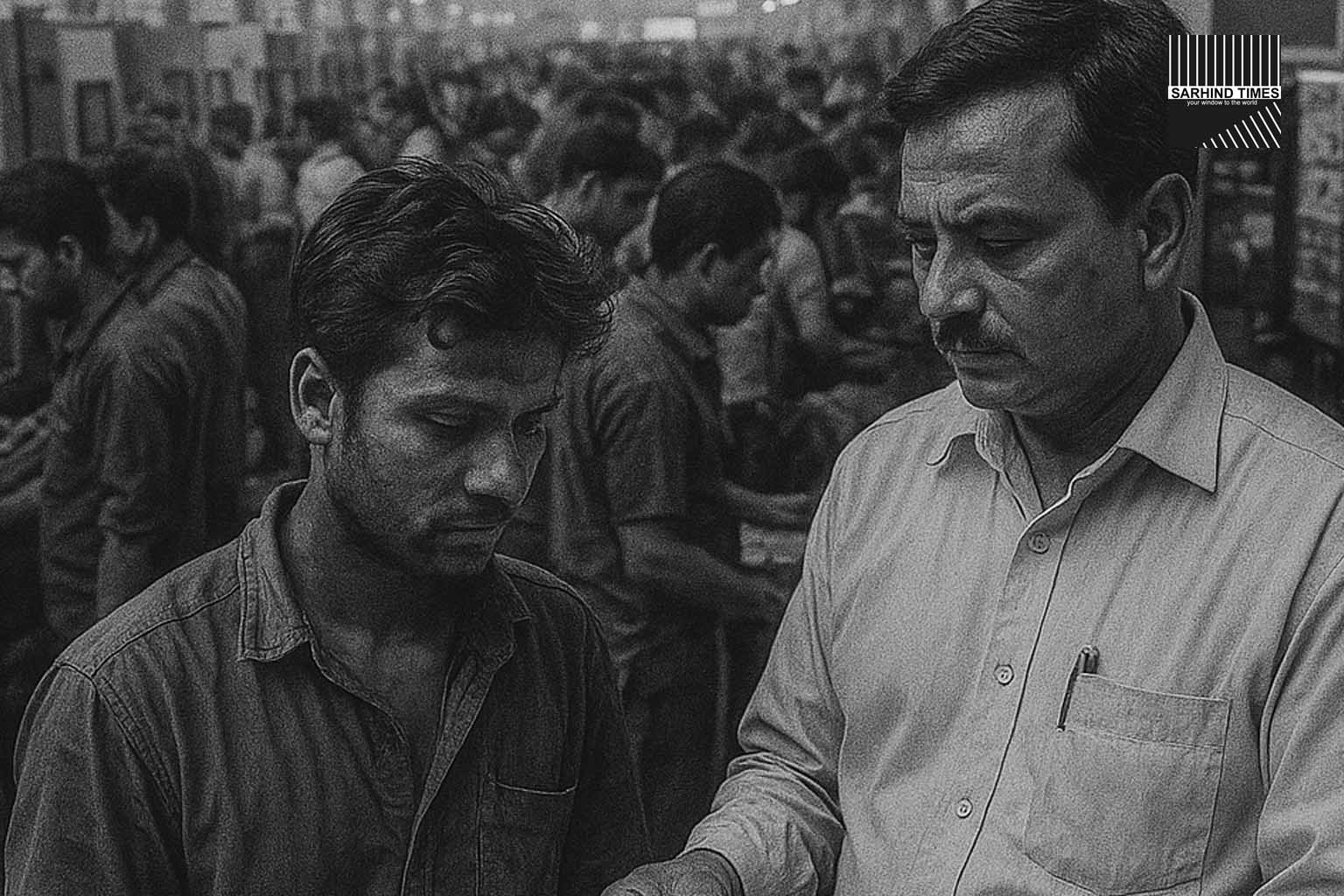
Effective July 1 2025 roll-out sees unskilled wages in the state rise to ₹11,275 per month amid broader hike across skill-tiers
Dateline: Chandigarh | November 12, 2025
Summary: The government of Haryana has notified a fresh minimum wage schedule, effective from July 1, 2025, raising baseline pay for unskilled workers in scheduled employments to around ₹11,275 monthly (₹433.64 daily) and proportionately higher rates for semi-skilled, skilled and highly-skilled categories. The revision signals increased labour cost pressure for employers—especially in the National Capital Region’s industrial zones such as Gurugram and Manesar.
What’s changed: The new wage structure
The state government issued the notification of minimum-rate-of-wages for Haryana dated 30 October 2025, applying from 1 July 2025. Under this, the monthly minimum wage for an unskilled worker across scheduled employments is set at **₹11,274.60**, equivalent to a daily rate of **₹433.64**. Semi-skilled categories rise to about **₹11,838.29** (₹455.32 / day) in class A and **₹12,430.18** (₹478.08 / day) in class B. Skilled workers now command salaries from around **₹13,051.71** (₹501.99 / day) to ₹13,704.31 (₹527.09 / day). Highly skilled employees see minimum pay of around **₹14,389.52** (₹553.44 / day). Clerical, supervisory, drivers and security-staff categories have likewise been adjusted.
These figures were compiled from an official summary of the notification.
The rationale cited in the official note refers to adjustments of the Variable Dearness Allowance (VDA) component in response to changes in the Consumer Price Index (CPI), and the requirement under the state-adopted Minimum Wages framework to revise twice yearly (typically 1 January and 1 July).
For employers – especially manufacturing units, warehouses, construction contractors, logistics and service-providers in Haryana’s high-growth corridors – the revision means payrolls must be updated retroactively to 1 July and compliance systems must be ready for audits and inspections going ahead.
Why this matters for the Gurugram-Manesar belt
Haryana’s labour-cost ecosystem is especially sensitive in the Gurugram-Manesar-NCR belt, given the density of manufacturing units (automotive, electronics, export-oriented), large service-sector footprints and a high-volume contract-worker workforce. With wages now escalated, multiple implications arise:
* **Increased operating cost**: Labour cost as a share of input has increased for units that rely on large unskilled/semi-skilled shifts. Even a modest rise of ₹2000–3000 per worker per month can add significant burden for large-scale facilities.
* **Contract-labour pay alignment**: Many factories use third-party contractors for workforce supply. These contractors will need to revise pay rates accordingly, or risk non-compliance under the Minimum Wages Act, 1948 and allied rules.
* **Competitive pressure and localisation decisions**: In a region already facing cost-pressures (land, utilities, skill shortages), rising wages may shift investor calculus—making alternative states with lower wage bases more attractive for labour-intensive operations.
* **Compliance readiness**: Given that the notification is retrospective to July 1, firms must ensure back-payments (if required) and updated wage registers. Inspection authorities are likely to review adherence during audits. Non-compliance may trigger penalties, interest and prosecution under labour-laws.
Worker-impact and broader labour-market implications
For workers—both in industrial zones and service-sectors—the wage hike provides relief against inflation and reinforces minimum income thresholds. However, the realisation of impact will vary:
* **Formal vs informal sector gap**: While scheduled employments are covered, a significant portion of informal labour (contract-workers, outsourced services, unregistered de-facto jobs) may still not see actual wage uplift. Bridging this gap remains a challenge.
* **Wage compression**: As baseline wages rise, pressure may mount on workers who previously earned just above minimum to expect higher increments or face narrowing spread between junior and experienced roles.
* **Labour supply and retention**: Employers may respond by improving shift-schedules, up-skilling programmes or increasing automation to offset cost-rises. This may accelerate substitution of low-skill jobs over time.
* **Inflation linkage**: The state’s approach of tying VDA adjustments to CPI signals that future revisions will continue under cost-inflation dynamics — making regular wage-checks essential for management and payroll planning.
Business reaction and operational implications
Firms operating in Haryana have begun to react to the change:
* **Payroll recalibration**: Compliance teams are working to update pay-scales, revise contract-labour rates, issue payment-advisories and align bonus/allowance schemes accordingly.
* **Budget impact assessment**: Financial controllers within manufacturing, warehousing, BPO services and logistics are analysing the incremental cost impact for FY 2025-26 and building this into forecasting, tender-pricing and margin calculations.
* **Contract-modelling and bidding impact**: Vendors supplying manpower are renegotiating contracts. Many firms may consider shifting input-mix toward higher-skilled roles or invest in mechanisation to maintain productivity.
* **Location rethink**: Investors and decision-makers reassessing operations in Haryana may weigh rising incremental wage cost alongside land, utility and regulatory cost to decide whether growth remains best in NCR or a lower-cost state may be more competitive.
* **OEMs and export units**: Sectors engaged in export manufacturing (automotive, textiles, electronics) in Haryana must align with global cost-benchmarks—higher minimum wages may shrink their cost-arbitrage advantage slightly and necessitate further operational sophistication.
Policy signals and future trajectory
The wage revision carries broader policy signals:
* The state’s repeat twice-annual update (January & July) suggests a proactive stance in aligning wage floors with inflation and living-cost changes.
* For labour-law ecosystem watchers, it emphasizes that states with large industrial clusters (like Haryana) are raising wage standards—it reflects structural shift from very low-cost states toward more sustainable wage-growth models.
* It offers a signal to workers’ organisations that wage floors are rising—potentially strengthening collective bargaining, union voice or wage-audit demands.
* For policymakers, the challenge is to balance wage-growth, business competitiveness and employment generation—especially in labour-intensive sectors. The next iterations (likely from 1 January 2026) may include additional sector-specific calibrations or transition-assistance for small-units.
What to watch next
Over the next 12 months, stakeholders should track:
* Audit findings from the Haryana Labour Department or Director of Factories around wage-compliance in Gurugram & Manesar.
* Any revision announcements due 1 January 2026 — given past pattern, another adjustment is likely.
* Wage-differentials across sectors (manufacturing vs services vs construction) and how firms respond (automation, relocation, skill-up).
* Contract-labour pay-alignment, especially in high-growth zones where outsourced workforce predominates.
* Interaction of wage-rises with other cost-bullets (utilities, land, logistics) in firms’ decisions for investment location and workforce strategy.
Concluding thoughts
The recent minimum-wage revision in Haryana marks a significant shift in labour-cost dynamics for the state’s booming industrial belt. For workers, it strengthens income security; for employers, it underscores the need for strategic workforce planning, compliance readiness and cost-management. While the rise is manageable for many firms, it adds to cumulative cost-pressure in a competitive investment environment. How companies adapt—by upgrading skills, automating, optimising contracts or even relocating—will determine whether Haryana retains its edge as a low-cost manufacturing and logistics hub. As this plays out, the revision serves as a reminder: wage-floors matter and in high-growth zones, they increasingly influence business decisions, not just worker satisfaction.



+ There are no comments
Add yours