
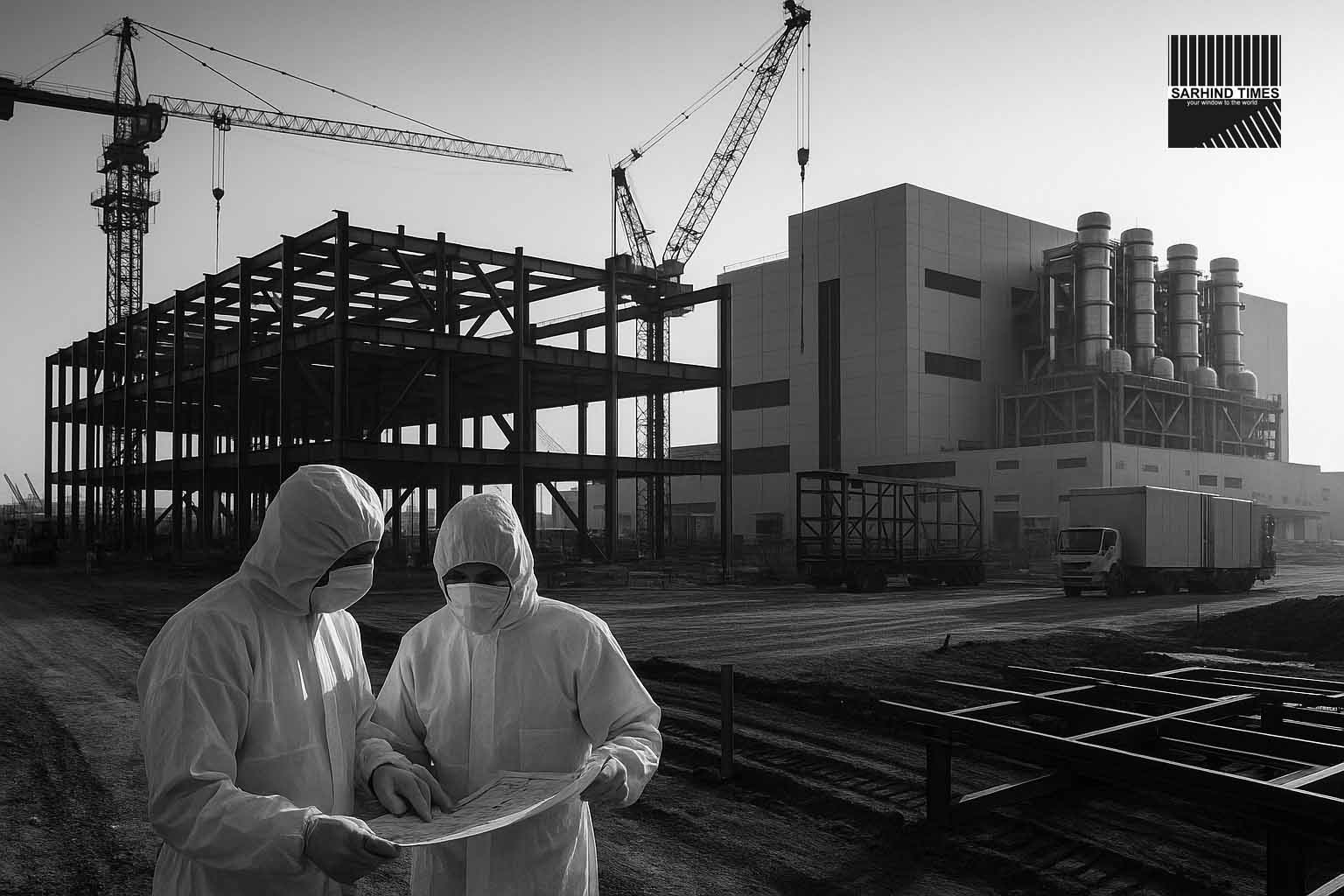
Under the India Semiconductor Mission, India green-lights multiple chip-making and packaging units, signalling a strategic shift in manufacturing infrastructure
Dateline: New Delhi | 11 November 2025
Summary: India has moved decisively to strengthen its semiconductor ecosystem by approving several production units, augmenting its incentive framework and attracting major global firms. With the India Semiconductor Mission (ISM) now backing projects spanning fabrication, assembly, testing and packaging, the country is seeking to leap from being a large chip consumer to a credible manufacturing hub. The architecture-of‐change now faces implementation hurdles but the momentum is clear.
State of play: India’s chip-manufacturing ambitions
For decades, India has been a major consumer of semiconductors but a peripheral player in global manufacturing. The strategic imperative has become stronger in recent years—geopolitical supply-chain disruptions, rising demand for chips in automotive, telecom, consumer electronics and defence, and the desire for technological sovereignty have converged to make chip-making a national priority.
Under the ISM, India has committed to supporting chip manufacturing across the value chain—from wafer fabrication (fabs) to assembly, testing and packaging (ATMP/OSAT) and design-linked incentives. The goal is to reduce import dependency, capture greater value-addition, and create high-skilled employment. Detailed announcements show that the government has approved 10 strategic projects with a total investment commitment of roughly US $18 billion.
Recent approvals and key deals
Some of the recent milestones include:
- The Union Cabinet has approved four new semiconductor manufacturing units in states such as Odisha, Andhra Pradesh and Punjab, with a combined investment of ₹4,594 crore (≈US $560 million).
- A joint venture between HCL Group and Foxconn Technology Group has been approved to set up a semiconductor-unit near Jewar (Uttar Pradesh) for ₹3,706 crore (≈US $435 million) under the ISM.
- India has approved multiple projects for display-driver chips, silicon-carbide (SiC) semiconductors and advanced packaging, involving partnership of global firms like Intel Corporation and Lockheed Martin Corporation.
Why this matters economically and strategically
The significance of this push is manifold:
- Value-chain upgrade: Moving from design-services and basic assembly to full-or-partial fabrication reflects a structural economic shift—creating higher value jobs and reducing import exposure in critical components.
- Global supply-chain positioning: As global manufacturers seek to diversify away from concentrated hubs (e.g., Taiwan, South Korea), India’s large domestic market, improving infrastructure and policy incentives make it an attractive alternative.
- Technology sovereignty: In sectors such as defence, telecom and automobiles, dependence on imported chips is a national vulnerability. Building domestic capacity reduces that risk.
- Regional development: The projects locate across multiple states (Odisha, Assam, UP, Punjab), offering employment and industrial revitalisation in less-manufacturing-intensive regions.
Policy architecture and incentives
The ISM framework offers fiscal support up to 50 % of project cost in many cases, along with design-linked incentives. For example, under the “Chips to Startup” component, India plans to train 85,000 engineers and invest roughly ₹1,000 crore over five years.
The government also launched the SEMICON India 2025 event, backed by a ₹76,000 crore investment, with focus not just on manufacturing but talent-ecosystem, design-tools, packaging and global partnerships.
Implementation challenges and headwinds
Despite the strong announcements, several structural challenges remain:
- Capital intensity and scale: Chip fabs require multibillion-dollar investments, long gestation periods and advanced supply-chain ecosystems—India is at the early stage of this.
- Technology and ecosystem readiness: Beyond the plant, supporting industries (wafer-substrates, specialty gases, ultra-clean chemical supply, photolithography equipment) must scale. Many of these are still import-dependent.
- Skilled workforce shortage: India has strengths in design services, but fewer clean-room manufacturing skills; training and retention are essential.
- Timing and global competition: With other nations also making aggressive moves in chip manufacturing, India must move quickly to avoid being behind in node-technology or becoming a low-value node supplier.
Sectoral and business implications
For businesses and investors, this semiconductor push opens multiple opportunities:
- Electronics manufacturers: With local chip capacity improving, firms assembling devices may face lower input-risk and quicker time-to-market; localisation becomes more viable.
- Chip-design houses and start-ups: As capex gets supported, domestic design firms may scale using local fabs and packaging units, improving cost-structure and competitiveness globally.
- Equipment and materials suppliers: Firms supplying clean-room tools, chemicals, specialty gases, and packaging services have a growing market in India; global toolmakers already committing investments.
- State-and-regional governments: States positioning themselves as chip-hubs (e.g., Gujarat, UP, Assam) must fast-track infrastructure, land-acquisition, power-/water-supply and skilled-labour to win projects.
What to watch next (milestones & metrics)
The next 12-24 months will be critical. Key indicators include:
- The number of chip-manufacturing units that achieve production milestones or pilot runs by end-2026.
- Investment disbursement against approvals—whether approved projects translate into firm contracts, ground-breaking and equipment importation timelines.
- Skill-ecosystem growth—number of engineers trained in VLSI, clean-room operations, packaging technologies; and talent retention metrics.
- Growth of the domestic supply-chain—components, substrates, testing labs, packaging units located in India rather than imported.
- Export performance—whether “Made in India” chips begin entering international supply chains and reduce net import of semiconductors in key sectors (automobile, telecom, defence).
Implications for India’s broader industrial strategy
This semiconductor initiative sits at the heart of India’s larger “Make in India 2.0”, digital economy, self-reliance and global manufacturing pivot. If successful, it may reshape India’s industrial map—from primarily software-services to hardware-manufacturing, from low-value assembly to high-value design and fabrication.
For global tech supply chains, Indian success means that Asia’s chip manufacturing geography may diversify further, reducing concentration risks in Taiwan and Korea. That in turn may change cost-structures, sourcing strategies and strategic partnerships.
Conclusion
India’s accelerated push into chip manufacturing is bold, well-timed and strategically significant. With approval of multiple projects, large fiscal incentives and global partnerships, the country is aiming to break into an industry long dominated by a few players. The opportunity is vast—but so are the challenges.
Execution will matter more than announcements. If India can align infrastructure, skill-ecosystem, supply-chain localisation and global market access, the semiconductor moment may mark a structural shift for its technology-and-manufacturing future. If not, the risk is that India becomes a lower-tier node without full value-capture. The coming years are decisive.



+ There are no comments
Add yours