
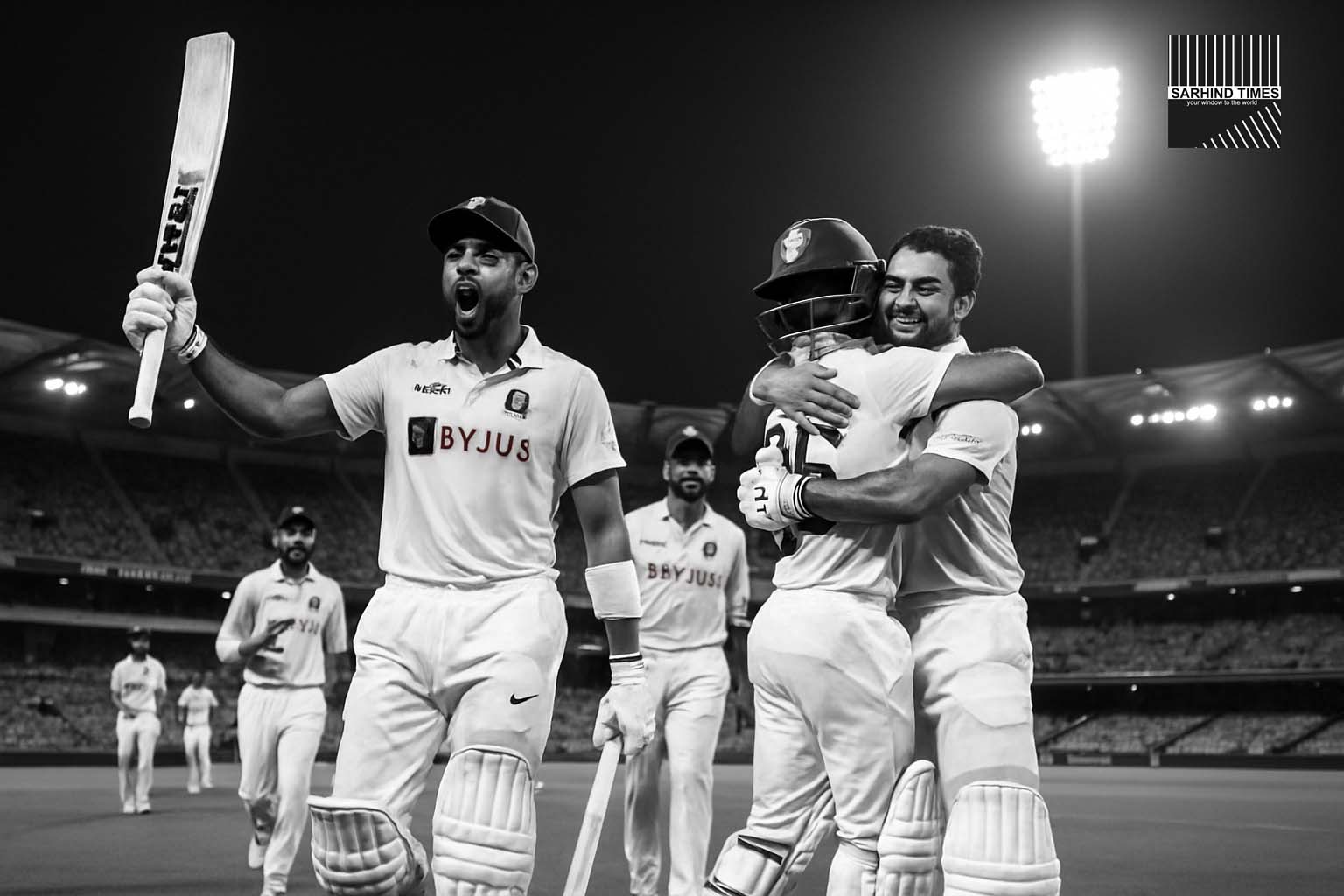
In a landmark victory Down Under, India secure a 2-1 series win over Australia with dominant starts and record-breaking performances
Dateline: Brisbane | 10 November 2025, Asia/Kolkata
Summary: The Indian cricket team wrapped up a successful five‐match T20I tour of Australia by winning the series 2–1, despite the final match at The Gabba being abandoned due to rain. Key performances by Abhishek Sharma and Shubman Gill, a milestone by Sharma in becoming the fastest batter to 1,000 T20I runs (in balls faced), and the continuation of captain Suryakumar Yadav’s record of bilateral T20 series wins underscore India’s growing dominance in the format. The result offers confidence ahead of home campaigns and major tournaments.
Tour Overview and Context
India arrived in Australia determined to improve their T20 record abroad. The five-match series opened in late October and ran through early November. Australia, with home advantage and a strong T20 side, was expected to hold edge. However, India managed to take the momentum, clinching the series ahead of the final match.
The cancellation of the fifth fixture at The Gabba due to rain did not diminish the achievement: India had already built enough points to seal the series. In the key moments of the series, India’s aggressive batting and disciplined bowling made the difference.
The broader significance is that India’s T20 roadmap — leading into the 2026 T20 World Cup on home soil — receives a major confidence boost from a series win in Australia. While conditions (Australian pitches, fast bowlers, bounce) remain challenging, India adapted well and delivered. This result also adds to the leadership record of captain Suryakumar Yadav and head coach Gautam Gambhir, consolidating their tenure.
Key Performances and Milestones
A number of individual and collective performances stood out:
– Abhishek Sharma was named Player of the Series. His strike-rate and consistency were critical in giving India fast starts. In the final match (though rain‐affected) he became the **fastest batter in terms of balls faced** to reach 1,000 T20I runs.
– Shubman Gill also impressed, particularly in the early overs, showing his capacity to dominate power-play bowling in foreign conditions.
– India’s top order, led by the two aforementioned batters, routinely gave India strong platforms. Australia’s bowling attack, which had looked formidable on paper, was unable to consistently break the partnership early or slow the run rate.
– The bowling unit deserves credit too: while the Australian batsmen had their moments, India’s bowlers kept them under control in the matches India won. The ability to defend totals or restrict scoring at key intervals made the difference.
– The abandoned final match still reflected India’s dominance – at 52/0 in 4.5 overs before rain intervened — suggesting intent and momentum were fully there.
Strategic and Tactical Insights
What enabled India to win this series in foreign conditions? Several factors:
– **Aggressive power-play utilisation**: India’s openers set the tone in most matches. The ability to attack early and put pressure on Australia’s bowling attack meant India rarely found themselves on the back foot.
– **Adaptation to conditions**: Australia’s pitches offer pace and bounce; Indian batsmen showed good technique as well as intent. The bowlers adjusted to bounce and used the conditions to their favour.
– **Depth in batting and bowling**: India’s bench strength and ability to rotate players enhanced resilience—particularly in case of injury or form lapses.
– **Captaincy and game management**: Suryakumar Yadav marshalled his resources well, making tactical choices around bowlers, field placements and batting order that showed maturity.
– **Mental edge**: Winning away in Australia is always psychologically significant. India handled pressure moments better than Australia, especially in the matches India won. The cancelled game didn’t shake their confidence because the series was already sealed.
For teams and service-providers analysing cricket trends, this series underscores the continuing shift in T20 powerbalance — India is no longer a team that emerges from behind; they are increasingly the team setting the tone.
Implications for Indian Cricket’s Future
Looking beyond the series, several implications emerge:
– India’s preparation for the home T20 World Cup in 2026 is strengthened. A successful foreign tour builds momentum, assets (batters/bowlers confident in overseas conditions), and internal belief.
– Selection discussions: Performances by Sharma, Gill and others will influence team composition. The selectors now have a strong case for giving winners extended runs ahead of major tournaments.
– Commercial and media impact: A successful series win in Australia elevates the brand value of Indian cricket, leads to stronger broadcast narratives, sponsorship opportunities and increased digital engagement (especially if early openers like Sharma continue accelerating).
– Domestic cricket ecosystem: Indian Premier League franchises, state associations and coaching setups will use this result as validation of player pathways and conditions training — from power-play batting to overseas condition readiness.
– Global perception: Opponent teams will increasingly view India as a full-fledged T20 powerhouse with both skill and mental resilience. This changes competitive dynamics for upcoming global tournaments.
Challenges and Areas of Concern
While the victory is noteworthy, it is not without caveats:
– Australia did not field its full strength in every match, and weather (rain) intervened in the finale — meaning India did not face a full contest in the final game. Future tours may present tougher challenges.
– Consistency will now matter. One series win does not guarantee success in every condition. India must maintain this momentum across formats and geographies (for example, sub-continental conditions, bowling-friendly pitches).
– Opposition learning curve: Australia and other teams will study India’s tactics and may counter-adapt for upcoming series. India must continue evolving rather than resting on laurels.
– Expectation management: With success comes pressure. The media, fans and sponsors will expect similar results — the team must guard against complacency or over-rotation risks.
– Injury and workload: With packed international and domestic calendars, managing player workload is critical. The Indian team must balance fresh talent exposure with rest and recovery protocols.
What to Watch Next**
Several upcoming touch-points are worth tracking:
– India’s upcoming home series against South Africa cricket team (Tests, ODIs, T20s) starting 14 November in Kolkata and Guwahati. This will test whether India can carry momentum into multi-format engagement.
– Player form: Will Sharma and Gill sustain this breach of form? Can they convert starts into match-winning innings under pressure?
– Team combination and selection dynamics: Will the successful openers be retained? Will bowlers who performed get more long-term contracts? The selection committee’s actions will be scrutinised.
– Strategy evolution: Will India move from aggressive power-play style to more nuanced approach for diverse conditions? The versatility of match strategy will matter.
– Market and commercial ripple: Franchise owners, sponsors, broadcasters will re-assess valuations and player branding — especially if Indian openers continue to dominate globally.
For your domain of automation, content creation and workflow services, these are useful signals: content demand around “India’s winning T20 strategy”, “openers who changed the game”, “series win insights” may rise; your platforms (voice/AI workflows, avatar-based recap modules, multilingual content) have a chance to capture this surge of interest.
Conclusion
India’s T20 series win in Australia stands as a marker of maturation in the shortest-format game. It underlines not just talent but composure, preparation and execution in difficult conditions. While rain truncated the final match, India had done enough to claim the series with authority.
As the Indian cricket machine turns its attention to the home season and the world stage, the challenge is to build upon this success rather than drop back. The series win is a step — not the finish line. For players, fans, broadcasters and content services alike, the opportunities ahead are significant.
The broader take-away: India is no longer chasing; it is setting the pace. And for any business, like yours, engaged in cricket-related services, content and automation, the current phase offers multiple openings. From telling the story to servicing the workflow, now is the time to engage.



+ There are no comments
Add yours