
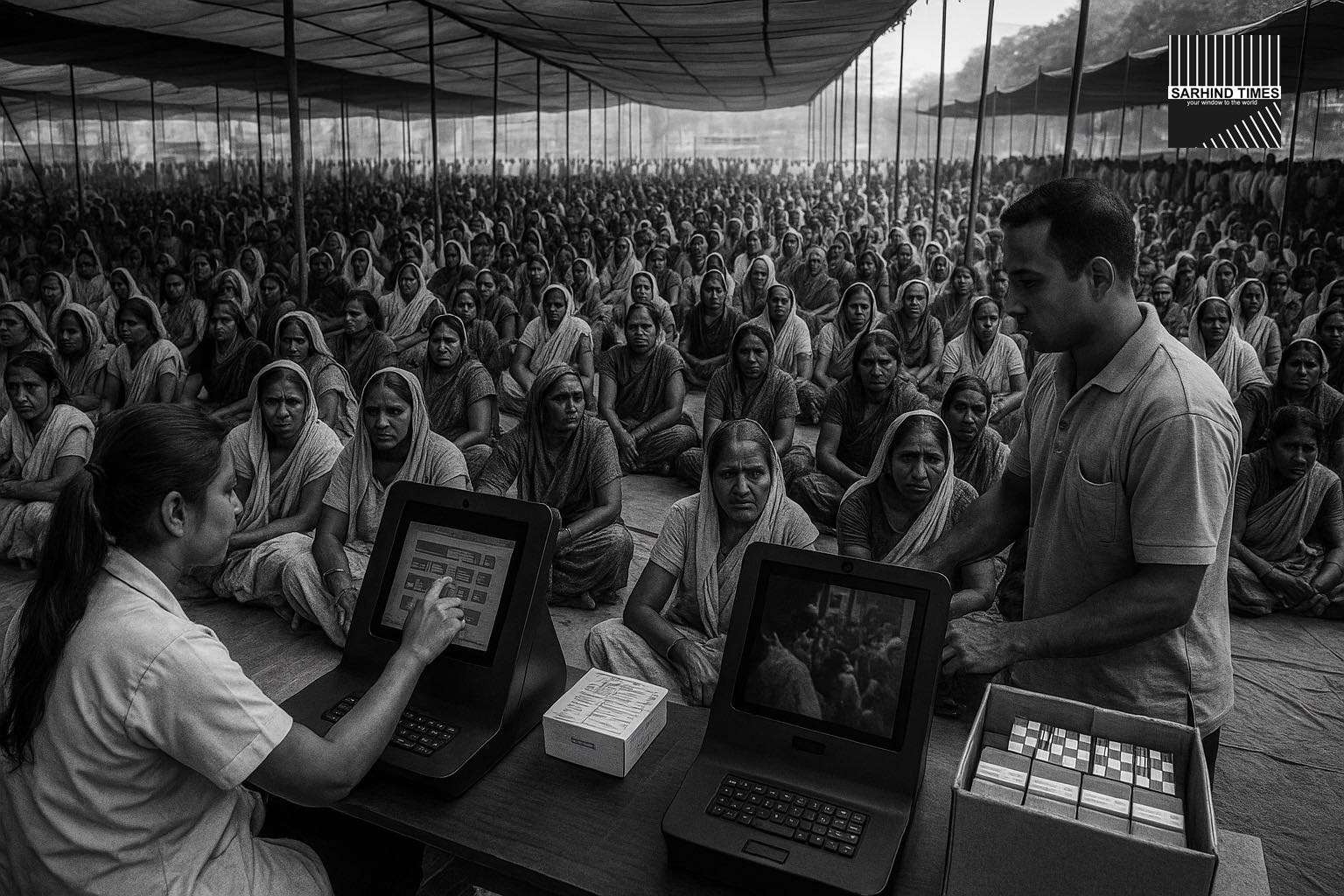
From 17 Sept to 2 Oct 2025, nationwide drive ushers in preventive health push through unprecedented mobilisation
Dateline: New Delhi | 09 November 2025
Summary: A sweeping health initiative launched by the central government has achieved three Guinness World Records under the banner of Swasth Nari, Sashakt Parivar Abhiyaan. With over 3.21 crore registrations on a health platform, nearly 10 lakh women signing up online for breast-cancer screening in one week, and more than 1.25 lakh registrations for vital-sign screening within a state in the same period, the campaign marks one of India’s largest-ever preventive-health drives. The campaign emphasises women’s health, family well-being and early disease-detection.
Campaign launch and scale
Campaign began on 17 September 2025, flagged by the Prime Minister, and ran through 2 October 2025 — aligning with national nutritional activities and women-health objectives across India. The primary aim was to combine a “whole-of-government” and “whole-of-society” approach: building awareness for women’s health, adolescent girls and children; enhancing preventive screening; boosting family healthcare; and empowering communities. Official data show participation on an unprecedented scale: more than 3.21 crore registrations for a health-platform in one month; around 9.94 lakh women signing up online for breast-cancer screening in one week; and 1.25 406 registrations for vital-signs screening in one week at state level. The campaign engaged more than 20 ministries, thousands of camps, schools, self-help groups, local governments and volunteers. The records were officially certified by Guinness World Records and publicly announced in early November 2025.
Operational footprint and outreach
According to official information, the campaign covered the entire country, across rural and urban areas, through over 19.7 lakh health-camps and reported more than 11 crore total footfalls on health-platforms. The outreach included screenings for hypertension, diabetes, oral cancer, breast & cervical cancer, antenatal check-ups, anaemia tests, TB screening among women, sickle-cell screenings in targeted states, vaccination drives, counselling & wellness sessions.
In addition to government infrastructure, the drive took advantage of digital registration platforms, health-apps, village-level worker networks (Anganwadi, ASHA), self-help groups, school-student volunteers, Panchayati Raj representatives and local health-centres. The mobilisation of community-platforms was an integral part: over 1.14 crore students engaged, 94 lakh SHG members, 5 lakh Panchayati representatives.
Why women’s health is central
The rationale for focusing on women stems from multiple angles: women serve as key health-gatekeepers in families; screening women improves early detection of chronic diseases and nutrition deficits; maternal and child health outcomes impact long-term demographic and economic wellbeing. Government documents emphasise that if a mother is healthy, the entire family is healthier.
The campaign therefore set out to bridge preventive care gaps for women: cardiovascular risk detection (e.g., ECGs or vital-signs), cancers (breast, cervical, oral), nutrition and anaemia, maternal and child health, adolescent health, non-communicable disease screening.
Record-breaking elements and digital reach
The Guinness records set under the campaign bring focus onto the digital registration and mobilisation component. More than 3.21 crore individuals registered on the designated platform in one month — a nationwide figure seldom seen in healthcare drives.
The “most people to sign up for breast-cancer screening online in one week” achieved nearly 9.94 lakh registrations, demonstrating how digital outreach is being leveraged for large-scale screening.
The “most people to sign up for vital-sign screening online in one week (state level)” crossed 1.25 lakh, showing deeper penetration at sub-national levels and state drives supporting the central push.
This layer of digital-workflow enabled real-time data capture, follow-up mapping, resource-allocation, and monitoring of outreach. It reflects a shift toward preventive-health architecture in India — not just treatment after disease, but identification and early intervention.
Health screening outcomes and early detection
Alongside registration numbers, the campaign delivered concrete screenings: over 1.78 crore hypertension screenings; roughly 1.73 crore diabetes tests; about 69.5 lakh oral-cancer screenings; around 62.6 lakh antenatal check-ups; 1.43 crore vaccine doses administered; 1.51 crore anaemia tests; more than 85.9 lakh women screened for TB; around 10.2 lakh screened for sickle-cell disease; over 2.14 crore persons participated in counselling or wellness sessions.
These outcomes are significant because many of these conditions are silent, progressive and likely to create major burden if left unaddressed. By front-loading screening at scale, the campaign hopes to reduce later-stage disease, reduce treatment costs and improve health-system efficiency.
Implications for health system and preventive care
This campaign signals a major shift in how the health system in India conceptualises preventive care. For decades, the emphasis was on infrastructure (beds, hospitals), communicable-disease control and maternal/child care. But the rising burden of non-communicable diseases (NCDs) — heart disease, diabetes, cancer — and the demographic change demand a different strategy.
The digital registration, mass-screening model, the community-worker engagement and cross-ministry coordination are elements of this new strategy. The campaign illustrates that large-scale preventive health is possible, though replication, follow-up and sustainability remain key questions.
It also opens questions about system readiness: once screening identifies cases, are diagnostics, referrals, treatment pathways and follow-up systems in place? How will the data-registrations be used to track outcomes, ensure care-continuity, prevent drop-outs? Will local health-systems absorb the additional burden of identified cases?
Challenges ahead: follow-up, quality, equity
Mobilisation and registration are one thing; quality of screening, accuracy of diagnosis, linkage to care and equitable reach are another. The scale introduces operational risks: false negatives/positives, variable quality of screening across geographies, digital-divide issues in rural/remote areas, resource constraints in follow-up care.
There are also equity concerns: did the campaign reach marginalised women—tribal, remote, economically weak—in the same measure as urban-affluent segments? Did digital-registration favour literate or connected women? Are men being engaged in parallel to ensure family health benefits? How sustainably will the screening infrastructure be maintained beyond the campaign window?
Sustainability is key: once the campaign ends, how will the momentum be sustained? Preventive-health requires regular screening, follow-up, behavioural change, lifestyle engagement. One-off camp-based success must transition into programme-cycle health-system integration.
Regional and state-level variation
While national figures are impressive, state-level performance varies. Some states have embraced the campaign more aggressively, deploying additional support such as mobile diagnostics, local health-worker incentives, community-outreach vehicles, and partnerships with NGOs and private sector. Other states — with health-system capacity constraints, low connectivity or remote geographies — may lag.
It will be important to monitor which states sustain momentum, which build referral networks, and which convert screening into measurable outcome improvement (reduced late-stage cancers, reduced uncontrolled hypertension/diabetes, improved maternal-child indicators).
The campaign’s digital registration platform also enables state-wise dashboards and monitoring, which can help identify lagging districts and tailor interventions. The link between registration and actual follow-up care will be measurable over the next 12-24 months.
Women, health equity and nation-building framing
The campaign links women’s health to family strength and national development. This narrative is important because health often remains a neglected sector in women-lives due to social, cultural and economic factors. By putting women centre-stage, the drive seeks to redirect resources, attention and structural design toward gender-responsive systems.
The “Swasth Nari” (healthy woman) narrative intersects with “Sashakt Parivar” (empowered family) and “Viksit Bharat” (developed India) frames. The messaging is simple yet powerful: healthy women lead to healthier families; healthier families support the nation’s progress.
At the same time, there is no sugar-coating: mobilising millions is one thing; converting screening into long-term health gains is harder. The monitoring and institutionalisation of results will decide whether this campaign becomes a legacy or remains a one-time milestone.
Digital health and data strategy
The campaign’s remarkable digital registration numbers demonstrate how digital health platforms can be scaled rapidly when coupled with large-scale outreach and political backing. The health-platform managed millions of registrations in a short time, underlining potential for future large-scale preventive-health drives and even mass-vaccination or screening efforts.
However, data privacy, accuracy, follow-up linkage, digital literacy and human-resource capacity remain critical. The alignment with other digital health initiatives (e-Health, Ayushman Bharat digital stack, health-information systems) will influence how the data is leveraged.
The big question will be: will this data turn into actionable community-health-intelligence? Will health-workers and primary care systems be empowered to track, treat, monitor identified high-risk individuals? Will alerts, reminders, behaviour-change interventions and longitudinal data tracking become mainstream?
Private-sector, NGO and ecosystem engagement
The campaign’s success relies heavily on partnerships: hospitals, diagnostics chains, NGOs, mission-mode NGOs, self-help groups, student volunteers, technology-platforms. Public-private synergy was built into the model—which suggests future preventive-health drives may increasingly adopt such hybrid models instead of purely government-run camps.
Private diagnostics chains, health-tech platforms, insurance players and corporate wellness programmes will likely build on this momentum. Meanwhile academic institutions may analyse data for research insights—early detection trends, regional screening uptake, health–behaviour links.
Implications for costs and health financing
A mass-screening drive potentially reduces downstream costs by catching disease early when treatment is less complex and expensive. If successful, this could influence how the government allocates health-budget resources: shifting more toward preventive programmes, community-health, primary care, screening infrastructure rather than only tertiary-care expansion. It may also support arguments for insurance models rewarding prevention and early-detection.
On the flip side, screening raises demand for diagnostic, treatment and follow-up services—making it essential that these systems are not overloaded. Cost-management, referral mechanisms and workforce readiness will determine how efficient this roll-out turns out.
What to watch in the coming months
To assess whether the campaign becomes meaningful beyond the headlines, several things need tracking:
– The conversion rate from registration/screening to diagnosis to treatment.
– Reduction in late-stage cancers, uncontrolled diabetes/hypertension, maternal & neonatal complications in the next one-two years.
– State-wise drop in health-inequities, especially for remote and under-served populations.
– Integration of the screened cohort into long-term health-monitoring and primary-care systems.
– The budget allocations and policy reviews prioritising preventive health in upcoming health-budgets.
– Private-sector diagnostic, telehealth and wellness players capitalising on trend and creating sustainable prevention-ecosystems.
Conclusion
The success of the “Swasth Nari, Sashakt Parivar Abhiyaan” campaign is a clear signal: India is stepping up from reactive treatment to proactive preventive-health mobilisation. The newly-set Guinness World Records capture the scale of ambition and outreach—but the real challenge lies ahead: converting this into sustained health-system change, broader coverage, equitable access and measurable health-outcomes.
If the momentum holds, this campaign could mark a turning point in India’s health-journey: putting women at the centre, leveraging digital platforms, mobilising society at scale and shifting focus from disease to health.
It is now up to policy-makers, health-managers and societies to convert the “huge numbers” into “lasting impact”. India has set the target; now it must follow through.



+ There are no comments
Add yours