
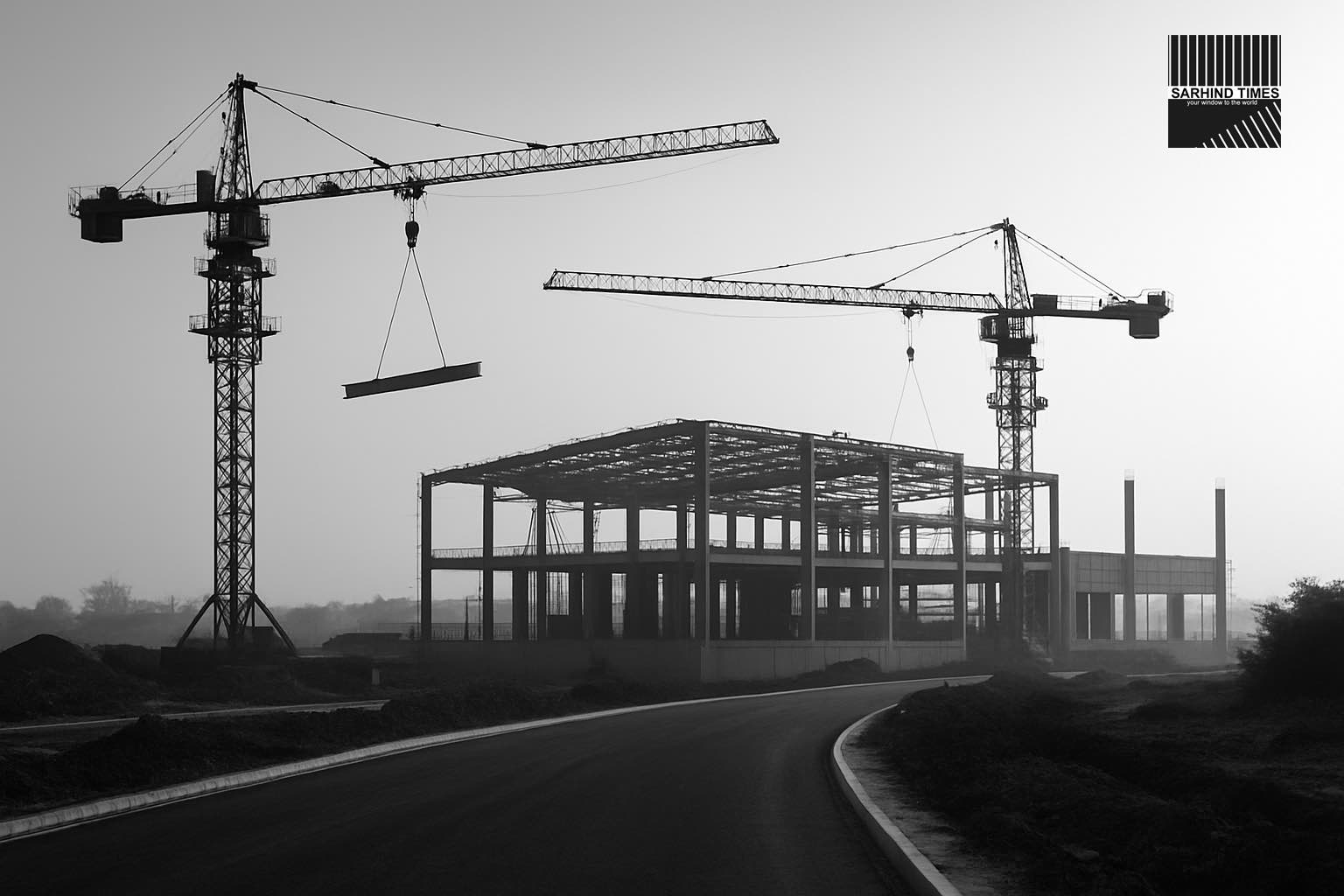
State government commits major funding for new industrial zones, logistics parks and smart-city upgrades in Gurugram over five years
Dateline: Gurugram | November 7 2025
Summary: The Government of Haryana has announced an infrastructure investment programme worth approximately ₹12,000 crore centred on the Gurugram region. The five-year plan targets the development of new industrial zones, logistics parks, access roads and smart-city infrastructure, marking a significant push to consolidate Gurugram’s status as a manufacturing and logistics hub within the Delhi-NCR and national supply-chain network.
Context: Gurugram’s Changing Role in Haryana’s Economy
Gurugram has long been a leading service-sector city in Haryana, known for its IT parks, business centres and proximity to the national capital. However, in recent years the state government and industry stakeholders have sought to diversify Gurugram’s economic base—moving beyond offices and real-estate into manufacturing, logistics and high-value industrial clusters. With national-level supply-chain realignments, global companies seeking alternatives to China, and India’s “Make in India” narrative gaining traction, Gurugram is seen as a strategic node thanks to its existing infrastructure, connectivity to Delhi, and access to the airport and highways.
The new investment announcement by the Government of Haryana represents a deliberate shift. Rather than incremental upgrades, the ₹12,000 crore allocation over five years indicates a medium-term plan to transform Gurugram’s industrial ecosystem: new special economic zones (SEZs), integrated logistics parks, last-mile connectivity corridors, and smart-city infrastructure upgrades (fiber, energy grid, waste-water treatment). The aim is to build a manufacturing-led complement to Gurugram’s services strength and position the region as a multi-modal logistics and export hub.
Key Components of the Infrastructure Plan
The investment plan can be broken down into three major pillars:
- Industrial Zone Development: The state will develop two new industrial parks of 750 hectares each on the periphery of Gurugram—one in Manesar-Kharkhoda corridor and another near Pataudi. These parks will be fully serviced (roads, power, water, effluent treatment) and offer plug-and-play plots to manufacturing firms.
- Logistics Parks & Supply-Chain Connectivity: A major logistics park comprising over 300 acre along NH-48 (Delhi–Jaipur highway) with built-up warehousing of 2.5 million sq ft, multimodal connectivity (road, rail siding), and dedicated cold-chain zone. In addition, the existing Pataudi road access will be upgraded to a four-lane express corridor to reduce travel time to the airport and Delhi.
- Smart-City and Urban Infrastructure Upgrades: Recognising that manufacturing and logistics depend on urban liveability and infrastructure, the plan also allocates ₹2,000 crore for smart-city components in Gurugram: advanced power-grid, waste-water reclamation to support industrial effluents, digital fibre backbone, electric vehicle (EV) charging network and last-mile public-transport upgrades in the industrial zones.
Fiscal Arrangements and Implementation Timeline
The funding will come from a mix of state budget allocations (₹5,000 crore), central-state matching grants under national infrastructure schemes (₹3,500 crore), and industry-partner-financed PPP projects (projected ₹3,500 crore). The plan is structured over a five-year horizon (2026–31) to allow staged development, stakeholder integration and scalable build-out rather than a one-year rush.
Implementation is organised into annual tranches:
- 2026–27: Finalise land acquisition and servicing of the first industrial park; commence logistics-park construction.
- 2027–28: Launch built-up warehousing and cold-chain units in logistics park; begin urban infrastructure upgrades.
- 2028–29: Complete express-corridor build-out and smart-city fibre/EV network; begin second industrial park land servicing.
- 2029–30: Occupancy of plots in both parks, ramp-up of exports and supply-chain operations; integrate urban-infrastructure systems.
- 2030–31: Full operationalisation of both parks, hand-over of smart infrastructure and initial monitoring of output and jobs.
Expected Economic and Employment Impact
The government projects that the investment will attract manufacturing commitments worth ₹25,000–30,000 crore and create approximately 120,000 direct jobs in Gurugram over the five-year period, with additional indirect employment estimated at around 70,000 in services, logistics and supporting supply-chain firms. The new parks are expected to contribute incrementally to state gross value added (GVA) by 1.8–2.0 per cent annually in the out-years and generate export-oriented output of around USD 4–5 billion by 2031.
For Gurugram, the mix of jobs is expected to tilt towards manufacturing and high-value logistics rather than just office and service-jobs, which has implications for skills, residential planning, commuting patterns and urban services. Training programmes will be rolled out—alongside the investment—to equip the workforce with automation, robotics, supply-chain management, cold-chain logistics and digital-skills relevant to the new zones.
Why the Timing is Significant
This announcement comes at a time when the Indian economy is broadly recovering and seeking to capitalise on global supply-chain realignments. The state government of Haryana has observed increased interest from multinational companies (MNCs) exploring relocation or additional capacity in India. In parallel, central policy nudges—such as production-linked incentives (PLI), logistics-ease reforms and semiconductor ambitions—encourage states to build physical infrastructure rapidly. Gurugram’s proximity to Delhi, its airport connectivity and already established corporate ecosystem make it a logical candidate for the next-wave industrial push.
Moreover, by announcing a multi-year funding commitment, Haryana signals long-term certainty and infrastructure readiness—traits valued by global investors and supply-chain planners. The integration of urban infrastructure in the plan also recognises that manufacturing competitiveness increasingly depends on liveability, connectivity and quality of services for workers and firms alike.
Implementation Challenges and Risk Factors
While the plan is ambitious, several risks are identified:
- Land-acquisition and regulatory delays: While the state has improved processes, securing large contiguous land parcels near Gurugram remains challenging due to fragmented ownership, litigation and competing uses.
- Ensuring utilities and infrastructure readiness: Manufacturing plots require assured power, water, wastewater treatment and logistics infrastructure—delays in any of these could slow occupancy.
- Maintaining fiscal discipline: The state budget will need to continue to allocate funds amidst other priorities; external shocks or fiscal stress may force rescheduling.
- Global demand risk: The plan assumes export-oriented manufacturing take-up; global trade slowdowns or supply-chain disruptions could affect realisation.
- Urban-services stress: As industrial and logistics activity grows, urban infrastructure (housing, roads, public transport, environment) must scale accordingly—without creating congestion or environmental stress.
Stakeholder Reactions and Investor Sentiment
Industry bodies, real-estate developers, logistics firms and chambers of commerce in the region welcomed the move. The Confederation of Indian Industry (CII) Haryana chapter described the plan as “a long-awaited blueprint for manufacturing diversification in Gurugram”. Several leading logistics operators have flagged their interest in locating cold-chain and e-commerce fulfilment centres in the proposed corridor once the express-corridor completes. Real-estate developers see ancillary expansion in housing and services catering to the new parks. The response from large MNCs to land-servicing tenders (which closed this October) indicates high-level interest already; the first industrial-plot allotments are expected in early 2027.
Policy Linkages and Future Outlook
The investment plan aligns with multiple policy frameworks:
- National Manufacturing Policy (Draft) which emphasises 50 per cent growth in manufacturing GVA by 2030.
- National Logistics Policy (Revised) which targets reduction of logistics cost from 14 per cent of GDP to 10 per cent by 2030—the Gurugram corridor is one of the designated nodes.
- Haryana’s own industrial-policy revision (announced in 2024) which increased land-bank in key corridors and extended the definition of MSME to include advanced manufacturing.
Conclusion
With its ₹12,000 crore infrastructure announcement, Haryana is signalling that Gurugram will move into a new phase—transitioning from corporate services hub to manufacturing-logistics engine. The scale of the investment, the multi-year time-frame and the integration of smart-city infrastructure reflect a maturation of policy and ambition. As implementation unfolds, real-world benefits will depend on land readiness, utility provisioning, investor uptake and coherence between industrial, urban and transport-planning policies.
For investors, businesses and job-seekers in north India, Gurugram’s next five years may offer a compelling proposition: a twin-engine city economy with agility in services and depth in manufacturing. For the state government, success will hinge on execution, coordination and sustained commitment through to 2031.



+ There are no comments
Add yours