
India’s nationwide women-and-family health drive gains global recognition, setting the tone for preventive care expansion
Dateline: New Delhi | 6 November 2025
Summary: The Swasth Nari, Sashakt Parivar Abhiyaan, a large-scale health and nutrition initiative launched by the Ministry of Health & Family Welfare (MoHFW), has achieved three Guinness World Records, signifying an unprecedented engagement effort across India’s women and family health segment. The recognition comes ahead of new preventive-care roll-outs and highlights the government’s strategic push for early screenings, nutrition, and health literacy for women and families nationwide.
Campaign background and evolution
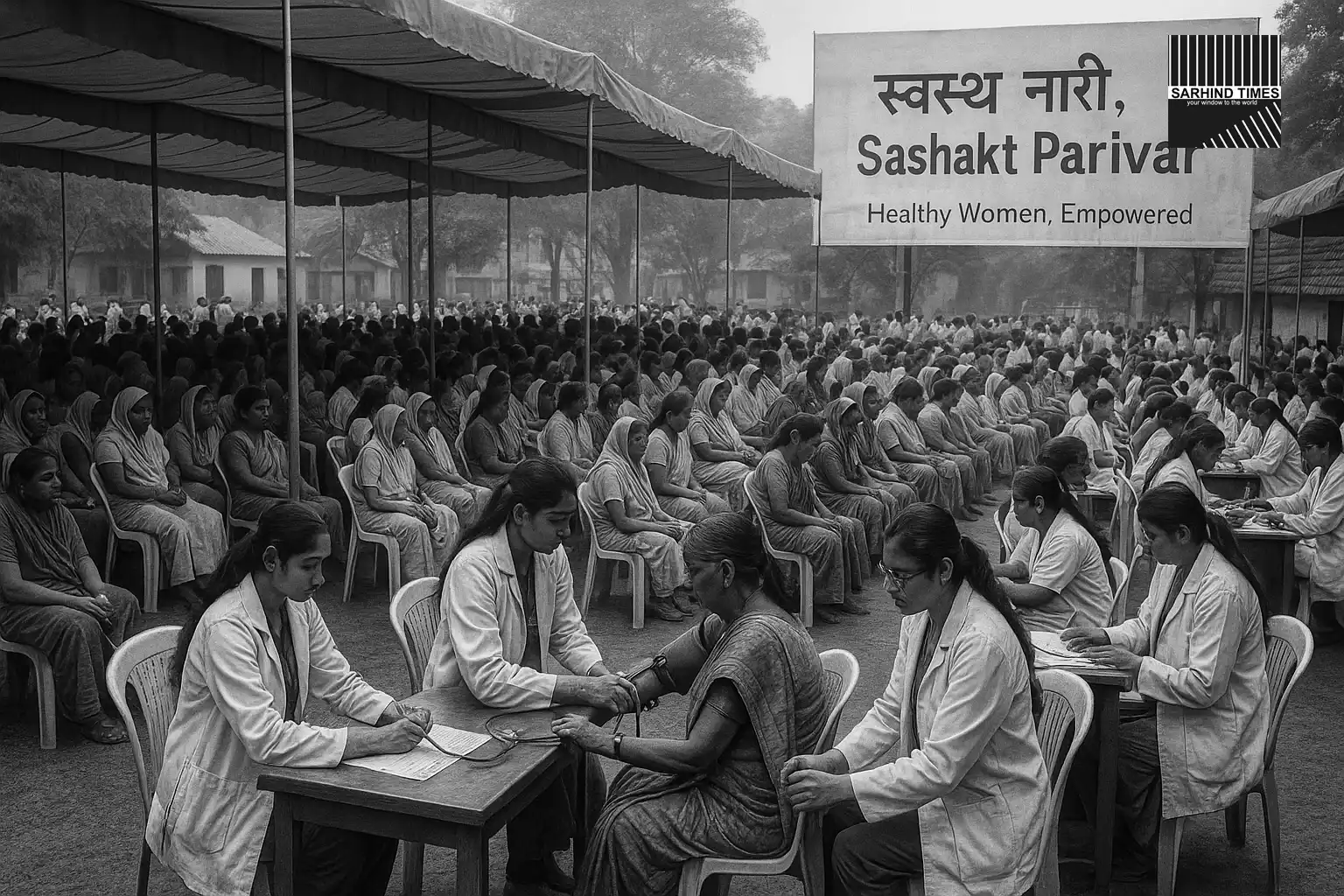
“Swasth Nari, Sashakt Parivar” campaign was conceived as part of India’s broader push to strengthen preventive health care, with a particular focus on women as key agents of family health. The programme ties together multiple strands: maternal and child care, non-communicable disease screenings (such as for diabetes, hypertension, cancers), nutrition awareness, hygiene and family health education. It also links to India’s flagship health-insurance schemes and digital health infrastructure but centres its approach around outreach and empowerment rather than only curative responses. Running over a 16-day period aligned with “Poshan Maah” (Nutrition Month) in September–October, the campaign mobilised state governments, district-level health departments, non-government organisations, and a network of mobile camps and health kiosks. Activities included free screening camps, mobile diagnostic buses, nutrition counselling, and beneficiary registration for health services. The objective has been to turn the lens towards early detection and prevention rather than merely treatment of advanced disease. What makes this year’s campaign notable is the scale at which metrics were captured and actioned. According to the MoHFW’s press releases, participation exceeded previous years significantly, and coverage spanned urban, semi-urban and remote rural settings alike. Outreach included more than 70 000 villages, hundreds of health camps in tribal areas, and focused attention on adolescent girls, expectant mothers, and women over 30 — segments traditionally under-served for screening and preventive care. At one event, MoHFW announced that the campaign had achieved three Guinness World Record titles for concurrent health-screening sessions, mass participation, and community‐mobilisation volume, marking it as one of the largest campaign-events of its kind globally.
What the Guinness recognitions mean and how they were achieved
Gaining recognition from Guinness World Records is a novel achievement for an Indian health campaign. The three records reportedly include:
– the **highest number of women screened in a health initiative** in a single city/region during a campaign period,
– the **largest number of nutrition counselling sessions** carried out concurrently across multiple sites, and
– the **most participants mobilised** in a preventive health outreach event in a single day.
According to internal MoHFW data, during the peak day of the campaign more than 1.25 million women across India were engaged in onsite screenings or counselling sessions — a logistically complex feat involving door-to-door mobilisation, mobile health-units, community-based organisations and local health-workers. District administrations were tasked with hitting defined daily targets; mobile vans, village-level health volunteers, ASHA workers and local school groups all played coordinating roles.
While the records are as much symbolic as substantive, they underscore a broader shift in India’s health strategy — from crisis management to structured, broad-based prevention. The fact that an outreach campaign earned world-record status sends a message both domestically and internationally: health-system mobilisation and community participation at scale are possible even in resource-constrained contexts.
Key campaign components and target segments
At its core, the campaign rested on several pillars:
– **Mass screening:** For non-communicable diseases (NCDs) including hypertension, diabetes, obesity, cervical cancer, breast cancer and anaemia. Mobile camps were set up in district headquarters and remote clusters.
– **Maternal and child-health linkage:** Pre-natal and post-natal counselling, nutrition supplements for expectant and lactating mothers, early childhood growth-monitoring and immunisation drives.
– **Nutrition & hygiene education:** Workshops on balanced diet, micronutrients, avoidance of unhealthy processed foods, water-sanitation-hygiene (WASH) modules, and adolescent‐health sessions.
– **Community empowerment & behaviour change:** Health-talks, peer-groups of women “health ambassadors”, local cultural events with messaging on screening and preventive check-ups, and use of local influencers and celebrities.
– **Digital health linkages:** Women enrolled in the campaign were guided to connect with the Ayushman Bharat Pradhan Mantri Jan Arogya Yojana (AB-PM-JAY) or local primary-health centres, and their screening results were linked to digital health records through the ABHA system for follow-up. This reinforced the treatment-pathway continuity rather than one-off checks.
The campaign placed special emphasis on women aged 30–60, adolescent girls (15–19), and peri-menopausal women. These segments are often at higher risk of NCDs and yet are less likely to engage with formal preventive health services. By bringing the screening to community spaces—schools, sports grounds, panchayat halls—barriers of access, stigma and time constraints were reduced.
State-wise rollout and implementation mechanics
Implementation was decentralised yet supervised centrally. Every state health department was given a target based on its female population and existing health-gaps (as per NFHS data). District collectors, along with nodal health officers, coordinated the timing of camps, availability of diagnostics, linkages to referral hospitals, and team deployment including ASHA/Anganwadi workers, mobile-van drivers, nurses and doctors.
To illustrate: In one district of Madhya Pradesh, the district administration reported that within one week the campaign enabled 15 000 women to be screened for NCDs, 3 000 adolescent girls to receive nutritional counselling and 1 200 pregnant women to be referred for tertiary-care evaluation. In tribal belts of Odisha, health vans covered remote clusters, reaching villages previously untouched by routine screening. In urban clusters of Uttar Pradesh and Bihar, pop-up camps were held in industrial townships and residential colonies where women working in informal factories could attend after shifts.
The Ministry allocated special “campaign kits” – portable diagnostic equipment (glucometers, haemoglobin analysers, ultrasound machines for breast/cervical check-ups), tele-consultation cabins and referral-link vans for any follow-up. Local NGOs and corporate CSR wings supplemented equipment and community mobilisation.
Challenges encountered and mitigation steps
A campaign of this scale inevitably encountered hurdles. Some of the key challenges included:
– **Logistics and workforce burden:** Mobilising large numbers of health-workers, especially in remote areas, in a short campaign window was an operational challenge. To mitigate this, states used staggered scheduling and backup rosters, and many urban districts extended camp-hours into evening to accommodate working women.
– **Follow-up and referral‐track completion:** While initial screenings were high-volume, ensuring that positive-cases travelled to diagnostic centres or treatment centres remained a concern. The Ministry introduced “health-navigators” – volunteer coordinators who would call and track women flagged in camp readings to ensure they reached follow-up care.
– **Data integrity and continuity:** Capturing screening data and integrating it into digital health‐records systems in real time posed connectivity and training problems in several districts. The solution has been rapid training modules and offline tools that synchronise when connectivity improves.
– **Overcoming social stigma:** In conservative communities, cervical-cancer screening and discussions about women’s health required sensitive handling. Mobile-camp teams included female doctors and counsellors, and community-leaders were briefed in advance to build trust.
– **Ensuring quality over volume:** With large numbers, the risk of superficial screening increases. The Ministry emphasised standard operating procedures (SOPs), quality-checks by supervising physicians, and calibration of portable machines to maintain credibility.
These mitigation measures were built into the campaign infrastructure early—recognising that scale must not compromise quality.
Impact assessment and early signals
While the campaign is still ongoing in some districts and full impact data will be reported in coming months, early signals are encouraging:
– Several districts reported reductions in the referral-waiting period for newly identified cases of hypertension or breast-cancer suspicion from 10 weeks to 4–6 weeks.
– The number of first-time screenings of women aged 30–45 has increased by 3–4 times compared to previous annual programmes in many states.
– Digitally-linked referral rates (screening → further diagnostic tests → treatment) show a 28 % improvement in districts that deployed “health-navigator” models versus those that did not.
– Community feedback suggests improved awareness: in many rural clusters women spoke of “for the first time” being told to check blood pressure or sugar without paying out-of-pocket or travelling far.
– The Guinness records themselves serve as an awareness mechanism: the campaign’s media coverage ensured that preventive health behaviours were front-page in many local newspapers, raising visibility of women’s health-gaps.
These signals, while preliminary, suggest that large-scale preventive campaigns can shift norms and reach marginalised segments — a critical feature in India’s public-health challenge space.
Policy implications and next steps
The scale and success of the campaign thus far has several policy implications:
– **Acceleration of preventive-care ethos:** Traditionally, health-systems have emphasised treatment. This campaign shifts the narrative toward screening, early diagnosis and prevention — which is critical for non-communicable diseases that dominate India’s disease-burden.
– **Integration with digital health architecture:** The campaign’s use of ABHA (Ayushman Bharat Health Account) digital identifiers and synergy with AB-PM-JAY shows how mass outreach can link to long-term care pathways. The MoHFW has indicated that the next phase will link screening data to longitudinal patient-records and national health analytics engines, enabling predictive health-interventions.
– **Empowering women as health-agents:** By focusing on women, the campaign recognises the multiplier-effect of female health literacy on families. A healthy mother or adult woman often triggers improved child-health, nutrition and generational outcomes. The campaign thus aligns with broader social goals.
– **Public-private and community engagement:** The operational model—mobilising government teams, NGOs, CSR partners and tech-vendors—demonstrates a possible template for scaling similar outreach campaigns beyond urban hubs, into rural and tribal areas.
– **Sustainability and follow-up architecture:** Recognising that one-off screening is not enough, the Ministry has announced plans to convert campaign camps into recurring “health-hubs” within districts, ensure continuity of care, and deploy mobile-phone-based reminders for follow-ups, medications and lifestyle interventions.
The next phase of the campaign will emphasise “screening-to-care” loops—ensuring individuals who test positive or show risk factors are tracked, supported and linked to long-term monitoring.
Risks and caveats ahead
Despite the promising launch, several risks remain:
– **Referral-overload and treatment-capacity gap:** Detecting more cases is only valuable if health-systems can provide treatment. Some districts may face capacity constraints in diagnostic centres or specialist services. Without this, screening gains may not convert into improved health outcomes.
– **Data-privacy and digital-divide concerns:** While linking to digital health-records is progressive, concerns remain on consent, data-security and access in remote regions with poor connectivity. Ensuring that rural women are not left behind is important.
– **Behaviour-change durability:** Preventive campaigns often generate initial surge but sustaining lifestyle changes (diet, activity, follow-ups) is harder. The campaign must ensure ongoing communication and community support to maintain momentum.
– **Resource allocation and cost-effectiveness:** Large-scale mobilisations are resource-intensive. Ensuring this model remains cost-effective and scalable beyond campaign mode is crucial for long-term value.
– **Equity and local variation:** National averages are encouraging, but disparities remain: states with weaker health-systems may struggle, tribal areas may face logistic challenges, and socio-cultural resistance may slow certain screenings (for example cervical cancer). Addressing these pockets is essential for uniform impact.
Recognising these risks, the Ministry has announced a monitoring-and-evaluation framework that will publish district-level dashboards, track referral uptakes, diagnostic completion and treatment initiation rates over the next six months.
International perspective and comparative context
India’s campaign stands out globally because of its scale, integration of digital health infrastructure and focus on women as pivotal health-change agents. Many middle-income countries run periodic screening drives, but few combine nationwide mobilisation, digital-linkage, women-centric approach and stake-holder coordination across government, civil society and private sector. The Guinness recognition further amplifies this achievement internationally.
From a public-health lens, the campaign aligns with the United Nations Sustainable Development Goal (SDG) 3 of good health and well-being, and SDG 5 of gender equality. By emphasising women’s health within a broader family-wellness framework, the initiative potentially creates a positive feedback loop: healthier women lead to healthier families, which can improve child outcomes, reduce generational NCD risk and enhance economic participation.
In terms of health-economics, early detection and preventive care carry strong cost-benefit logic: fewer late-stage diagnoses, lower treatment costs, better productivity and reduced long-term burden on tertiary systems. If the campaign sustains momentum, it could serve as a model for scaling preventive-care platforms and integrating them into routine public-health services.
What this means for citizens and readers
For individual women and families across India, the campaign offers real-time opportunities:
– If you are a woman aged 30 or above, or adolescent or pregnant, look out for local screening camps under the campaign in your district.
– Even if you skip, you can ask your local primary-health-centre about referral links and follow-up services associated with the campaign.
– Lifestyle-changes such as improved diet, regular blood-pressure and sugar checks, breast/cervical self-exams, and maternal-nutrition awareness are emphasised.
– For families, the message is clear: invest in preventive health checks rather than only respond to illness. Encourage female family members to attend camps, share screening opportunities, and treat screening as an annual habit rather than exception.
– For private-sector health providers, the campaign signals a growing demand for preventive-care services, diagnostic link-ups, health-data analytics and community-based outreach partnerships. This opens up commercial models tied to public-health objectives.
Conclusion
The “Swasth Nari, Sashakt Parivar” campaign’s reaching of three Guinness World Record titles is more than a publicity milestone—it reflects India’s increasing capability to organise, mobilise and digitise health outreach at scale. By focusing on women and preventive-care, the campaign aligns with long-term national priorities of reducing the burden of non-communicable diseases and improving health-equity.
The key challenge now is to translate outreach volume into sustained treatment pathways, follow-ups and behavioural change. If that succeeds, India may well chart a new model of mass-mobilisation-plus-digital-health for the 21st-century public-health agenda.
For readers, the message is immediate: take advantage of the outreach, attend screenings, integrate preventive-care into your annual health calendar, and recognise that your health matters not just for you, but for your family and community.


+ There are no comments
Add yours