
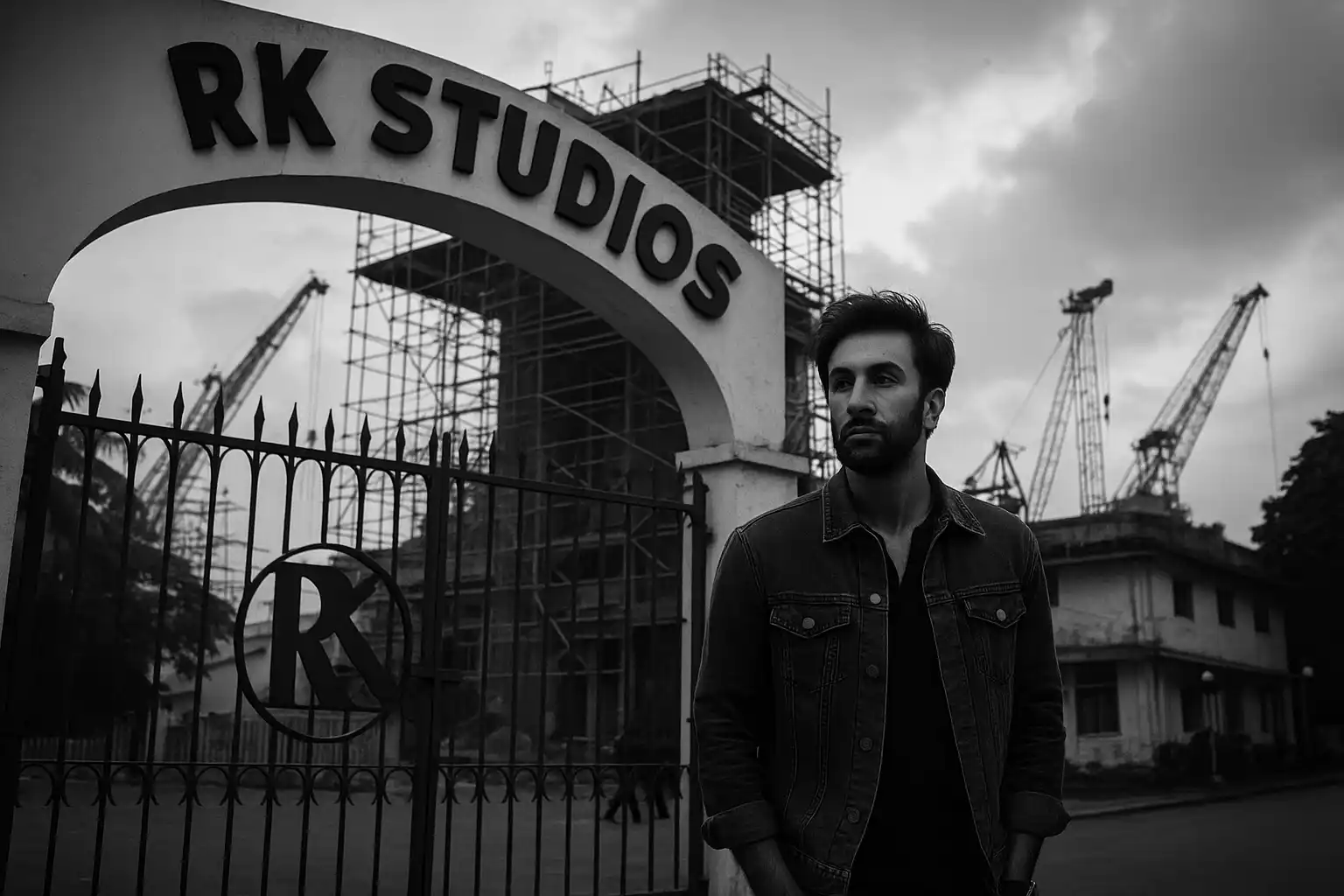
A blending of legacy and modern vision as the Kapoor scion takes the helm of family studio renewal
Dateline: Mumbai | 05 November 2025
Summary: Bollywood star-actor Ranbir Kapoor is set to resurrect the historic RK Studios — founded by his grandfather Raj Kapoor in 1948 — and will direct the first film under its revamped banner, pairing legacy with a fresh creative outlook. The relaunch encompasses infrastructure redevelopment, modern production facilities and a slate of new high-profile collaborations.
Historical Significance of RK Studios
Iconic RK Studios has long been a landmark in Indian cinema. Established by Raj Kapoor in the post-independence era, the studio became the birthplace of many classic films, profoundly shaping Bollywood’s heritage and identity. Over decades, RK Studios witnessed the golden era of Hindi cinema — iconic performances, imaginative sets and a signature brand of storytelling associated with the Kapoor family name.
Yet in recent years the facility faced decline, with studio buildings ageing, land-cost pressures mounting in Mumbai and industry production patterns shifting toward multiplexes, streaming and multi-city shoots. The decision by Ranbir Kapoor to step in and spearhead its revival signals both personal ambition and institutional renewal: preserving cinematic heritage while adapting to contemporary demands.
Scope of the Revival and the Directorial Debut
The new project will be Ranbir’s directorial debut, making this renewal even more symbolic. The plan involves physical refurbishment of the RK Studios campus: modern production stages, digital-post-production suites, high-end VFX facilities and co-working spaces for content creators. According to inside reports, collaborators include Deepika Padukone and director Ayan Mukerji — reflecting a blend of star power and creative pedigree.
Ranbir Kapoor described the relaunch in a media interaction: “This is about honouring what my grandfather built, but also building something that works for next-gen storytelling. RK Studios was a temple of cinema; I want it to be a laboratory for what comes next.” The studio’s focus is reported to include multilingual production, cross-platform content, digital-first formats and global collaborations.
Why the Timing Matters for Indian Cinema
The Indian film industry is at a structural inflection point. Streaming platforms, international co-productions, regional-language content and multi-platform release strategies have disrupted traditional Bollywood models. In that context, a legacy studio’s revival carries deeper significance: it is not only about nostalgia but about infrastructure for the future.
Mumbai’s production real-estate has become extremely expensive. Many filmmakers are relocating shoots to Hyderabad, Chennai, Jaipur or abroad. By upgrading RK Studios and building modern facilities, the Kapoor family is effectively betting on Mumbai’s ability to remain a production hub — and on India’s potential to produce globally competitive content from home.
Industry Response and Stakeholder Perspectives
The announcement has stirred interest across Bollywood. Producers and technical-service houses view the investment as a welcome signal that Mumbai is continuing to receive infrastructure upgrades. Several VFX and post-production specialists commented that “if RK Studios really opens up its digital-suite and lease-space to external productions, that’s a big boost for Mumbai’s ecosystem.”
Actors and creatives, meanwhile, noted the symbolic value. One veteran actor said: “The Kapoor family has carried the weight of Hindi cinema heritage. A revival of RK Studios isn’t just bricks-and-mortar—it’s an emotional marker for the industry.” Another director added: “Legacy studios matter because they create institutional memory. When we lose that, we lose more than sets — we lose identity.”
Challenges Ahead: Heritage Meets Modernisation
While the plan is ambitious, execution will pose multiple challenges.
Land and zoning: The studio campus lies in central Mumbai, where land values are extremely high and redevelopment must comply with municipal zoning, heritage-building restrictions and city infrastructure constraints. Balancing modern facilities with built-heritage elements will require careful planning.
Production competition: Other Indian cities (Hyderabad, Chennai, Bengaluru) are aggressively positioning themselves with incentives, infrastructure and state support. To keep Mumbai competitive, RK Studios will need to offer cost efficiency, flexibility and state-of-the-art tech.
Changing audience and release models: As consumers shift to streaming, short-format digital content and regional-language films, the studio must adapt its business model. Relying solely on big theatrical blockbusters may not be sufficient; building a content-pipeline across formats will be key.
Creative Vision: Blending Legacy and Next-Gen Storytelling
Ranbir Kapoor’s directorial debut is expected to reflect this blend. While details remain under wraps, industry observers expect a multi-language film with regional stars, digital release plan and cross-platform tie-ins. The goal is to showcase both the legacy of RK Studios and its future-orientation.
The studio’s programming may also include initiatives to support new filmmakers, incubator programmes, co-production deals with OTT platforms and technical-partnerships with VFX houses. This positions RK Studios not simply as a closed flagship but as an open-ecosystem platform for content creation.
Broader Impacts on the Indian Film Ecosystem
Several wider impacts may emerge:
- Infrastructure growth: Other legacy studios may also pursue upgrades, leading to overall uplift in Mumbai’s production capacity.
- Employment and talent retention: By consolidating advanced production facilities in Mumbai, the revival could help retain local talent (technicians, VFX artists, creators) who have migrated due to infrastructural limitations.
- Regional production appeal: With multilingual production capability, the studio may foster cross-regional content, supporting India’s pan-language film growth.
- Heritage preservation: The project sends a message that Indian cinema values its heritage, even as it innovates — contributing to institutional memory and cultural continuity.
What to Watch Next
Key signals to monitor include:
- The timeline and scope of physical refurbishment at RK Studios—how fast studios and post-production units are operational.
- The announcement of Ranbir Kapoor’s directorial film: cast, language(s), budget, distribution model and release platform(s).
- The opening of lease/residential spaces for third-party productions—will external filmmakers be invited or restricted?
- Partnerships with streaming platforms, co-production deals with regional/foreign producers and whether the studio becomes a talent-incubator.
- Community and labour-response: production-crew contracts, working condition improvements and how old-school studio staff are integrated into the modern facility.
Conclusion
Revival of RK Studios under Ranbir Kapoor is an emblem of where Bollywood stands today: rooted in legacy, pressure-tested by infrastructure and business changes, yet optimistic about innovation, cross-platform narratives and India’s global content ambition. The gamble is bold, mixing heritage bricks with future-facing ambition.
If executed well, this project could become a model of how Indian studios evolve — not simply renovate physical space but build new creative ecosystems, link theatre with streaming, region with pan-language, and legacy with start-up culture. For audiences, producers and creators alike, it offers hope that India’s cinematic heartbeat continues to beat loud, clear and globally relevant.
In an era where content is king, and where heritage either shrinks or adapts, RK Studios’ revival says: we choose to adapt—and to lead. The first big step in that direction will be Ranbir Kapoor’s directorial film. All eyes will be on it, and on what this new RK Studios will deliver to Indian and global audiences alike.


+ There are no comments
Add yours