
New Delhi | 4 November 2025
Dateline: New Delhi | 4 November 2025
Summary: Three major developments mark a critical moment for India’s health sector: The World Health Organization has issued a global advisory on contaminated cough syrups made in India, the Ayushman Bharat Pradhan Mantri Jan Arogya Yojana (AB-PMJAY) has clarified that beneficiaries no longer need to renew their health cards yearly, and the women-focused campaign Swasth Nari, Sashakt Parivar Abhiyaan has achieved three Guinness World Records, signalling growing emphasis on preventive and women’s health. Together these reflect both the opportunities and vulnerabilities in India’s healthcare system.
Contaminated syrups trigger international health warning
The global health community has been alerted to serious pharmaceutical safety concerns originating in India. The WHO issued a formal medical-product alert for three cough syrup brands produced in India that were found to contain extremely high levels of diethylene glycol (DEG), an industrial solvent toxic to humans. The affected syrups include Coldrif (manufactured by Sresan Pharmaceuticals), Respifresh TR (manufactured by Rednex Pharmaceuticals) and ReLife (manufactured by Shape Pharma).
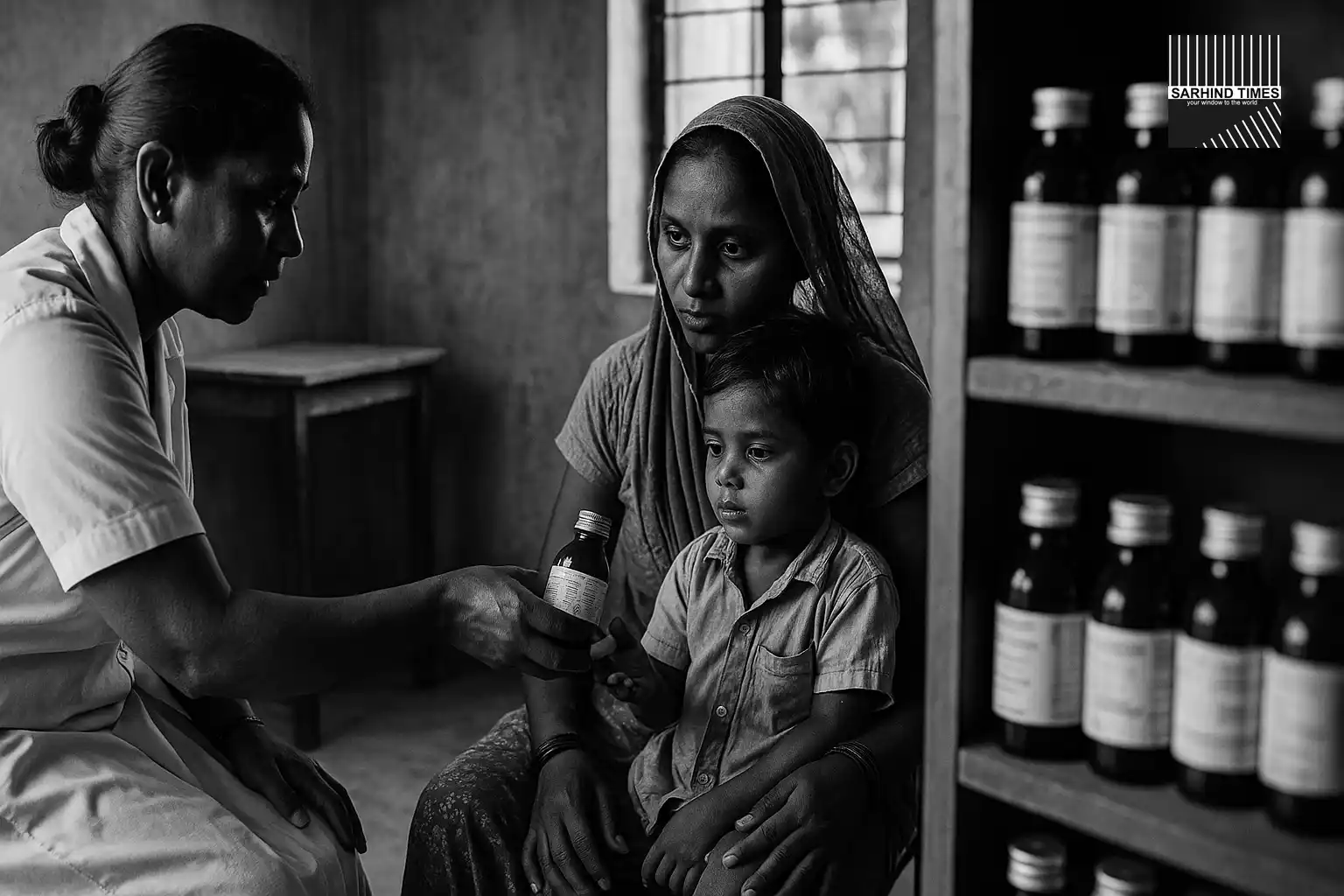
According to the alert, several children under the age of five from the central Indian district of Chhindwara (Madhya Pradesh) died after taking Coldrif syrup, which contained DEG at levels nearly 500 times above permissible limits. The syrups were not reported to have been exported outside India, but the warning emphasises that global vigilance is required.
This incident has sparked scrutiny of India’s drug-regulatory systems, manufacturing controls, quality assurance protocols and supply-chain oversight. The affected companies have had production halted and licences suspended. Investigations are ongoing to determine how the contamination occurred — whether through substitution of raw materials, inadequate quality-control checks, or systemic oversight failure.
Regulatory fallout and public-health implications
The manufacturing and regulatory response is under pressure. The national drug regulator (the Central Drugs Standard Control Organization, CDSCO) has opened investigations into the implicated firms, and state-level drug control departments are raiding manufacturing plants, testing raw materials and recalling suspect batches. The speed and transparency of these actions are being closely watched by both public health experts and international agencies.
From a public-health perspective, the implications are serious. The deaths of children from what are normally benign over‐the-counter medicines raise concern about broader confidence in drug safety for all age-groups. The case underscores how vulnerable populations—especially young children—bear greater risk when manufacturing and regulatory failures occur.
Experts warn that the incident may lead to more cautious prescribing of syrups for young children, increased parental wariness, and possibly weaker trust in generic medicines. For India’s pharmaceutical industry—one of the largest in the world—the reputational and export-risk stakes are high. Manufacturing firms are now under greater pressure to demonstrate higher quality standards, adopt stronger internal audits and ensure rigorous raw-material validation.
Healthcare access: Ayushman‐Card policy clarified
In parallel with the drug safety crisis, the Ministry of Health and Family Welfare announced a significant policy clarification regarding India’s flagship health-insurance scheme. Beneficiaries of the Ayushman Bharat Pradhan Mantri Jan Arogya Yojana (AB-PMJAY) no longer need to renew their “Ayushman Card” each year to retain access to coverage. The clarification aims to remove administrative burden and reduce dropout risks among vulnerable populations.
Under the scheme, eligible individuals hold an Ayushman Card that grants them annual health-cover benefits up to ₹5 lakh for secondary and tertiary care. Previously, many beneficiaries—especially in rural areas—believed they had to renew the card annually; confusion around expiry dates, renewal charges or renewal procedures sometimes resulted in coverage disruption. With the announcement, the ministry expects improved continuity of coverage and fewer gaps in access for beneficiaries.
The clarification comes at a time when the government is strengthening its digital-health infrastructure and integrating beneficiary databases with other schemes and identity platforms. By reducing friction in access, the policy adjustment signals an emphasis on utilisation and inclusion rather than just enrolment.
Impacts and practical outcomes
For beneficiaries—especially in remote or underserved regions—the removal of renewal requirement is likely to ease access. Many households previously chose not to visit health-centres or apply for renewal for fear of losing coverage. The ministry expects fewer disruption cases and smoother claim processing.
For insurers and hospitals participating under the scheme, the change may require adjustments in their systems and workflows—especially to handle claims from longer-term card-holders, verify eligibility periodically, and ensure fraud risks are managed. It also places emphasis on linking digital-registration, biometric ID and hospital-integration to support seamless claims.
Women-centred preventive-health campaign hits world records
Amid these challenges, India achieved a positive milestone: The nationwide campaign “Swasth Nari, Sashakt Parivar Abhiyaan” (Healthy Woman, Empowered Family) achieved three separate Guinness World Records for mass outreach, health-screening coverage and community engagement. The campaign, targeted at women’s preventive health, screened thousands of women for non-communicable diseases (NCDs) such as hypertension, diabetes and cervical cancer across hundreds of districts, while organising awareness drives in multiple states.
The records reflect both scale and commitment: The campaign succeeded in mobilising large-scale community participation, health-worker involvement and digital-tracking of screening outcomes. The achievement reinforces the government’s shift towards prevention, early diagnosis and community health-worker networks—not just curative care.
Experts say that improved women’s health has ripple effects: healthier mothers lead to healthier children, the household becomes healthier and long-term health outcomes improve. The campaign aligns with WHO’s emphasis on reducing preventable morbidity among women and promoting gender-equitable health services.
Why this trio of developments matters
The juxtaposition of a drug-safety crisis, health-policy simplification and women-centric preventive care illustrates the complex dynamics of India’s health-sector transition. On one hand, the cough-syrup contamination exposes vulnerabilities: manufacturing quality, regulatory oversight and risk management. On the other hand, the policy shift in AB-PMJAY and the women’s-health campaign reflect structural strengthening: easier access, preventive focus and mass-mobilisation.
From a global lens, India’s health system is under increasing pressure: growing population, rising non-communicable disease burden, expansion of digital health platforms, and integration of private and public sectors. The drug safety concern raises caution for both domestic and export markets; the policy change signals commitment to inclusive access; the preventive campaign shows a future-oriented health strategy.
The road ahead: challenges and opportunities
Despite the positive momentum, there are pressing challenges to translate these developments into sustained health outcomes:
- Ensuring that the drug-safety incident leads to systemic reform, not just isolated recall. That means strengthening raw-material traceability, internal audits at manufacturing units, state-level regulatory capacity and public-transparency mechanisms.
- Monitoring how the removal of renewal requirement translates into improved utilisation: Do more eligible beneficiaries use services? Are claim-denials, frauds or access-gaps rising?
- Ensuring preventive campaigns like Swasth Nari are integrated into routine health systems rather than stand-alone drives—that means follow-up care, referral pathways, data-analytics on screening outcomes and sustainability.
- Strengthening digital-health infrastructure, including beneficiary-databases, hospital-information systems, interoperability, privacy and cybersecurity. As beneficiaries remain enrolled longer, the data landscape becomes more complex.
- Managing the rising cost of healthcare: As access expands and utilisation increases, cost pressures may rise for public finances, insurers and households—especially in the backdrop of non-communicable diseases and ageing population.
What the average citizen should keep in mind
For individuals and households, a few practical takeaways stand out:
- If you hold an Ayushman Card under AB-PMJAY, do note that you do **not** need to renew it annually. You should however ensure your details are updated, eligibility continues and you understand your benefit entitlements.
- Parents and guardians should be particularly cautious about cough syrups and over-the-counter medicines for children—especially if labels, manufacturing dates or batch-numbers seem suspect. Seek second opinions, check for government recalls and avoid giving children unused or unverified medicines.
- Women should seize opportunities for preventive screening—as campaigns like Swasth Nari indicate, early diagnosis of conditions such as hypertension, diabetes, cancer can make a critical difference. Ask your health-worker about screening drives, local initiative dates and follow‐up care.
- Stay informed: As the health-system evolves rapidly, policy changes may impact entitlements, benefits, service modalities and costs. Verifying with your local health-centre, insurer or health-worker helps avoid surprises.
Looking ahead: implications for policy and healthcare systems
From a systemic standpoint, three key implications emerge:
- Quality assurance and regulatory reform: The cough-syrup incident highlights need for a tighter regulatory ecosystem—licence enforcement, raw-material provenance, independent testing, recall mechanisms, and accountability of manufacturers. For a country that is a global pharmaceutical powerhouse, preserving quality is vital.
- Access and inclusion: Simplifying access mechanisms like removing renewal requirements may increase uptake and financial protection—but only if underlying service-delivery capacity expands, hospitals accept cards, claims processing is efficient and patients are aware of entitlements.
- Prevention and women-health focus: The success of large-scale campaigns aimed at screening and preventive care underscores the shift from reactive to proactive healthcare. As India grapples with non-communicable diseases and demographic-change pressures, such preventive strategies will become increasingly important.
Concluding reflections
India’s health-sector dynamics currently reflect a mixture of promise and challenge. The nation stands at an inflection point where manufacturing excellence, regulatory strength, inclusive policy and preventive focus must converge. The contaminated cough-syrup episode serves as a warning: unchecked vulnerabilities have real and immediate consequences. At the same time, the policy clarity on Ayushman Card and the record-setting women’s campaign provide glimmers of systemic progress.
For the health-system to deliver on its potential, the next few months will be critical: will regulators act decisively? Will service-delivery systems absorb increased demand? Will the preventive-care momentum be sustained? And will citizens engage proactively with their own health? The answers will shape the health-trajectory of India for decades to come.



+ There are no comments
Add yours