
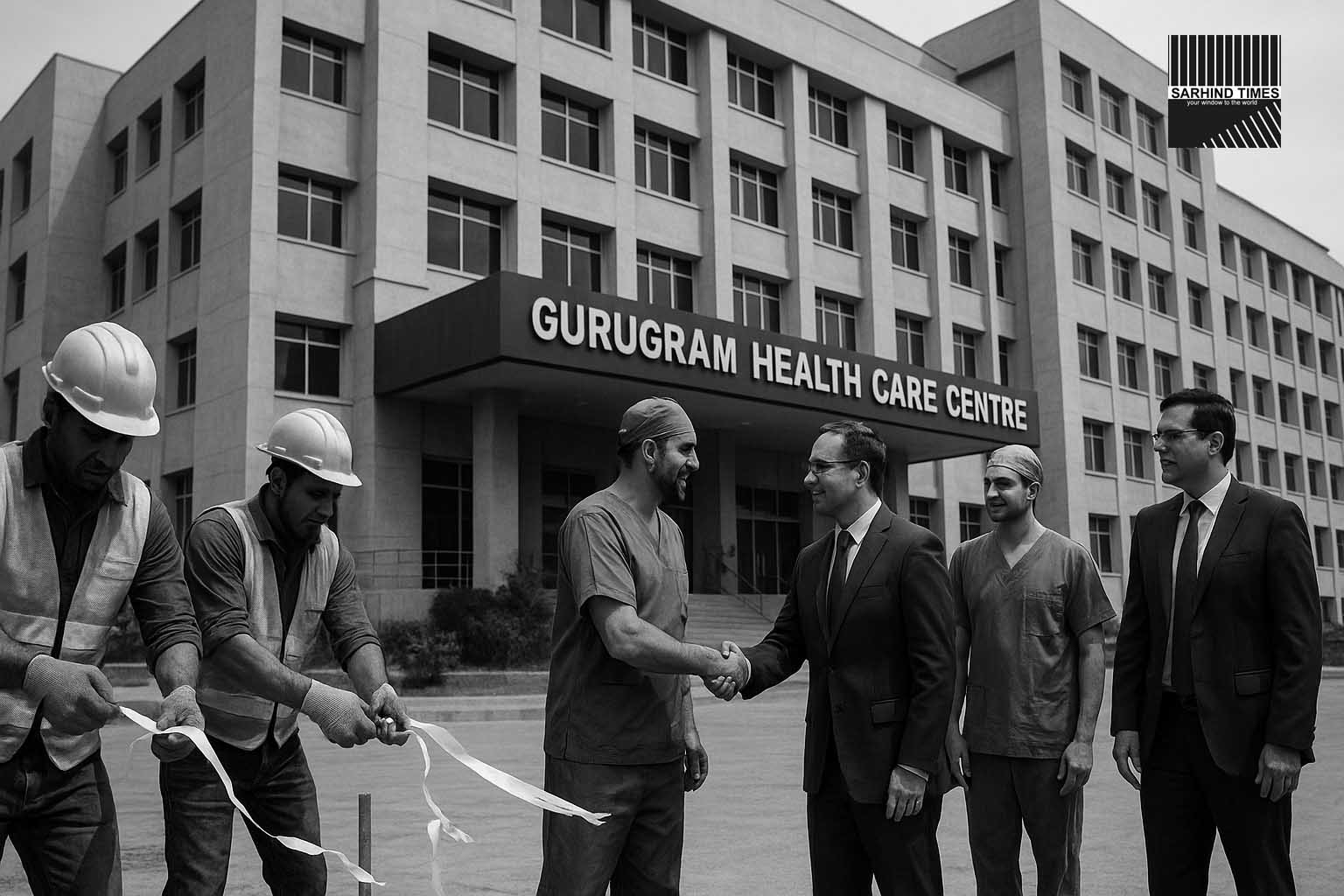
State government signals sweeping upgrade of hospitals, diagnostics and rural-urban health linkages in Gurugram-centric health mission
Dateline: Chandigarh / Gurugram | 01 November 2025
Summary: The Haryana government has unveiled a major health-infrastructure investment plan of about ₹3,800 crore for the fiscal year, with a special focus on the Gurugram region. The plan includes a new multi-specialty medical campus, revamping of district hospitals, expanded diagnostics and rural health outreach. Officials say the push is intended to strengthen Gurugram as a regional health hub and reduce dependence on Delhi-NCR facilities.
Investment plan and scope of the health mission
The Haryana Cabinet, in its recent meeting, approved a health-mission investment of roughly ₹3,800 crore for the budget year 2025-26. The funds are earmarked for key projects across the state, but the most prominent is a **new multi-specialty medical campus** to be built on a 40-acre campus in the Gurugram-Sohna corridor. The campus is expected to house a 500-bed hospital, advanced diagnostics wing, trauma and emergency block, a medical-college annex and state-of-the-art tele-medicine units. The state government describes it as “Gurugram’s answer to cross-border health-migration to Delhi”.
Beyond the flagship campus, allocations include ₹800 crore for upgrading district hospitals in Haryana, ₹350 crore for mobile-clinic and health-outreach units in semi-urban and rural belts, ₹400 crore to establish advanced diagnostics (MRI/CT/PET) in each of the five zones of the state, and ₹250 crore for strengthening ambulance and outreach networks linking Gurugram to surrounding districts and villages. In addition, ₹1,000 crore is set aside as a health-innovation fund that will finance public-private partnerships in diagnostics, tele-health and digital-medicine platforms.
Why Gurugram is central to the health upgrade strategy
Gurugram, often known as the private-healthcare hub of NCR, has long seen patients from across northern India and even neighbouring states travelling to its private hospitals. The government noted that public-sector infrastructure has not kept up with this demand, and many patients requiring tertiary or multi-specialty care still move to Delhi-NCR or even other states. By situating the new campus near Gurugram and improving district-level infrastructure in the surrounding region, the state aims to reduce such outbound patient migrations and make high-quality care accessible locally.
Additionally, the state health-department believes the Gurugram region’s corporate, expo-centre and foreign-visitor population deserves enhanced healthcare readiness. With the region serving a large expatriate workforce, post-COVID-19 heightened expectations around healthcare premiumisation, and a boom in medical-tourism interest in Haryana, the campus forms part of future-proofing of the state’s health-asset base.
Rural linkage, outreach and diagnostics upgrade
While the flagship campus focuses on tertiary care, the broader investment addresses the rural-urban health continuum. The budget allocates ₹350 crore for mobile outreach clinics – vans equipped with laboratory and tele-consultation facilities that will serve villages in Gurugram district, Nuh, Rewari and beyond. These units aim to bridge primary-care access gaps, provide early diagnostics, remote specialist consultations and wound up rural referrals directly to the new Gurugram campus.
The diagnostics component aims to reduce the “diagnostic desert” in Haryana. Until now many residents in semi-urban and rural areas had to travel to Gurugram city, Panipat or Delhi for advanced imaging and PET scans. With ₹400 crore set aside for diagnostic centres, each health-zone in Haryana will receive a high-end facility, thereby de- bottlenecking referrals and reducing wait-times.
Workforce, digital health and innovation fund
The state health-mission emphasises workforce development and digital enablement. Of the total budget, roughly ₹500 crore is designated for training programmes: for specialist doctors, trauma-nurses, radiology technicians and paramedical staff. The state is also advancing tele-medicine networks that will link primary-health centres and mobile clinics to specialists in the new campus near Gurugram, enabling remote consultations and daytime–night-time digital care coverage.
The ₹1,000 crore innovation fund will support public-private partnership (PPP) models in diagnostics, remote-care, health-analytics and wearable-device integration. The government expects startup-led tele-health firms to participate, especially in hubs around Gurugram, leveraging proximity to India’s leading tech-ecosystem for health innovation. The plan also includes pilot projects for AI-driven early-diagnosis of non-communicable diseases (NCDs) and remote monitoring of chronic patients.
Financing and implementation timeline
The financing model will be mixed: roughly 60 % state-budget capital, 30 % central-health-mission grants and 10 % private-sector co-investment. The government expects the new medical-campus to be completed in **36 months**, with initial outpatient services starting by **end of 2026**. District-hospital upgrades will be rolled out over 24 months, mobile-outreach units within the next 12 months. Monitoring and progress metrics will be reported quarterly, with key performance indicators (KPIs) such as bed-occupancy, diagnostic-wait-times, patient-satisfaction scores and reduction in cross-state patient migration targeted.
Governance, regulation and public-accountability
The health-department will create a “Haryana Health-Mission Board” to oversee governance, comprising state-secretaries of finance, health, industry, public-private-partnerships and hospital-leaders. An idea-management portal will allow citizens to track project-updates, lodge grievances and view metrics. The health-department emphasises transparency, adherence to timelines and public-consultation in campus-design and rural-outreach deployment.
Given prior criticism around hospital-project delays (labour-shortage, approvals, land-clearances), the government has made clear that **no approval will be granted for new hospitals** in Gurugram district unless they connect into the tele-network of the new campus and align with the state-governance board’s design guidelines. This policy measure ensures infrastructure standardisation, prevents duplication and guarantees integration of public-private clinics within the state-wide network.
Expected impacts for citizens, healthcare economy and region
For citizens in Gurugram and surrounding zones, the infrastructure push means quicker access to multi-specialty treatment, reduced travel to Delhi, lower out-of-pocket costs and faster diagnostics. Rural patients can benefit from mobile clinics, remote consultations and earlier detection of chronic disease. The expansion of diagnostic infrastructure across the state will help manage non-communicable diseases, which account for a large share of morbidity and mortality.
For the healthcare economy, the new campus and diagnostic centres are expected to attract investment, create high-skill healthcare jobs (doctors, technicians, data-analysts), stimulate medical-tourism and anchor health-tech startups around Gurugram. The linkage with the innovation fund aligns with Haryana’s ambition to become a regional hub not just for manufacturing and tech, but also for advanced-healthcare and medical services.
Key risks and governance challenges
Despite the promise, several implementation risks remain. These include land-acquisition delays, contractor bottlenecks, shortage of trained specialist doctors, and integration of digital infrastructure across diverse rural and urban zones. Ensuring seamless referral pathways from rural outreach clinics to the new campus is also operationally complex. Budgetary pressures may arise if private-sector co-investment lags and state grants are delayed. The innovation fund model too may require robust governance to ensure transparent selection of startups and avoid grant-leakage.
Another critical risk relates to equity: while the new campus and diagnostics upgrades may benefit the Gurugram-centred region, other less-connected districts may feel left behind unless rollout is balanced. Further, while mobile-outreach units and tele-health promise rural inclusion, their success will depend on connectivity, local staffing and community health engagement in villages around Gurugram and southern Haryana.
Conclusion
The ₹3,800 crore health-infrastructure investment approved by the Haryana government is a bold step towards repositioning Gurugram as a tertiary-care and medical-innovation hub, while also strengthening rural-urban health linkages across the state. If implemented effectively, the plan can reduce health-migration, lower costs for patients, create jobs and foster health-tech innovation. The next few years will reveal whether the ambitious design converts into tangible outcomes—or whether implementation bottlenecks dampen the promise. What is clear is that Haryana has placed health infrastructure at the heart of its regional-growth strategy—and for the residents of Gurugram, the stakes are high for timely delivery and equitable access.



+ There are no comments
Add yours