
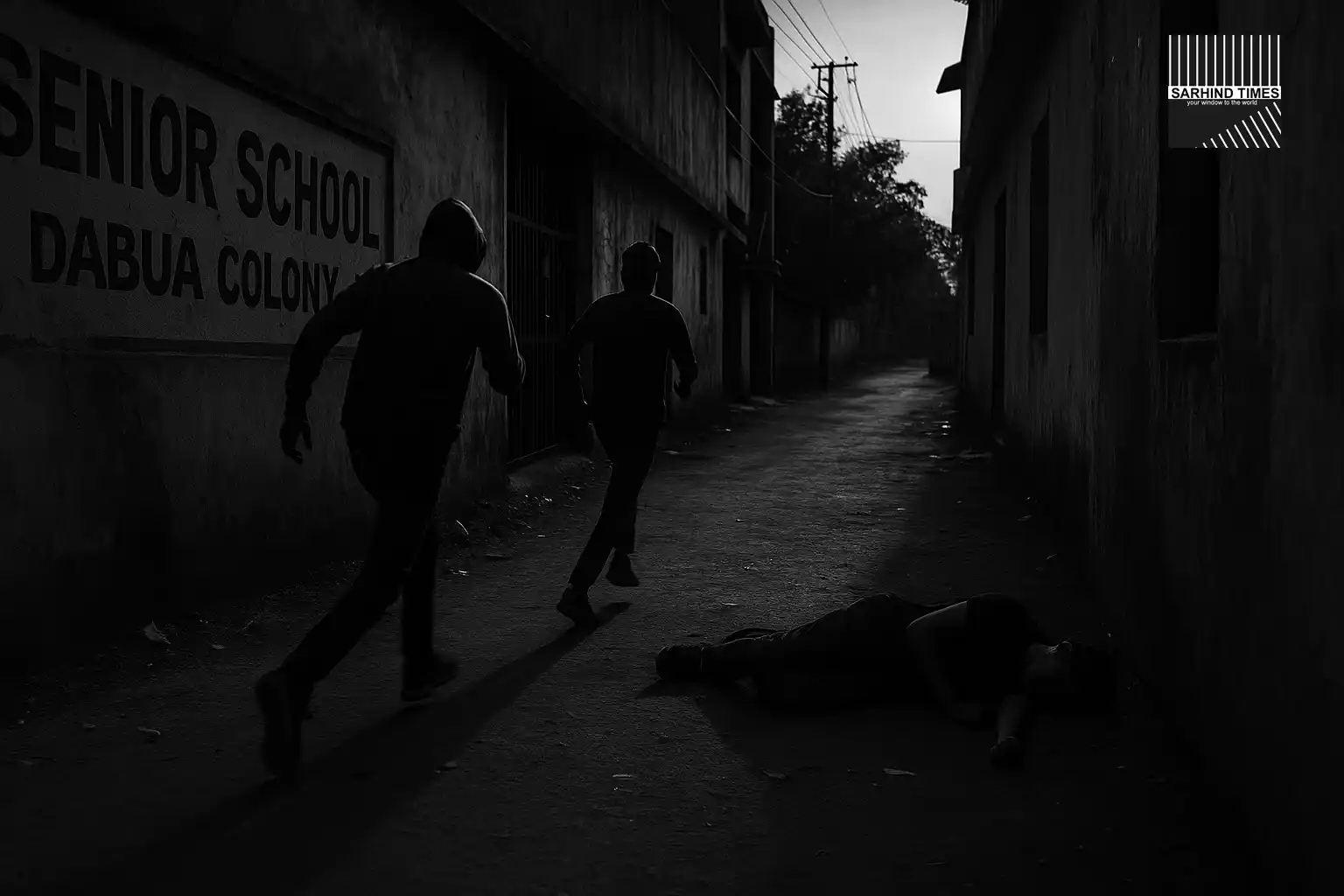
Alleged old rivalry leads to violent attack near Vishwas Convent Sr Sec School in Dabua Colony
Dateline: Gurgaon | 29 October 2025
A 15-year-old student of Vishwas Convent Senior Secondary School in Dabua Colony, Gurgaon, was stabbed multiple times by two boys following an alleged old rivalry. He is currently undergoing treatment and the police have identified the suspects.
Incident details and immediate response
In the afternoon of Tuesday, authorities in Gurgaon responded to an alarming incident in which a Class VIII student, identified as Utkarsh (aged 15, resident of Dabua Colony), was stabbed multiple times as he was leaving his school premises. According to the initial police report, the attack occurred at approximately 2:15 pm, just a short distance from his school, Vishwas Convent Senior Secondary School, located in the Dabua Colony area of Gurgaon.
The victim was immediately rushed to Fortis Escorts Hospital in Gurgaon where his condition was described as stable but under observation. The police identified two male suspects — both minors — who allegedly confronted Utkarsh in a narrow lane just two alleys away from the school. The motive is described preliminarily as a “tussle” from a few weeks ago that escalated into this violent confrontation.
Background: school zone safety concerns in urban Gurgaon
The incident raises fresh concerns about safety in and around school zones in and around Gurgaon. As the urban sprawl and associated population density increase, particularly in sectors such as Dabua Colony, policing and monitoring of narrow alleys and routes often used by students become challenging. The fact that the attack occurred just as students were leaving school underscores the vulnerability during transit times.
Experts note that adolescent rivalry, peer pressure, and unsupervised public spaces often contribute to such incidents. In this case, the police mention the attack stemmed from an old rivalry, which had not been resolved. Even within a school environment, tensions that originate in one setting (classroom or earlier interaction) can spill outside and escalate. The incident also shines a light on how after-school transit routes need better oversight when the student density is high.
Police investigation and suspect identification
The Gurgaon Police stated that investigations are underway at the local police station, and the two suspects (both minors) have been identified. While not yet apprehended (as of the time of the report), their profiles are being verified, and the police are working to trace their movements and weapon used in the stabbing. The narrow lane where the incident occurred is being treated as a crime-scene, with forensic teams collecting evidence. CCTV footage from nearby buildings and the school is under scrutiny.
The police have also initiated discussions with the school’s administration to understand whether any prior rivalry or disciplinary issue was reported between the victim and the suspects. Given that both parties appear to be of school-going age, juvenile justice guidelines will apply in the case of arrest and prosecution.
School and community reaction
According to sources, the school management has expressed concern and assured parents that measures will be reviewed to enhance student safety. This includes revisiting exit-route security, increasing teacher/guard supervision at dismissal time, and coordinating with local police to improve surveillance. Some parents of students expressed shock, pointing out that in the hours just after the school bell, many students head home by walk or public transport in groups — yet narrow lanes remain less monitored.
Local resident associations in Dabua Colony also called for increased lighting in alleys, faster patrolling and coordination with the Gurgaon Municipal Corporation for monitoring public spaces during off-peak hours. Residents noted that the growth of residential sectors and commercial activity has outpaced local amenities, including policing coverage and safe student pathways.
Context: youth rivalry and escalation risks
This case typifies the latent risk when “old rivalry” among youth remains unaddressed. In many urban zones, school rivalries, peer intimidation or local turf-conflicts may simmer for weeks without formal report, and then erupt into violence once an opportunity presents itself. The tendency for small disputes to escalate in unsupervised environments underscores a need for early intervention by schools, parents and local authorities.
As one educational psychologist notes, “We often see initial rivalry in classrooms or during games being dismissed as teenage banter, but when students meet in unstructured environments — narrow lanes, around pick-up zones, transit areas — the same dynamics can convert to aggression.” Schools and local communities must therefore work together on protocols: conflict resolution programs, peer-mentoring, and safer travel paths for students.
Possible factors in Gurgaon’s urban landscape
Gurgaon (now officially Gurugram) has witnessed rapid urbanisation, increasing population density, and the attendant stress on civic infrastructure including security and student-transit zones. The proliferation of narrow alleys linking sectors, mixed residential-commercial zones, and after-school mobility patterns create risk zones. The presence of unregulated transit paths, commercial encroachment, reduced visibility and lighting can all contribute to vulnerability.
In this incident, the location in Dabua Colony — a neighbourhood with mixed residential and commercial spaces, and narrow alley-linkages — may have contributed to the ease of the attack. Narrow lanes provide less escape, fewer witnesses, and limited CCTV coverage. The attack’s timing as students were dispersing increased risk: multiple students may be standing outside the school or walking home when the suspects struck.
Implications for juvenile justice and school policy
Because the suspects are minors, the matter will be handled under provisions of the Juvenile Justice (Care and Protection of Children) Act, 2015. This means that while the victim is also a minor, the suspects will face age-appropriate procedures, and the police must coordinate with the child welfare committee. The focus must include rehabilitation, counselling, and conflict resolution rather than purely punitive approach.
For the school, the incident may trigger policy review: ensuring student exit is staggered or supervised, mapping risky transit routes, installing adequate lighting and CCTV, and facilitating conflict-resolution mechanisms for students. Parent-teacher associations and local civic bodies will need to coordinate on safe zones and possibly escort walking groups for younger students.
Reactions and statements
As of now, the police spokesperson in Gurgaon has said that the victim’s condition is stable and that the suspects are minors who will be processed as per child-justice norms. The school has not released a detailed public statement yet but has assured parents of support and has held a meeting with students to reinforce safety instructions. Community representatives in Dabua Colony have indicated they will engage with the police to seek additional monitoring during after-school hours.
Long-term outlook and risk mitigation
Looking ahead, the key challenge is translating such high-profile incidents into structural improvements in student safety. This means: enhancing physical infrastructure (lighting, CCTV, secure lanes), improving surveillance (police patrolling, school-locality coordination), strengthening student-peer conflict programmes, and establishing rapid alert protocols (hotlines, school-police liaison). The Gurgaon Municipal Corporation and local police may need to conduct “school-zone audits” across sectors to identify trouble spots like narrow lanes, poorly lit alleys, and high-foot-traffic intersections.
For parents and students, the incident is a reminder of vigilance: avoid walking alone in isolated lanes after school, form groups for transit, report any student rivalry or bullying to school authorities early, and ensure communication between school and guardians about after-school movement. Schools are encouraged to facilitate safe-transport options, even for short distances, and encourage walking-in-pairs or with supervision.
Conclusion
The stabbing of a young student outside his school in Gurgaon reveals how unresolved youth conflicts, risk-prone transit zones and urban mobility gaps converge to create a dangerous moment. While the immediate humanitarian focus is the student’s recovery, the broader imperative lies in reinforcing safe school-zone ecosystems in rapidly evolving urban Indian cities like Gurgaon. The incident underscores the need for collaborative action between schools, parents, civic bodies and law enforcement to ensure that leaving school does not become a moment of vulnerability.



+ There are no comments
Add yours