

Major electoral update triggers intense political debate ahead of key state elections
Dateline: New Delhi | 28 October 2025
Summary: The Election Commission of India (ECI) has initiated Phase 2 of its Special Intensive Revision (SIR 2.0) of electoral rolls across 12 states and union territories, sparking fierce reactions from opposition parties who warn of potential disenfranchisement and manipulation ahead of upcoming polls.
What is SIR 2.0 and why now?
The Election Commission of India (ECI) has formally launched Phase 2 of its Special Intensive Revision (SIR) of the electoral rolls, targeting 12 states and union territories including Uttar Pradesh, West Bengal and others. The aim is to update and cleanse the voter database ahead of multiple upcoming elections, removing duplicate, ineligible or deceased entries, while adding eligible new voters — particularly younger adults turning 18. According to ECI sources, this move is part of a broader drive to enhance electoral integrity, accuracy and transparency in the voting process.
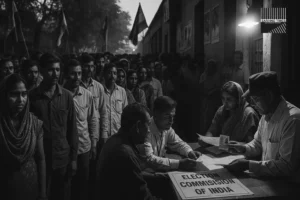
The revision process involves door-to-door verification, digital uploads of supporting documents, updating addresses, and de-duplicating entries. The ECI has emphasised easier document submission and improved connectivity for submission of claims and objections. The final revised rolls are to be published by February 7 of the coming year, ahead of major state assembly elections.
Opposition concerns: Allegations of bias and disenfranchisement
While the ECI maintains the process is administrative and technical, several opposition parties have strongly objected. They allege the revision is being deployed selectively to adversely affect voter segments considered unfavourable to the ruling coalition. For example, in Tamil Nadu the All India Anna Dravida Munnetra Kazhagam (AIADMK) and other non-BJP parties have criticized the timing and scale of this revision.
The Trinamool Congress in West Bengal has warned that the revision could lead to deletion of legitimate voters under the guise of cleaning up the rolls. They claim the door-to-door campaigns by the ECI may intimidate voters in rural and minority communities.
Opposition leaders point out that major voter-list clean-ups historically have often preceded state elections in India, raising the possibility of a strategic advantage. Critics argue that while accuracy is vital, the timing makes the process politically charged.
ECI’s response and safeguards promised
The ECI has responded by asserting that SIR 2.0 is standard procedure, and not a political exercise. A senior ECI official told the media that the process is being conducted “in a transparent, uniform and non-partisan manner”. The same official emphasised that access to the revision portal, submission of objections and inclusion of new voters is being facilitated across states.
The Commission has allowed any citizen to submit claims-and-objections online, and has mandated public display of draft rolls for 21 days before final publication. These steps are meant to ensure due process. The ECI has additionally set up helplines and outreach camps to help first-time voters, senior citizens, and persons with disabilities to verify their inclusion.
Which states are covered and why some are excluded?
The 12 states/UTs included in this phase of SIR 2.0 cover a mix of politically volatile and electorally significant regions. Reports list Uttar Pradesh, West Bengal among the states; other states and UTs have yet to make full disclosure of roll-out dates.
Notably, the north-eastern state of Assam has been excluded from this phase due to its unique citizenship verification process overseen by the Supreme Court and its continuing National Register of Citizens exercise. The exclusion has prompted questions as to whether the criteria for inclusion/exclusion are purely administrative or strategically political.
Historical context and past precedents
India has a recurring pattern of electoral roll revisions ahead of major elections. Previous nationwide or multi-state roll‐clean-ups have often occurred in the months preceding state or national polls. While many were purely administrative, others attracted criticism for alleged bias.
For instance, prior to the 2014 and 2019 general elections, several states conducted intensive voter registration drives and revisions. Such practices are generally legal and within ECI’s mandate, but the timing — too close to elections — often raises concerns about electoral fairness among opposition parties. Analysts caution that the credibility of the rolls is as important as their accuracy, and perception of fairness matters more in a competitive democracy.
Political implications for upcoming elections
The roll-revision exercise may influence the electoral landscape ahead of state elections in 2026 and the next general election expected later in this decade. For parties like Bharatiya Janata Party (BJP) which currently hold power at the centre and in many states, clean rolls might consolidate their advantage. Conversely, for opposition and regional parties the move raises fear of being disadvantaged.
Political analysts highlight that updates to rolls may affect voter demography, especially in states where young first-time voters, migrant labour, and urban settlers constitute significant blocs. The ability to add or delist large numbers of voters could affect party fortunes in closely contested constituencies.
Technical and logistic challenges
The scale of the initiative is immense: verifying tens of millions of voters across multiple states within months, ensuring access to technology and internet in remote rural zones, training field staff, ensuring document authenticity and managing objections — all present sizeable hurdles.
States will need to allocate resources for door-to-door enumeration, public awareness campaigns, complaint redressal systems and conflict resolution especially where documents are disputed. Some regions with weak infrastructure may struggle to comply fully, leading to unequal implementation and possible legal challenges.
Equity and inclusion concerns
Opposition critiques emphasise that the revision process may disproportionately affect marginalised voters: rural labourers who move frequently, urban migrants, seasonal workers, slum dwellers and minority communities often face challenges in document-linkage, address proof and awareness of revision deadlines.
Advocacy groups warn that unless the ECI ensures mobile camps, vernacular populist outreach, alternative document pathways and procedural flexibility, “clean-up” exercises risk becoming “lock-out” exercises. The Indian democracy is tested less by official data and more by actual inclusion of all eligible voices — especially those historically under-represented.
Analysis: Strategic timing, perception risk and democratic robustness
At surface level the SIR 2.0 looks like a positive administrative initiative to update voter lists. Clean, current rolls are foundational to credible elections. However, timing and scale make perception of fairness critical. Any tool wielded by the electoral body will be interpreted in a political light. Parties will assess advantage or risk based on speed, inclusivity and transparency.
If executed efficiently and impartially, this exercise could re-energise Indian democracy by bringing in younger voters, removing ghost entries, and ensuring one-person-one-vote electronically enforceable reality. On the other hand, any glitches, regional variation in implementation, or disproportional exclusions can undermine trust and turnout — potentially influencing outcomes more than issues or campaigns themselves.
What to watch next
Key parameters for monitoring in the weeks ahead will include:
- Number of objections filed and resolved by the ECI in each state.
- Demographic breakdown of additions versus deletions in each roll.
- Discrepancies across states in technology adoption and enumeration.
- Legal challenges filed against the revision process and any suspension orders from the courts.
- Effect of roll-revision on turnout, especially among first-time voters and urban migrants.
Conclusion
The launch of SIR 2.0 marks a significant event in India’s electoral calendar. It underscores the ECI’s intent to modernise voter infrastructure ahead of a period of heightened electoral activity. The move can bolster credibility of outcomes if conducted transparently. But the political sensitivity of roll-revisions makes this more than technical — it becomes an arena of contested democratic legitimacy.
For India’s thousands of electoral officials, millions of first-time voters and tens of thousands of political activists, the next few months will test whether the great Indian democratic machine can both renew itself and preserve fairness under pressure. The outcome may influence not just seat counts in state assemblies, but the broader quality of democracy itself.

+ There are no comments
Add yours