
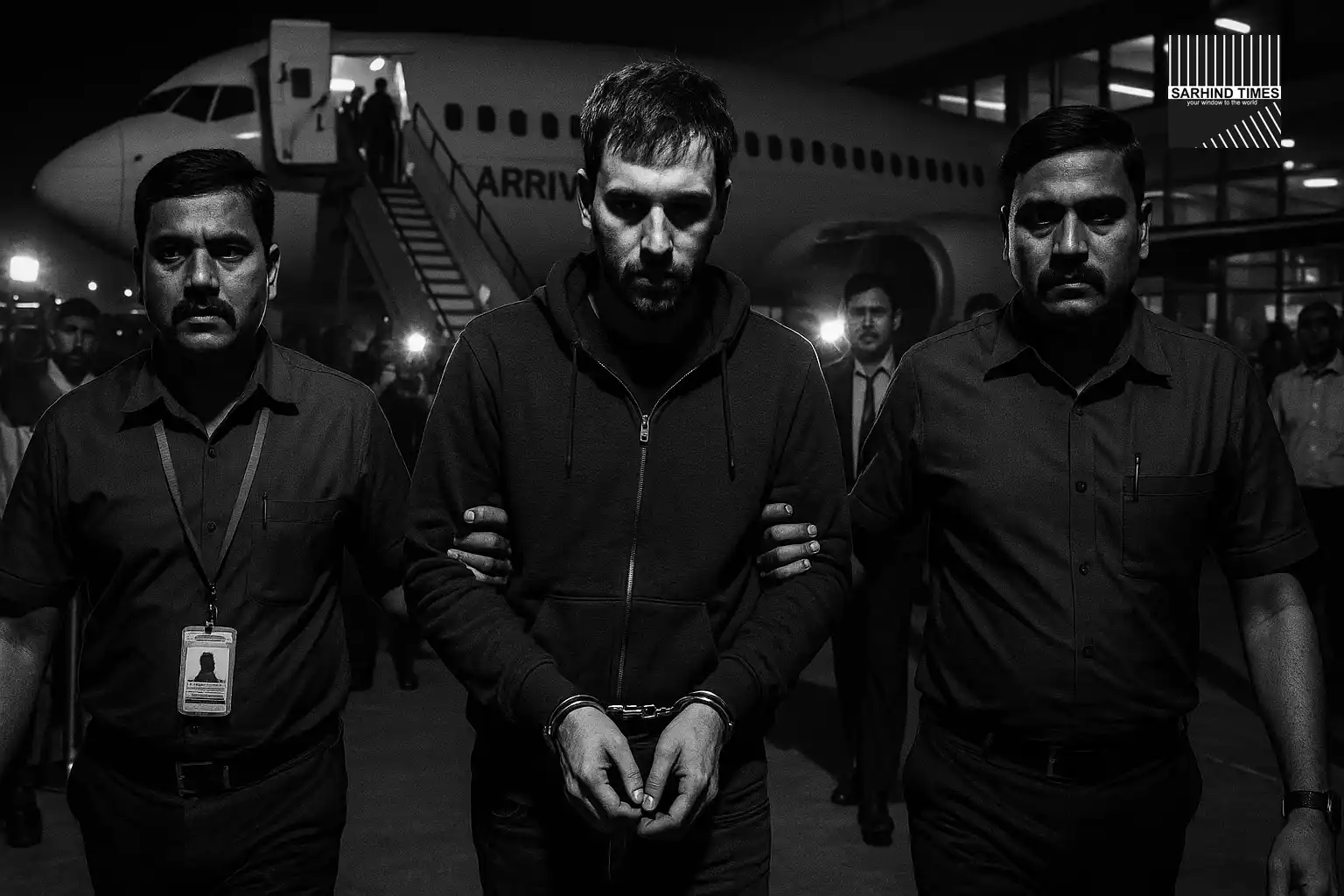
Central Bureau of Investigation brings back Lakhvinder Kumar from US, closing a major link in the underworld network of Lawrence Bishnoi
Dateline: New Delhi | 27 October 2025
Summary: The CBI arrested Lakhvinder Kumar — a reputed associate of gangster Lawrence Bishnoi — after the US government deported him to India yesterday. The operation underscores rising international law-enforcement cooperation and India’s focus on dismantling transnational criminal networks.
1. The arrest and background of the case
The CBI announced on 25 October 2025 that Lakhvinder Kumar (also known as “Lucky”) had been arrested at the airport in New Delhi shortly after his deportation from the United States. U.S. immigration authorities detained him earlier under an extradition warrant issued by India, following which he was handed over to Indian authorities. According to the CBI’s statement, Kumar is a long-time associate of gangster Lawrence Bishnoi and is alleged to have facilitated multiple crimes, including targeted killings, extortion and international money-laundering.
According to the case file, Kumar is believed to have been operating from the U.S. under false identities, coordinating with Bishnoi’s network in India and abroad. Indian investigators say he played a role in arranging weapon smuggling, laundering proceeds through shell companies in the U.S. and Canada, and planning attacks in major Indian cities. The extradition and arrest mark a major breakthrough.
2. Why this matters: transnational organised-crime in India
India’s fight against organised crime has increasingly moved into the global arena. While local gang networks have been active for decades, the scope of their operations—finance, weapons, drugs, overseas hideouts—has grown. The Bishnoi gang in particular is cited for high-profile murders, turf wars and deep links with drug trafficking. Bringing back Kumar from the U.S. both symbolises and operationalises India’s capacity to project its criminal-justice reach abroad.
For law-enforcement experts, the arrest has three implications:
– It tightens the noose on the Bishnoi network by removing a key overseas coordinator.
– It elevates deterrence: criminals abroad may not view foreign bases as safe havens.
– It sets precedent for future transnational extraditions and international cooperation.
<h³>3. The extradition process and co-operation</h³>
Although Indian authorities have long cooperated with the U.S. on crime matters, the visible deportation of Kumar underscores stronger tools and coordinated strategy. The CBI statement notes that multiple U.S. agencies—including the FBI and Homeland Security Investigations—had worked with Indian counterparts for over 12 months to trace Kumar’s movements, freeze assets and track his network. The U.S. finally acceded to India’s request under its treaty frameworks and deported Kumar to India under customs and immigration laws rather than a formal court-based extradition hearing—an expedited process in effect.
Documents seen by investigators suggest that Kumar had entered the U.S. on a visitor visa and then overstayed, using shell-corporations and proxy companies to mask income from extortion-proceeds. When Indian agencies traced the money-trail and submitted Mutual Legal Assistance Treaty (MLAT) requests, U.S. authorities froze accounts and removed his safe-haven status. He was apprehended in the U.S. in late 2024 and remained in detention until the deportation in October 2025. Indian agencies coordinated with state-crime branches in Punjab, Haryana and Delhi NCR to ensure his arrival and immediate custody after landing.
4. Details of the alleged crimes and network role
According to the CBI charge-sheet, Kumar’s alleged activities include:
– Acting as liaison between the Bishnoi gang and overseas financiers, coordinating hawala flows, cryptocurrency conversion and shell-company layering.
– Procuring weapons and arranging logistics for targeted killings in the Delhi-NCR and Punjab belt, including alleged involvement in attempts to assassinate political figures and extort major-industry owners.
– Supporting drug-trafficking routes from India to Europe via the Middle-East and North America, using courier centers and dual-citizen fronts.
– Supply-chain logistics: Kumar is alleged to have used legitimate U.S. companies (IT services, consulting) as fronts to route illicit funds, purchase high-value vehicles and real-estate, and provide maintenance for gang members relocated abroad.
The CBI has filed three FIRs under the Unlawful Activities (Prevention) Act (UAPA), Arms Act, Money-Laundering Act and Indian Penal Code provisions related to murder, attempt to murder and organized crime. In the immediate aftermath of his arrest, tax-enforcement agencies attached overseas properties worth ₹256 crore linked to Kumar’s network, and the Enforcement Directorate is reportedly coordinating parallel investigations.
5. Reactions and official statements
In Delhi, the CBI’s special director, Javed Khan, said:
> “This arrest should act as a deterrent to all organised-crime syndicates who believe that cross-border safe-havens shield them from Indian law. We will pursue networks relentlessly whether they operate from India or abroad.”
The Home Ministry said that the case underscores the government’s commitment to a “zero tolerance” policy toward organised crime and international gangs. A senior official in the Ministry of External Affairs added that India will continue to leverage extradition treaties, asset-freezing mechanisms and technology-based investigations.
Civil-society groups welcomed the arrest but cautioned that the challenge lies ahead—not simply in arrests but in prosecution and dismantling the full network. Advocate Meera Dhawan of the Delhi Criminal Bar Association said:
> “Arresting a key associate is one thing; building airtight evidence, witness-protection, and international asset recovery are the sustained tasks ahead.”
6. Impact on Delhi-NCR and Punjab crime narratives
The Bishnoi gang’s reputation is deeply rooted in the Delhi-NCR and Punjab underworld. The arrest of Kumar may trigger ripple-effects in these regions. In recent years, Punjab Police and Delhi Police have recorded multiple encounters, gang busts and arrests linked to the Bishnoi organisation. Analysts see April-2025’s back-to-back gang-wars, including the high-profile killing of a social-media influencer in Mohali, as part of the gang’s turf-defence. The removal of an overseas controller may refresh internal conflicts, cause network disruption and open intelligence windows for law-enforcement. In Gurgaon and Haryana, where Bishnoi-linked extortion rings have historically operated in real-estate and logistics, the arrest may raise a short-term spike in violence but longer-term opportunity for police to break syndicate hold.
7. Challenges ahead: prosecution, asset recovery and network fragmentation
Arresting Kumar is only the start. Observers note key challenges remain:
– **Prosecution risks**: Cross-border investigations involve multiple legal jurisdictions, evidence-gathering across countries, and long delays. Ensuring that the Indian courts convict rather than merely detain the suspect will take time.
– **Asset recovery**: Freezing assets is one step; tracing and confiscating behind-the-scenes holdings, shell-companies, cryptocurrency wallets and tied real-estate is harder. The ₹256 crore attached is significant but may represent a small fraction of the network’s total value.
– **Network remobilisation**: Gangs often adapt: removing one node triggers new leadership or splinter groups. Intelligence agencies must now monitor for succession, retaliatory violence, and covert regrouping.
– **Witness-protection & false ceilings**: Gang intimidation remains real in regions like Punjab and Haryana. Ensuring that arrested associates turn witnesses will be crucial for further dismantlement.
– **Judicial backlog**: India’s criminal-justice system faces large pendency; unless triage and fast-track hearings are applied, the suspect might end up in long pre-trial custody—dampening deterrence effect.
8. Wider policy and institutional implications
The arrest signals policy shifts:
– India’s enforcement architecture is increasingly integrating financial intelligence, extradition treaties, cyber investigation and traditional policing into a “whole-of-system” anti‐gang response.
– States such as Haryana, Punjab and Delhi must bolster their organised-crime units, invest in cross-border intelligence sharing, and coordinate with central agencies like the CBI, NCB and ED.
– Funding and legislative push: Parliament may soon consider amendments to criminal law to smooth extradition processes, introduce “foreign safe-havens” as aggravating factors for sentencing, and strengthen asset-forfeiture regimes.
– Deterrent message: As the home-defence narrative becomes more globalised, India appears to insist that overseas bases will no longer guarantee impunity—a shift from reactive to preventive crime-control strategy.
9. Observing the next 90 days: what to watch for
Key milestones to monitor include:
– Filing of charge-sheet by CBI within 90 days of arrest and its specification of Kumar’s role in extortion, weapons trafficking and money-laundering.
– Construction of cross-border evidence chain: U.S. bank-records, asset-linkages, cryptocurrency trails, custody statements of other associates.
– Intelligence follow-ups: whether Indian agencies can trace weapon-shipment channels, trace diverted funds and detain other overseas operatives.
– Regional law-enforcement action: Haryana and Punjab police may detain regional operatives or seize assets linked via Kumar’s network.
– Judicial outcomes: will the case proceed in fast-track mode? Are there fears of delays or rigging?
– Policy announcements: whether the government uses this case to unveil a broader “Global Gangs Initiative”—a coordinated anti-syndicate push across countries.
10. Bottom line
The arrest of Lakhvinder Kumar marks a significant tactical blow to the Bishnoi gang’s overseas operations and is a symbol of India’s evolving crime-control architecture. But a symbolic arrest is not enough. True disruption will require sustained prosecution, asset recovery, system-wide reforms and vigilance against gang adaptation. For Gurgaon-NCR, Punjab and Delhi, the operation provides a window of opportunity to reclaim ground—but only if local police and central agencies act in concert, avoid repeat terrorism-club tactics and build sustained forensic and intelligence capacities. The fight against organised crime may have opened an international front—but it remains a local battle too. India must now prove its overseas reach can translate into home-soil results.



+ There are no comments
Add yours