
New Delhi | October 7, 2025 | Sarhind Times Legal & Equality Desk
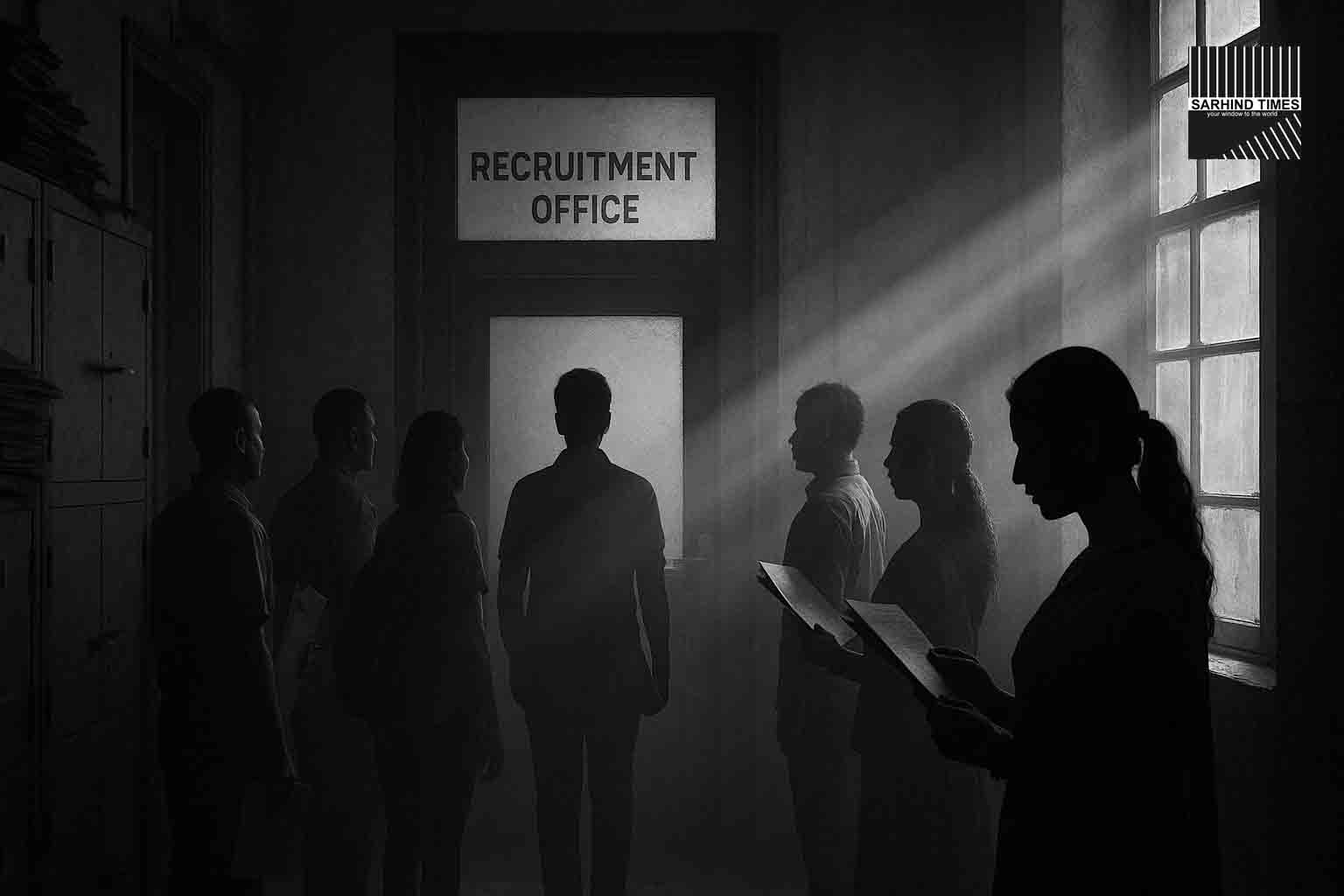
The Delhi High Court has questioned the prolonged delay in implementing job reservations for transgender persons, pointing out that more than a decade has passed since the Supreme Court’s landmark 2014 NALSA judgment directing affirmative action. The court’s stern observation has reignited debate over how policy intent has failed to translate into real inclusion within government offices and public-sector employment.
A Court’s Reminder: Equality Deferred
The hearing before Justice Subramonium Prasad’s bench turned into a pointed conversation on governance inertia. The petition, filed by a community rights group, sought time-bound implementation of the 2014 NALSA v. Union of India ruling, which recognized transgender people as a third gender and directed central and state governments to ensure reservations in education and public employment.
“Policy assurances without timelines amount to evasion,” the judge observed, asking the Delhi government to file a status report detailing concrete steps taken to amend recruitment rules, define quotas, and integrate transgender categories into official rosters.
The court fixed the next hearing for later this month, giving departments two weeks to file affidavits.
The Legal Backdrop: From NALSA to Now
The Supreme Court’s NALSA judgment (2014) was a constitutional watershed. It affirmed that transgender persons are entitled to fundamental rights under Articles 14, 15, 16, 19, and 21 — equality, non-discrimination, freedom of expression, and dignity. The ruling instructed governments to treat them as socially and educationally backward classes, extend reservations, and provide welfare schemes.
However, more than a decade later, implementation remains patchy:
| State | Status of Trans Reservation in Jobs | Remarks |
| Tamil Nadu | Implemented in police & welfare departments | Among earliest adopters |
| Karnataka | 1% quota notified in 2021 | First structured reservation model |
| Madhya Pradesh | Announced policy, partial hiring | Awaiting full inclusion |
| Delhi | No notification yet | Pending inter-departmental consultation |
Activists say Delhi’s delay undermines its self-image as a progressive capital.
Inside the Courtroom: Sharp Questions, Softer Answers
During the hearing, the Delhi government’s counsel stated that “consultations are ongoing across departments to harmonize recruitment frameworks.”
But the bench pressed further:
“Ten years cannot be classified as ongoing. How many meetings have taken place, and when can we expect the notification?”
The court’s tone underscored its growing impatience with bureaucratic foot-dragging, especially after multiple undertakings in earlier cases promising early action.
Activists Applaud the Court’s Intervention
Community representatives welcomed the court’s stance as a necessary jolt.
“It’s not about tokenism. We want actual seats, not sympathy,” said Ritika Das, coordinator of the Delhi Trans Welfare Forum.
“Hundreds of qualified trans persons have degrees but no formal job openings that recognize them. Government jobs could set a precedent for the private sector.”
Activists also highlighted secondary barriers: absence of sensitization, gender-neutral infrastructure, and workplace safety mechanisms.
“Reservation is the door; retention is the journey,” said Anjali Gopalan, founder of Naz Foundation. “Unless departments train staff and HR systems to include transgender persons with respect, inclusion will remain on paper.”
Policy Experts: Structural Clarity Needed
Legal and policy experts note that beyond notifications, practical mechanisms are essential:
- Roster Integration: Recruitment software and HR systems must include transgender category codes to avoid ad-hoc postings.
- Grievance Cells: Dedicated diversity officers in each department should address bias and workplace discrimination.
- Inclusive Facilities: Toilets, ID systems, and dress codes need to reflect gender diversity.
- Training & Sensitization: Pre-service training modules for civil servants should include gender sensitivity.
- Legal Synchronization: The 2019 Transgender Persons (Protection of Rights) Act must align with older service rules still using binary gender references.
Government’s Stand: “We’re Working on It”
Officials from Delhi’s Department of Social Welfare told Sarhind Times that groundwork is underway:
“We’ve circulated draft proposals to the Services and Finance Departments. The aim is to define a suitable percentage and roster mechanism consistent with central guidelines. The file is in advanced stages.”
But internal sources admit inter-departmental coordination is slow. Each ministry’s recruitment pattern varies—from direct recruitment (via DSSSB) to promotions and contractual hiring—requiring separate amendments.
Ground Reality: Invisible Barriers and Everyday Exclusion
Outside policy circles, transgender persons describe a harsher reality.
Priya Sharma, a post-graduate in public administration, said:
“I’ve cleared multiple exams but never see ‘third gender’ listed in application forms. Even where forms include it, HR systems often reject entries. It’s demoralizing.”
A 2024 study by the Centre for Policy Research found that fewer than 0.04% of government employees identify as transgender, despite India’s estimated transgender population exceeding 4.8 lakh (Census 2011).
Common hurdles include:
- Lack of identity validation (Aadhaar mismatches)
- Institutional bias at interviews
- Absence of grievance redressal cells
- Lack of workplace amenities like gender-neutral washrooms
Civil Society’s Role: From Courtrooms to Classrooms
Several NGOs have stepped in to bridge policy gaps through skills programs and employment drives.
- Garima Greh initiative: Shelters and training centers run by the Ministry of Social Justice now train trans persons in clerical and technical roles.
- Private partnerships: Corporates such as Godrej, Infosys, and TCS have piloted trans-inclusive recruitment programs, though participation remains limited.
- Education access: The Delhi government’s scholarship for trans students launched in 2023 helped over 700 beneficiaries but lacks linkage with job placement cells.
However, civil society organizations say without systemic government hiring, the ecosystem remains incomplete. “Representation in public offices normalizes visibility,” said policy analyst Dr. Reet Oberoi. “That’s the true power of state employment—it signals belonging.”
Legal History of Inclusion: A Timeline
| Year | Milestone |
| 2014 | Supreme Court’s NALSA Judgment grants “third gender” legal recognition and reservation rights. |
| 2019 | Transgender Persons (Protection of Rights) Act passed—mandates inclusion but leaves quota specifics to states. |
| 2021 | Karnataka becomes first state to implement 1% reservation. |
| 2022 | Delhi government forms a committee to explore implementation. |
| 2025 | Delhi HC questions prolonged delay, demands concrete timelines. |
National Implications: Setting a Precedent
If Delhi notifies transgender job reservations, it could influence other union territories and states still indecisive. The capital’s governance model—often mirrored by metro administrations—can establish uniform policy templates.
Experts emphasize that the case isn’t about numbers but visibility.
“Even a 1% inclusion across 200,000 Delhi government jobs is revolutionary,” said Prof. R. Menon, constitutional scholar at NLU Delhi. “It’s about ensuring the Constitution’s promise of dignity and opportunity reaches every citizen.”
Beyond Paperwork: Building Safe Workplaces
Policies alone cannot erase stigma. Workplaces need structural change—restrooms, pronoun respect, dress code flexibility, and zero-tolerance harassment policies.
A recent pilot project in Delhi’s Women & Child Department employed two trans officers in outreach roles. Officials found that productivity improved after staff underwent gender-sensitization workshops.
These micro-models, experts argue, can be scaled up across departments once recruitment begins formally.
Comparative Lens: How Other Countries Acted Faster
- Nepal (2007) — Recognized “third gender” in citizenship; civil service reservation followed within 5 years.
- Pakistan (2018) — Transgender Persons (Protection of Rights) Act implemented quotas in police recruitment.
- Argentina (2021) — 1% public sector jobs reserved for transgender and non-binary individuals.
- India (2025) — Still finalizing framework despite constitutional mandate.
The contrast underscores India’s policy lag despite having legal recognition earlier than many.
Judicial Oversight as Catalyst
Courts have historically pushed social reform where governments stall. From decriminalizing Section 377 to ensuring menstrual leave compliance, judicial nudges often accelerate executive action.
The High Court’s current intervention could similarly trigger formal notification by setting deadlines—a pattern seen in environmental, disability, and gender cases.
Lawyers familiar with the matter say the bench could, if unsatisfied, issue a mandamus order compelling notification within fixed time frames.
What’s at Stake
- For government: Upholding constitutional mandates and global equality commitments.
- For community: Breaking economic marginalization cycles.
- For society: Normalizing diversity in civic institutions.
Failing to act, say observers, risks not just contempt of the Supreme Court’s directive but perpetuating inequality in state recruitment.
Looking Ahead: Hope with Conditions
The High Court’s renewed scrutiny is expected to accelerate action.
If Delhi finalizes the quota structure—likely between 1%–3%—it may notify changes across DSSSB, DTC, and Delhi Police recruitments by early 2026.
But as activist Ritika Das remarked:
“We’ve seen reports and committees for years. This time, we want appointment letters, not promises.”
Conclusion: Justice Delayed, Dignity Denied
A decade after being constitutionally recognized, transgender Indians still await a seat at the public employment table. Delhi’s delay is not just administrative—it’s emblematic of how inclusion often stalls between intent and inertia.
The High Court’s sharp reminder rekindles accountability: equality is meaningless without access. The real verdict will be delivered not in judgments, but in job appointments that finally reflect India’s full spectrum of identity.
#TransRights #DelhiHC #Reservation #Equality #Inclusion#NALSAJudgment #PublicJobs #SocialJustice #HumanRights



+ There are no comments
Add yours