
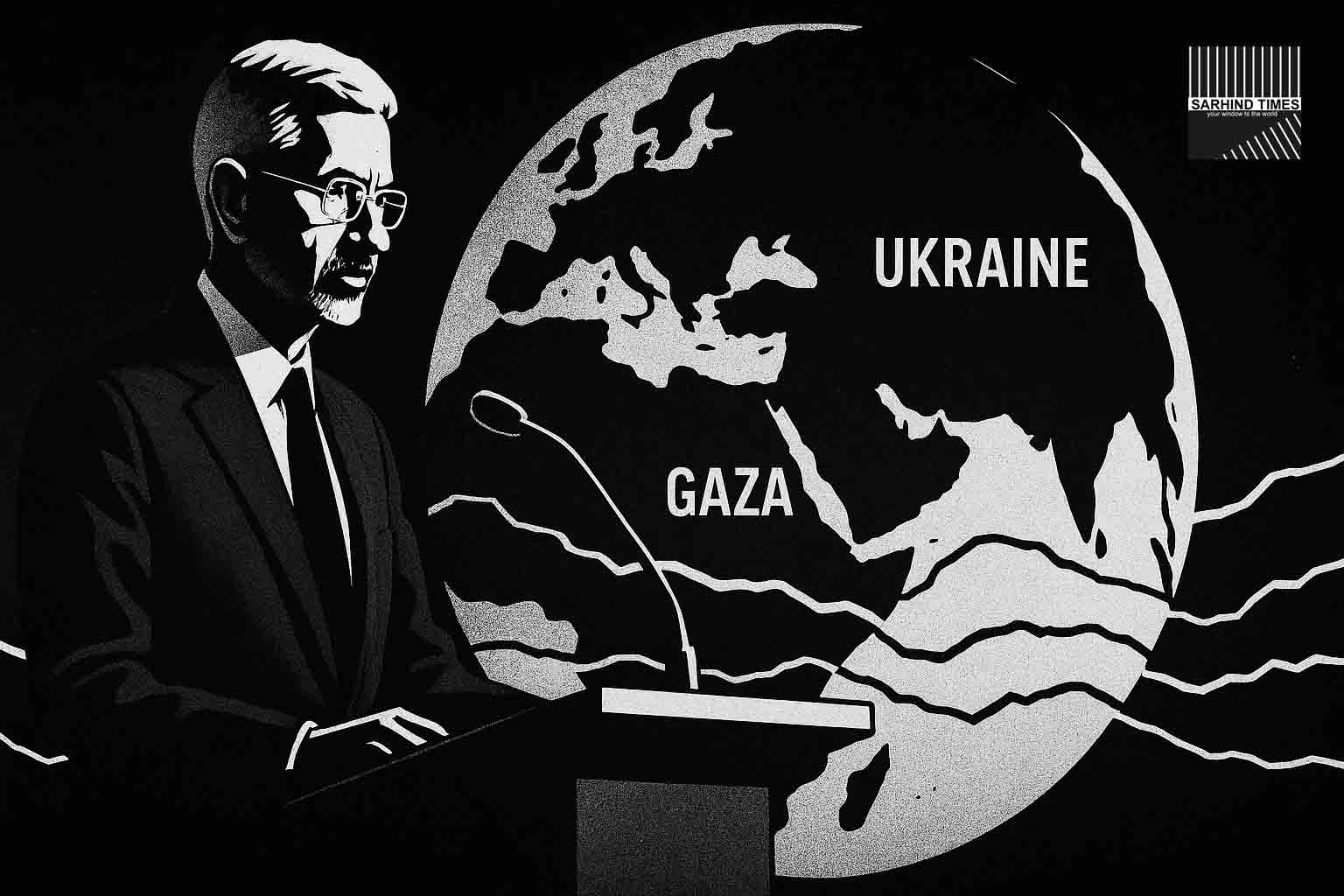
On the sidelines of the United Nations General Assembly in New York, External Affairs Minister S. Jaishankar addressed the G20 Foreign Ministers’ meeting with a pointed and timely message: the world must end “double standards” in responses to conflicts. He spotlighted the disproportionate burden borne by the Global South in the face of wars in Ukraine and Gaza, where disruptions in energy, food, and fertiliser supply chains have cascaded into crises for developing nations. Jaishankar also reiterated India’s zero-tolerance position on terrorism and called for urgent reform in multilateral institutions to reflect 21st century realities. His remarks, delivered at a critical diplomatic moment, set the tone for upcoming ministerials and underline India’s evolving posture in global diplomacy.
In this article, we unpack the significance of his remarks, analyse the global backdrop, explore the strategic objectives, and consider how India is positioning its foreign policy in a turbulent era.
1. Backdrop: Conflicts, Inequities & Global Shockwaves
1.1 The wars in Ukraine and Gaza, and their ripple effects
The conflicts in Ukraine and Gaza have deep humanitarian, geopolitical and economic consequences. Beyond the immediate zones of war, they drive volatility in global energy markets, spike commodity and food prices, disrupt logistics, and strain global supply chains. For economies in the Global South, many already reeling from COVID, climate stress and debt burdens, these shocks are severe.
Jaishankar made this connection explicit: disruptions in energy, food and fertiliser security are not peripheral — they underscore a systemic vulnerability in how the world responds to crises.
1.2 Double standards: what does he mean?
“Double standards” refers to inconsistent application of diplomatic, economic or moral levers — such as sanctions, aid, or global pressure — depending on who is involved or how powerful a country is. Jaishankar implied that the Global South sees selective enforcement, where some conflicts or actors are penalised or spotlighted more sharply than others. These inconsistencies compound pressure on developing nations that lack buffer resources or diplomatic clout.
The minister highlighted that “making energy and other essentials more uncertain in an economically fragile situation helps no one.”
1.3 Development, peace and their interdependence
A central tenet of his speech was:
“Peace can certainly enable development; but by threatening development we cannot facilitate peace.”
This is a strong normative argument. It contends that punitive or destabilising measures—especially those that exacerbate resource insecurity—can undermine the very foundations of peace-building. For India, this is not just moral positioning but practical: instability in food and energy markets hurt Indian interests too.
2. Key Themes & Messaging
2.1 Global South advocacy & institutional reform
Jaishankar’s remarks were rooted in a broader India-led narrative of Global South solidarity. He emphasised that many existing institutions, designed in a different era, are ill-suited to current geopolitical realities. He pressed for reforms to multilateral institutions (especially the UN) to better represent the voices, rights and expectations of developing nations.
In his earlier address at a High Level Meeting of Like-Minded Global South Countries, he laid out structural challenges: the shocks of the pandemic, multiple conflicts, climate extremes, and volatility in investment flows.
India’s message is consistent: the Global South needs more agency, not just accountability, in global order.
2.2 Diplomacy over coercion; bridge-builder role
While his critique was sharp, Jaishankar also offered a constructive path: countries that maintain engagement with multiple parties in conflict zones can help mediate or stabilise.
“In any conflict situation, there will be a few who have the ability to engage both sides. Such countries can be utilised … to achieve peace and to maintain it.”
This is a subtle diplomatic signal: India seeks to position itself as a credible interlocutor rather than a partisan actor.
2.3 Terrorism: zero tolerance, universal application
Jaishankar did not shy away from addressing terrorism:
“It is imperative that the world display neither tolerance nor accommodation to terrorist activities.”
He stressed that those who act against terrorists, in any theater, serve the broader international order. This is also a reiteration of India’s consistent stance: terrorism must not be dealt with selectively or based on political convenience.
2.4 Critique of multilateralism’s limitations
He observed that as conflicts, economic pressures and terrorism intensify, the limitations of current multilateral structures become more evident.
“The need for reforming multilateralism and the United Nations in particular are visible … The need for reforming multilateralism has never been greater.”
India is thus pushing for a recalibrated system — more inclusive, more responsive, more equitable.
3. Strategic Underpinnings & Objectives
3.1 Asserting India’s diplomatic autonomy
By openly criticising double standards (for instance, in energy politics or sanctions regimes), India is signalling that it will not be boxed in on moral postures imposed by others. This gives New Delhi more freedom in foreign policy choices.
In this context, his remarks on energy—in the light of pressure on Russian oil imports—resonate as a defence of strategic autonomy.
3.2 Strengthening India’s voice in global governance
India wants multilateral reform, not only to improve fairness but to gain institutional legitimacy and influence. By championing Global South concerns, India positions itself as their natural spokesperson.
If India can help shape the post-crisis global order (around supply chains, energy, food security, institution reform), it gains both soft power and structural leverage.
3.3 Pre-empting polarisation
In a world increasingly fracturing into power blocs, India desires a middle path. By emphasizing diplomacy, balanced critique, and institutional repair, it seeks to avoid being forced into rigid alignments.
3.4 Tactical gains in upcoming multilateral meetings
The New York remarks are a prologue to more detailed negotiations—on critical minerals, fertilizer cooperation, humanitarian corridors, WTO, UN reforms. India aims to carry its moral argument into technical tables. Diplomatic momentum matters.
4. Challenges, Risks & Counterpoints
4.1 Pushback from powerful actors
Critiques of double standards will inevitably be resisted by actors who benefit from asymmetrical enforcement regimes. India must navigate diplomatic fallout while retaining credibility.
4.2 Translating rhetoric into outcomes
Calls for reform are one thing; getting concrete institutional changes—especially in bodies like the UN Security Council—are a monumental challenge.
Similarly, being a bridge-builder requires trust from conflicting parties, which is not automatic.
4.3 Balancing foreign policy flexibility vs coherence
In asserting autonomy, India must avoid being seen as inconsistent or transactional. Its position must stay anchored in principles to maintain credibility.
4.4 Managing domestic & global expectations
India’s global audience will scrutinize how much it delivers — both in substance (agreements, projects) and style (follow-through). Overselling could backfire.
5. What to Watch Next
- Diplomatic leverage: How India pushes its proposed reforms in forums like the UN, G20, BRICS, WTO.
- Coalitions & partnerships: Whether India can build blocks within the Global South or middle powers to back its proposals.
- Operational initiatives: Projects in energy, supply chain resilience, food/fertiliser diplomacy that back the rhetoric.
- Reactions from major powers: The US, EU, China, Russia — how they respond to India’s critique.
- India’s balancing acts: Between moral consistency, strategic autonomy, and realpolitik.
6. Conclusion
S. Jaishankar’s intervention at the G20 FMs meeting was more than a diplomatic speech — it was a declaration of intent. By challenging the world to end double standards, India stakes a claim to moral agency, institutional reform, and strategic balance. The shifting global order offers opportunity — but only if rhetoric is backed by steady, principled diplomacy, capacity to mediate, and readiness to deliver.
The Global South, facing real strain from spikes in energy, food and fertilizer costs, will watch closely whether India’s message translates into new norms and structures.
For now, Jaishankar’s charge echoes an essential proposition: conflict and development are two sides of the same coin; to build peace, one must not undercut development.
#Jaishankar #G20 #UNGA #GlobalSouth #EnergySecurity #FoodSecurity #Geopolitics #Diplomacy #Terrorism #MultilateralReform



+ There are no comments
Add yours