
10 Sep 2025
Anti-corruption officials apprehend an Assistant Sub-Inspector red-handed in a bribery case, shedding light on persistent challenges of misconduct in India’s policing system.
Introduction
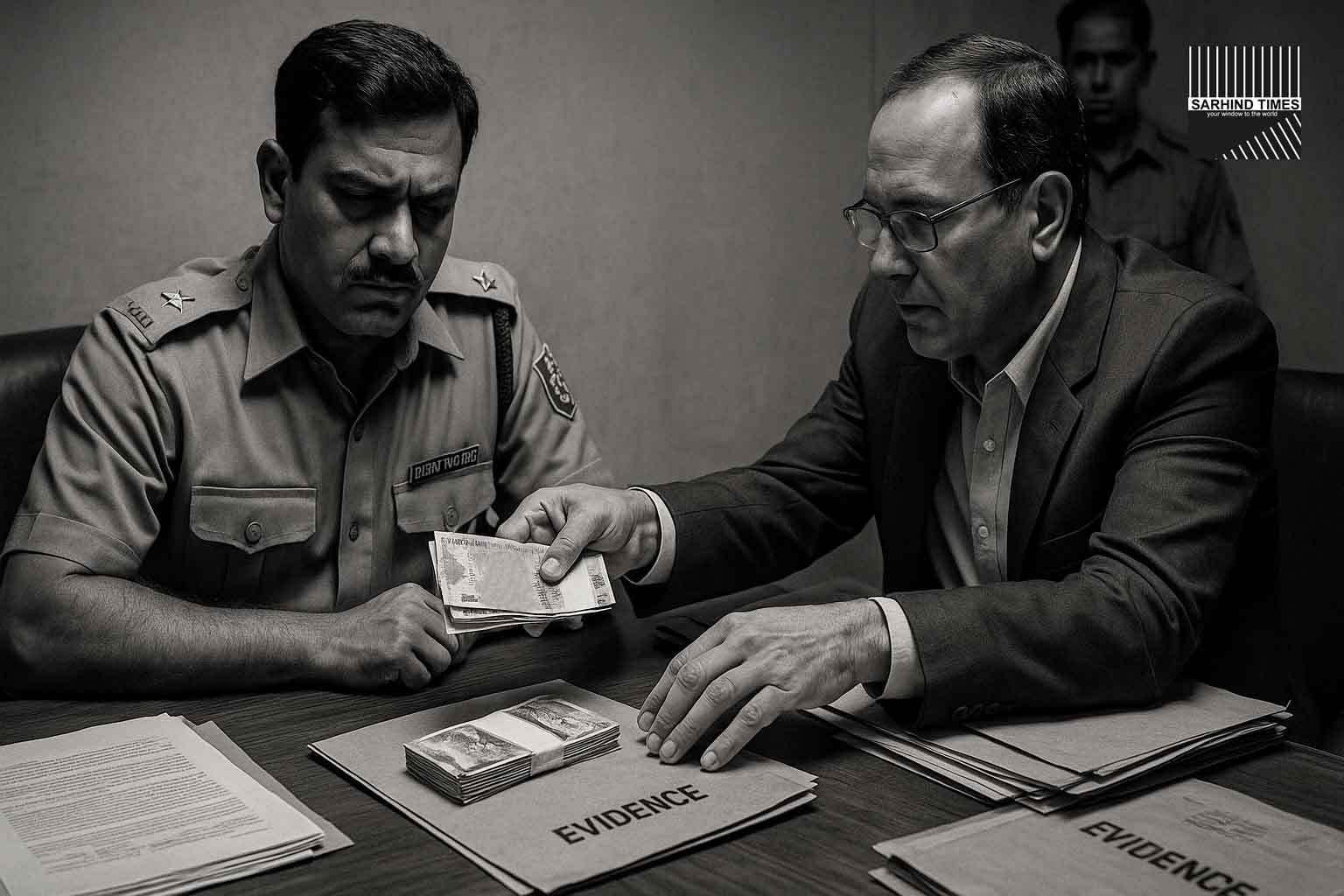
Delhi Police, often hailed as one of the most robust policing institutions in India, faces yet another credibility crisis after an Assistant Sub-Inspector (ASI) was arrested in a bribery sting operation. The officer, accused of demanding and accepting a ₹15,000 bribe, was caught by the vigilance team in a meticulously planned trap.
What adds drama to the case is that the officer allegedly tried to dispose of the bribe money mid-operation, but anti-corruption officials seized the cash as evidence and secured his arrest. The incident has reignited debates about institutional accountability, public trust, and systemic reforms in law enforcement.
Background & Context
Corruption within the police force has long been a matter of public concern in India. While Delhi Police has often undertaken reforms—ranging from digitized FIR filing to body-worn cameras—the human factor remains vulnerable to misconduct.
In this case, vigilance officials received a formal complaint from a citizen who alleged that the ASI demanded a bribe in exchange for favorable action in a case. Following standard procedure, a sting operation was authorized.
This is not an isolated case. According to data from the Central Vigilance Commission (CVC), police departments consistently figure among the top agencies in terms of corruption complaints filed annually. Experts note that while the majority of officers perform their duties honestly, even isolated incidents tarnish the image of the entire institution.
The Operation: How the Bribe Trap Was Executed
Anti-corruption stings typically involve:
- Verification of the Complaint – Officials corroborated the victim’s claims before setting up the trap.
- Marking the Currency – The ₹15,000 bribe money was chemically treated for identification.
- Surveillance Setup – Plainclothes vigilance officers monitored the exchange.
- The Arrest – The ASI was apprehended as soon as the money exchanged hands.
In this case, the officer panicked and attempted to discard the cash, but evidence was immediately recovered. The vigilance team acted swiftly, ensuring that no loophole could be exploited later in court.
Immediate Aftermath
- Suspension Proceedings: Departmental procedures have been initiated to suspend the officer pending inquiry.
- Criminal Case: A case under the Prevention of Corruption Act has been registered.
- Internal Vigilance: Delhi Police headquarters has ordered a review of the officer’s past postings to check for other irregularities.
- Public Response: News of the arrest spread quickly on social media, with netizens demanding stricter punishments for corrupt officials.
Impact of the Case
On the Police Force
The arrest has dented the reputation of Delhi Police, which has in recent years tried to brand itself as a modern, citizen-friendly service. Incidents like these raise questions about the efficacy of internal oversight mechanisms.
On Citizens
Citizens often hesitate to file complaints against corrupt officers due to fear of reprisal. This case, however, may embolden others to come forward, knowing that vigilance bodies are actively pursuing accountability.
On Governance
The case highlights the continued relevance of vigilance commissions and anti-corruption wings. Stronger collaboration between citizens, police leadership, and oversight agencies is seen as crucial to systemic reform.
Expert Opinions
- Former Police Commissioner (Retd.):
“Corruption at lower levels not only impacts public trust but also erodes the chain of command. Even one bribe case can overshadow years of service by honest officers.” - Legal Analyst:
“The Prevention of Corruption Act provides a strong legal framework. However, successful prosecution depends on airtight evidence—sting operations like this one are vital in securing convictions.” - Civil Rights Activist:
“The system needs both punishment and prevention. Alongside vigilance traps, police reforms must address issues like pay parity, working conditions, and accountability.”
Broader Relevance
- Politics: Corruption cases often become political talking points, with governments under pressure to demonstrate “zero tolerance.”
- Society: Ordinary citizens face harassment when bribery becomes normalized; cases like this highlight the urgency of building a culture of integrity.
- Technology: Calls are growing for more widespread adoption of body cameras, e-records, and AI-based complaint tracking to minimize human discretion in sensitive processes.
- Law & Order: Ensuring clean policing is integral to upholding rule of law, especially in a capital city like Delhi.
Future Implications
- Deterrence: Visible punishment of corrupt officers could deter others.
- Reform Momentum: The case may accelerate ongoing police reforms such as transparent transfers and rotation policies.
- Digital Oversight: Expect stronger pushes for digitized systems to reduce cash-based interactions.
- Citizen Engagement: Public confidence in vigilance mechanisms may increase, leading to more whistleblower complaints.
Conclusion
The arrest of a Delhi Police ASI in a ₹15,000 bribery sting is more than a headline—it is a test of institutional integrity. While one officer’s misconduct cannot define an entire force, such incidents reinforce the need for structural reforms, technological safeguards, and stronger accountability mechanisms.
For the people of Delhi, the case is a reminder of both the challenges of corruption and the possibilities of justice when vigilance bodies act decisively. The road to restoring public trust lies not only in punishing the guilty but also in creating a system where corruption finds no safe haven.
#CorruptionCrackdown #DelhiPolice #Bribery #Vigilance #LawAndOrder #PoliceReform #Accountability #StopCorruption #JusticeForCitizens #CleanGovernance



+ There are no comments
Add yours