
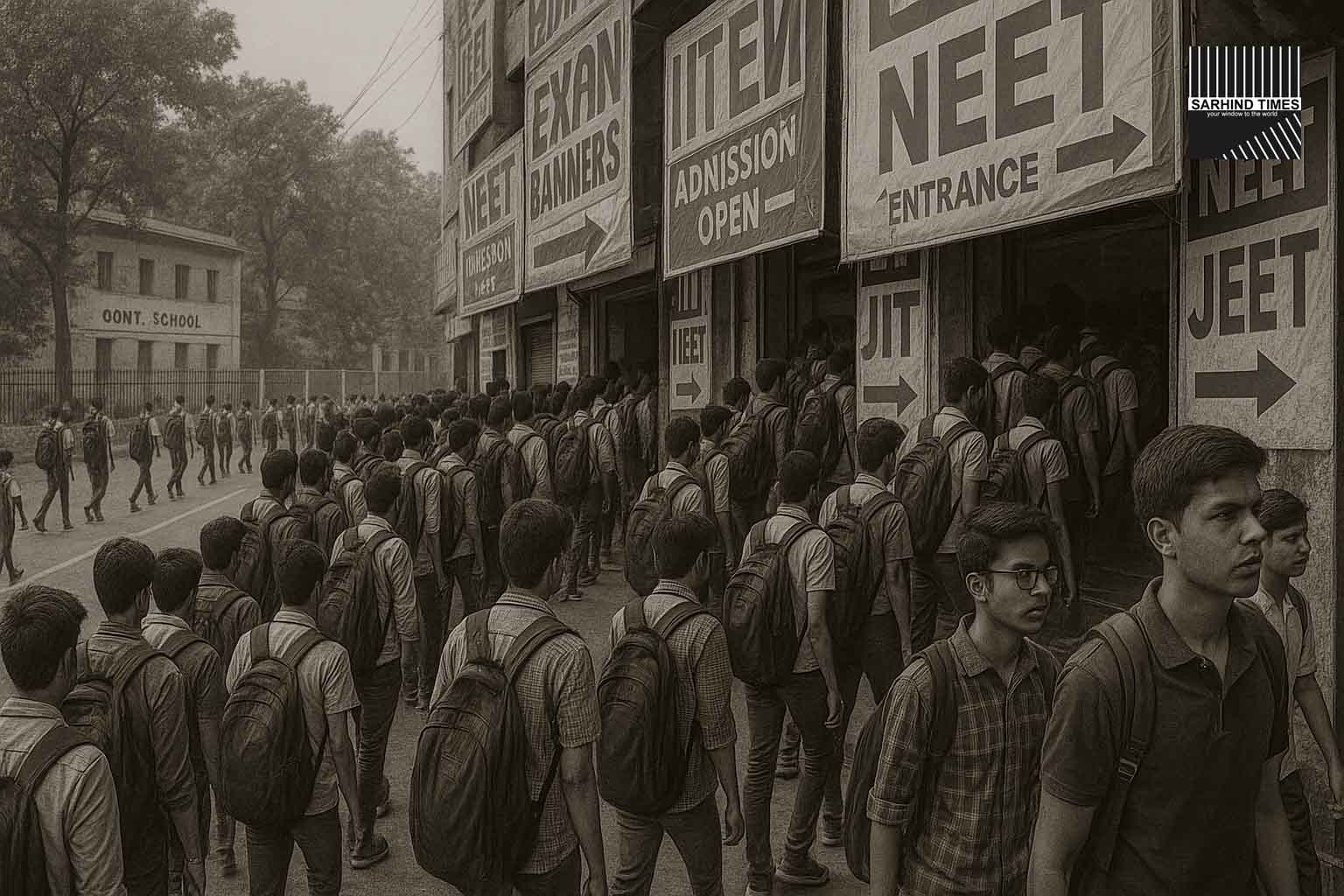
The imposition of 18% GST on coaching and private tuition, while school fees remain exempt, aims to reduce India’s deep-rooted culture of extra classes. But experts say cost alone may not overcome other root causes like competition, quality gaps, and parental anxiety.
Introduction
Few issues stir as much debate among Indian parents as private tuition and coaching classes. For decades, families have poured savings into after-school tutoring to ensure academic success in board exams, competitive tests, and professional courses. Now, under GST 2.0, the government has taken a bold step: school education continues to be exempt from Goods and Services Tax, but private coaching and online tuition remain under the 18% slab.
The move is not just fiscal—it is symbolic. By taxing coaching while keeping schools tax-free, policymakers hope to nudge society away from its tuition obsession and back toward trusting formal schools. But will this economic push be enough?
The Policy: What Changed
- Schools: Exempt from GST. Tuition fees for CBSE, ICSE, IB, and state-board institutions remain tax-free.
- Private coaching institutes: Continue under 18% GST, including offline and online platforms.
- Skill and professional training: Some exemptions exist for government-recognized courses, but mainstream coaching for JEE, NEET, UPSC, and board support is taxed.
The framing is deliberate. Authorities want parents to see schools as the primary site of learning, not coaching centres. By making coaching comparatively costlier, the government believes students may reduce reliance on it.
Why This Matters
India’s ₹58,000 crore coaching industry has ballooned in size, especially in hubs like Kota, Hyderabad, and Delhi-NCR, drawing millions of students every year. Estimates suggest it could cross ₹90,000 crore by 2028, driven by competitive exams and digital platforms.
Parents often spend as much—or more—on coaching as they do on school fees. In lower- and middle-income families, tuition costs strain household budgets, with many families prioritizing coaching over other needs.
The government’s new GST design signals an attempt to rebalance priorities. But whether that will dent India’s tuition culture remains doubtful.
Why Coaching Dominates in India
Experts highlight several reasons why families feel compelled to rely on private tuition:
- Uneven school quality: Public schools vary widely in teaching standards, infrastructure, and student-teacher ratios.
- Competitive exam pressure: Tests like JEE, NEET, UPSC, CLAT, and CUET fuel a parallel economy of test prep.
- Parental anxiety: Parents worry their child will be left behind if peers attend coaching.
- Peer influence: A cultural mindset that “tuition equals success.”
- Learning gaps: Students struggling in large classrooms turn to tutors for personalized help.
In short, coaching fills real and perceived gaps. Simply making it costlier may not erase these root causes.
Industry Response
Coaching institutes argue that the policy unfairly penalises them while schools also outsource learning gaps to them indirectly.
Rohit Agarwal, owner of a coaching chain in Kota, told Sarhind Times:
“We don’t create demand—schools and exams do. Parents seek us because school teaching and curriculum often fail to prepare students for competitive realities. Taxing coaching doesn’t solve that problem.”
Edtech platforms echo this concern. Online tuition startups, already struggling with post-pandemic corrections, say higher costs may push families back to informal neighbourhood tutors who operate outside the tax net.
Parents’ Perspective
Parents remain divided.
- Some welcome the move as a signal that schools should be sufficient for learning.
- Others feel trapped, saying coaching is not optional but a survival tool for exams.
Meena Sharma, a parent in Delhi, explained:
“My son is preparing for NEET. Without coaching, he cannot compete. The tax adds burden, but we have no choice.”
Experts Weigh In
Educationists argue the GST step is symbolic but insufficient.
Prof. Anil Gupta, policy analyst, noted:
“The issue is not price—it is systemic. Unless government schools improve, exams diversify, and assessment culture changes, coaching will remain unavoidable. GST cannot substitute for reforms.”
Other experts point out that high-performing countries like Finland and Singapore rely on strong school systems, not parallel coaching economies. India’s structural dependence on tuitions reflects gaps in school pedagogy, teacher training, and exam design.
Socio-Economic Divide
The GST burden falls unevenly:
- Upper-middle and wealthy families: Can absorb the 18% hike, continuing coaching as before.
- Lower-income families: May cut back, risking widening the educational gap.
This raises concerns about equity in access to competitive exams, especially for underprivileged students already at a disadvantage.
What Could Work Alongside GST
Analysts suggest the policy can be meaningful only if accompanied by reforms such as:
- Strengthening public schools: More investment in teachers, infrastructure, and pedagogy.
- Affordable alternatives: Government-backed tutoring for weaker students.
- Exam reforms: Reducing overemphasis on high-stakes single tests.
- Skill-based learning: Diversifying pathways beyond rote-driven coaching.
- Technology integration: Free or low-cost digital aids to reduce reliance on paid coaching.
Without these, GST may be seen as fiscal optics, not transformative policy.
A Symbolic Gesture or a Structural Shift?
Supporters say the 18% GST creates a “psychological nudge”—a reminder to families that schools should be the centre of education. Critics argue it is only a symbolic gesture, unlikely to dent a deep-rooted culture built on decades of competitive pressure.
The answer may lie somewhere in between. While the tax will pinch wallets and perhaps discourage excess expenditure on multiple tutors, it is unlikely to reverse India’s coaching dependence without broader reforms.
Closing Thought
India’s tuition obsession is not a new phenomenon—it is a symptom of larger systemic challenges in schooling and exams. The government’s GST move is bold, but whether it is truly weighty or just symbolic will depend on what comes next.
Will policymakers pair this fiscal nudge with educational reforms, or will families simply absorb the extra cost and continue business as usual? For now, the question lingers, even as India’s coaching economy shows no sign of shrinking.
#TuitionObsession #GST18 #EducationReform #CoachingCosts #PublicSchoolQuality #PolicyImpact #IndiaEducation #CompetitiveExams



+ There are no comments
Add yours